 Sunita Somvanshi

Norway Coastline Plastic Pollution: Are the Viral Claims True?
Norway sits at the top of almost every global sustainability ranking. So when a viral social media reel showed a filmmaker hauling 1,600 kilograms of plastic off a Norwegian beach in a single day — and claimed the country’s coast is eight times more polluted than the global average — it landed like a contradiction. If you’ve been wondering whether those numbers hold up, the official research broadly says yes, with caveats the reel couldn’t fit in.
The footage was made by Luisa Thiel, a German documentarian and surfer who works with the Norwegian nonprofit marine cleanup organisation In The Same Boat. Her crew operates shallow-water landing craft along Norway’s exposed Atlantic-facing coastline. The 1,600 kg single-day haul she documented is consistent with the organisation’s operational records. The Norwegian Environment Agency (Miljødirektoratet), research group NORCE, and environmental consultancy Mepex Consult have each independently measured Norway’s coastal plastic problem. Their findings support the reel’s alarm — but each of the headline numbers has a methodological boundary the viral format did not carry.
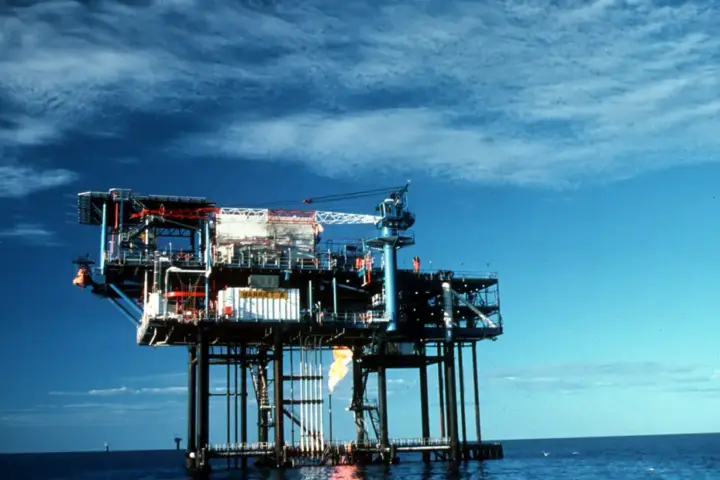
Believing ocean plastic is driven primarily by consumer litter — shopping bags, snack wrappers — leaves the single largest contributor to marine debris largely exempt from public pressure. In Norway, up to 80% of coastal plastic by weight stems from commercial fishing and aquaculture, not household shoppers. For environmentally conscious people and policymakers, cleaning coastal waters requires shifting attention from supermarket checkout bans to enforceable producer-responsibility mandates across commercial maritime fleets.
Hotspots, Heavy Gear, and the 10% Traceability Trap
The claim that Norway’s coastline is “eight times more polluted than the world average” is real data — but it describes specific places. NORCE researchers measured debris density in wave-exposed outer-coast accumulation coves known as vrakviker — natural pockets along Sotra, Øygarden, and similar Western Norway headlands where the Norwegian Coastal Current funnels debris onshore and traps it. In those coves, concentrations reached 8 to 12 times global average beach debris levels. Norway has over 100,000 kilometres of coastline. The 8x figure does not apply across all of it.
The same geographic precision applies to the “one tonne per 100 metres” claim. OSPAR Convention monitoring protocols survey standard 100-metre beach transects. In the heaviest accumulation pockets — where decades of discarded trawl nets, salmon-farm ropes, and fish boxes have compressed into dense layers — cleanup crews routinely extract 1,000 to 3,000 kg from a single 100-metre corridor. That is a real, documented outcome in those locations. It is not a coast-wide average.
The 80% fishing-and-aquaculture figure from Miljødirektoratet is accurate, but the unit matters: that share is by weight. Heavy commercial gear — trawl nets, mooring lines, aquaculture cage components — is dense. By item count, particularly near populated harbours, consumer plastics and expanded polystyrene fragments dominate. A Sentio Research poll found roughly 70% of Norwegian citizens wrongly attributed the coastal plastic problem to everyday packaging. The science and the public intuition are both responding to real things; they are just measuring differently.
The domestic-origin figure is the most precisely bounded claim. Mepex Consult analysed around 10 tonnes of litter from 50 Norwegian sites. Only about 10% of collected pieces still had any legible identifying markings after wave action and UV exposure. Within that identifiable 10%, 77% traced to Norwegian domestic sources; fewer than 1% came from Asia or distant non-European waters. A Sentio poll found 25% of Norwegians believed foreign sources were a major contributor, while only 19% correctly identified domestic sources. The reel’s “77% from Norway” is accurate as stated — but it covers only the fraction that could still be read. Nine out of ten pieces arrived as anonymous fragments, unattributable to any country.
For readers in the US, UK, and Australia who look to Scandinavia as the environmental benchmark, this points to a gap common to every maritime nation: EU single-use plastics legislation has targeted consumer items effectively, but commercial fishing gear has faced far weaker binding regulation. Extended producer responsibility frameworks are reaching packaging manufacturers in multiple countries, but fishing and aquaculture industries have largely remained outside their scope. The contrast with projects like engineered river plastic interceptors in urban waterways shows how differently resourced the two problems remain.
Where does most of Norway’s coastal plastic pollution come from?
Most coastal plastic in Norway originates domestically from sea-based industries. Studies by the Norwegian Environment Agency and Mepex Consult show commercial fishing and aquaculture generate up to 80% of beach plastic by weight. Of plastic items with identifiable markings, 77% trace to Norwegian domestic sources; fewer than 1% came from Asia. The majority of collected plastic retains no legible origin markings after marine weathering.
What the reel captured is real: Norway’s exposed outer-coast coves accumulate extraordinary concentrations of plastic, most of it heavy industrial gear. What the format couldn’t carry is the structure underneath — the 8x figure describes specific Atlantic-fringe funnel coves, not the full national coastline; the 77% domestic-origin figure comes from the small readable fraction of collected debris; and the 80% fishing share is a measurement of mass, not pieces. Norway’s coastline is not uniformly degraded. Its outer-coast hotspots show that ocean cleanup depends on regulating commercial maritime industries. Norway’s Directorate of Fisheries is developing mandatory gear-marking rules and digital loss-reporting systems; watch for those announcements to track whether binding accountability follows the data.