Rahul Somvanshi
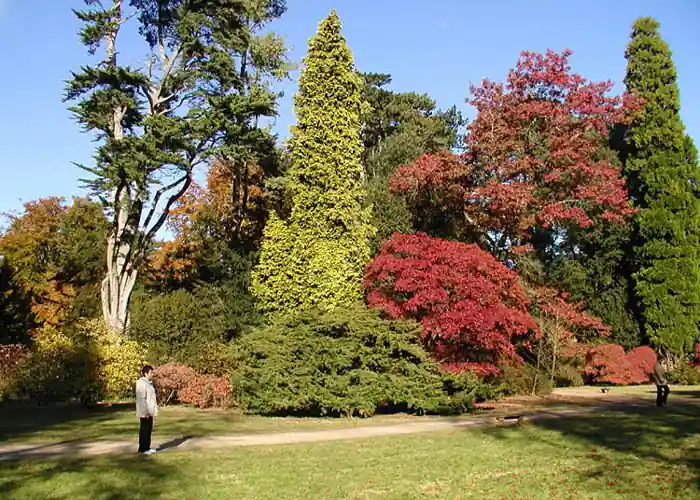
Britain now has a four-year research project investigating which productive tree species are more resilient to drought. The ADAPT project, launched by Forest Research and Forestry England Westonbirt, The National Arboretum, is monitoring 355 trees across 12 timber species. The project launched amid Britain’s record summer, which provisional Met Office figures show was the hottest on record.
ADAPT stands for Assessing Drought Adaptation of Productive Trees. Forest Research and Forestry England Westonbirt, The National Arboretum, launched the project. It runs for four years and is funded by the Department for Environment, Food & Rural Affairs (Defra). Forest Research announced the launch in a news release published on 23 November 2026. The first phase places tree growth sensors on 355 trees across five experiments in Britain. The trees are productive timber species, grown for timber and other wood products. The project launched amid Britain’s record summer, which is covered in more detail in our UK heatwave report.
For woodland owners, the choice of tree species matters because drought can affect how trees grow. ADAPT aims to provide local evidence that may help land managers and policymakers plan which productive trees hold up under drought.
The 12 Productive Timber Species Monitored Across 5 British Experiments
The network covers 12 species: silver birch, radiata pine, maritime pine, Scots pine, Sitka spruce, Douglas fir, grand fir, Corsican pine, western red cedar, Low’s fir, western hemlock and European larch. Most are conifers, the cone-bearing trees that commonly supply timber. Silver birch is the only broadleaf on the list. The network is designed to let researchers compare how each species responds under different site conditions across the five experiments. For wider context on national tree planting, see our report on the UK trees action plan and second national forest.
The team uses dendrometers, sensors fitted to the trunk that measure tiny changes in its diameter. Forest Research calls them tree-growth sensors. Each sensor records every 30 minutes. That fine detail could allow researchers to see when growth slows, which may reflect drought stress. The project has not yet reported any findings from these measurements.
Sub-Canopy Microclimate Sensors and Historic 1km-Square Drought Data
Scientists are also designing and prototyping custom devices to assess conditions beneath the canopy, the layer of leaves overhead. These devices track carbon dioxide, temperature, humidity, light and airflow. The researchers will investigate whether tree species affect conditions beneath the canopy, and whether more drought-resilient species create more resilient forest microclimates.
Project lead Dr Tom Ovenden MICFor is involved in the planned drought analysis. The team will analyse climate records dating back to 1901, covering roughly the last 125 years, at 1km-square resolution. A 1km square is a grid cell about one kilometre on each side. The planned analysis will examine how drought frequency, intensity, seasonality and duration have changed across the UK at this resolution.
ADAPT pairs trunk measurements taken every 30 minutes with a planned high-resolution analysis of historic drought records. The project aims to link these two datasets, which could support local-scale planning, including comparing a species’ growth pattern with the drought history of a particular area.
What is the UK Forest Research ADAPT project?
ADAPT (Assessing Drought Adaptation of Productive Trees) is a four-year Defra-funded collaboration between Forest Research and Forestry England Westonbirt. It uses 30-minute dendrometer sensors on 355 trees across 12 timber species in five British experiments, paired with roughly 125 years of 1km-square drought records dating back to 1901. Its aim is to help identify climate-resilient productive trees, according to Forest Research.
Which 12 tree species are being monitored in Britain’s ADAPT drought network?
The 12 species are silver birch, radiata pine, maritime pine, Scots pine, Sitka spruce, Douglas fir, grand fir, Corsican pine, western red cedar, Low’s fir, western hemlock and European larch. Most are conifers, while silver birch is the one broadleaf. All are productive timber species.
What role does Westonbirt Arboretum play in the ADAPT project?
Westonbirt, The National Arboretum, is a launch partner alongside Forest Research. It is home to about 2,500 different types of trees and shrubs. Westonbirt will develop visitor activities, with research highlights shared over the next three and a half years.
ADAPT will run for four years, combining 355 trees across 12 timber species with roughly 125 years of historic drought records. Westonbirt will develop visitor activities, with highlights shared over the next three and a half years. The launch announcement reports no sensor findings or completed drought maps, so the project’s conclusions are still to come.