Rahul Somvanshi
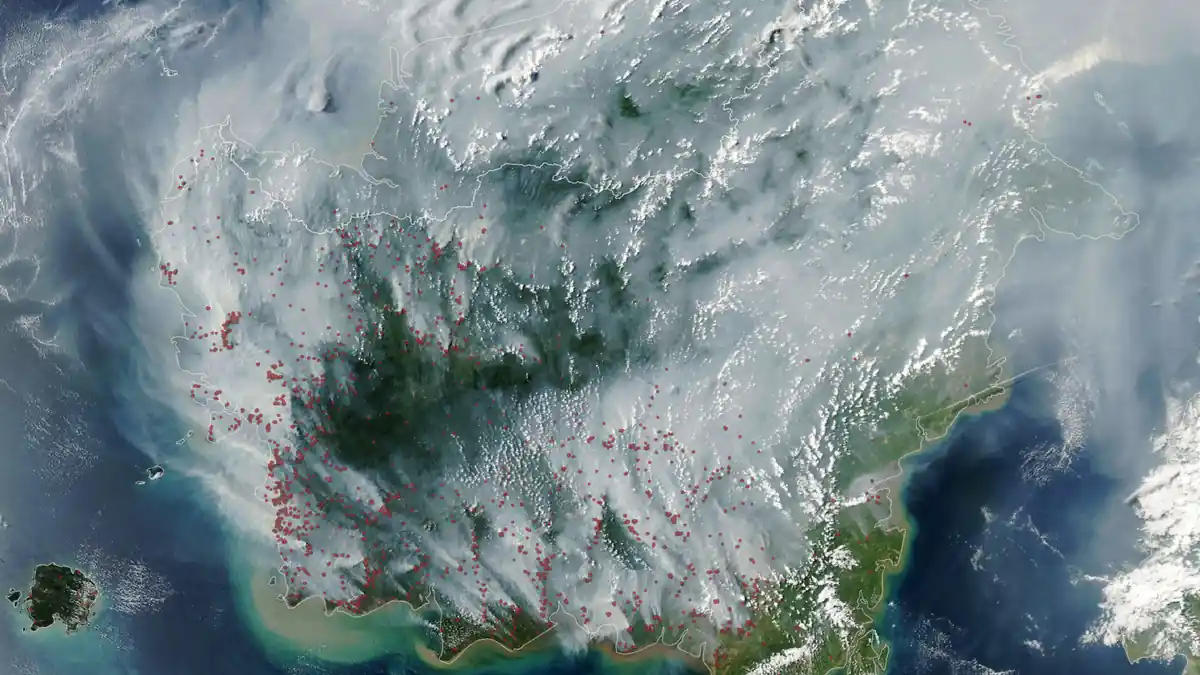
In 2026, smoke from Indonesia’s burning forests blanketed four countries. Roughly 12.5 million people across Indonesia, Malaysia, Singapore, and Timor-Leste breathed haze thick enough to close schools and ground flights in Kalimantan. By November, more than 400,000 respiratory infections had been recorded — a figure still climbing when this study was published.
The question that matters: how much of this was climate change, and how much was weather?
A World Weather Attribution study published 12 November 2026 answers that directly. Its authors are scientists from Indonesia, the US, the Netherlands, Sweden, and the UK.
How much did climate change make Indonesia’s 2026 fires worse? The study found climate change made extreme temperatures several orders of magnitude more likely. It also raised those temperatures by roughly 1.6°C above what pre-industrial conditions would have produced. Dangerous short-term hot-dry conditions became about three times more likely, with intensity rising by approximately 0.4 kPa.
One of Indonesia’s Worst Fire Seasons Since 2015
By September 2026, roughly 1.9 million hectares had burned across Indonesia — one of the worst totals since the catastrophic 2015 season. Fire emissions were approaching that 2015 benchmark by October.
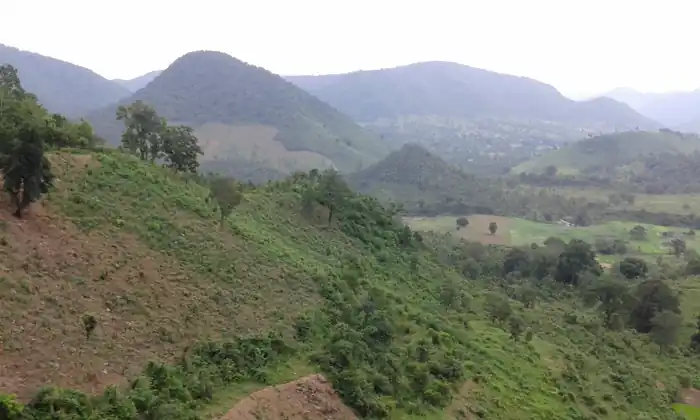
The World Weather Attribution team examined three regions: Borneo, Sumatra, and Java. These cover the country’s most fire-prone landscapes, including Kalimantan’s highest-priority wildfire hotspots, and account for the bulk of emissions. Haze crossed sovereign borders, affecting air quality in Malaysia, Singapore, and the Philippines. Regional flight disruptions and school closures followed.
The scale alone placed this season among Indonesia’s most damaging on record. But scale alone doesn’t explain cause. For that, the researchers broke fire weather into its components — and found two forces working together.
El Niño Started It. Climate Change Made It Worse.
Indonesia’s fire seasons are tightly tied to El Niño, the climate pattern that periodically suppresses rainfall across Southeast Asia. In 2026, El Niño reduced July-to-October rainfall by roughly 50% compared to a neutral climate year. That alone creates severe fire conditions.
Climate change added a separate layer. It pushed seasonal temperatures up by approximately 1.6°C above what pre-industrial conditions would have produced. El Niño contributed a further 0.3°C on top of that — but the larger temperature shift came from long-term warming.
For rainfall, climate change contributed an additional roughly 15% reduction beyond El Niño’s effect. The two forces combined to produce a fire season where a natural weather cycle and human-caused warming were pulling in the same direction simultaneously.
The Metric Most Outlets Won’t Explain: Vapour Pressure Deficit
The study’s most useful fire-risk measure is one most news coverage will skip. Vapour pressure deficit — VPD — is the gap between how much moisture the air can hold and how much it actually holds. When VPD is high, the air is aggressively drying vegetation, soil, and peat.
The researchers measured the annual maximum of a 7-day rolling average of daily maximum VPD. That rolling window captures sustained hot-dry spells — not one hot afternoon, but an extended period of drying that leaves fuel critically vulnerable to ignition.
Climate change made extreme VPD conditions roughly three times more likely and increased their intensity by about 0.4 kPa. El Niño made those conditions roughly five times more likely and added around 0.6 kPa. Combined, the two effects produced fire weather well outside the historical range.
Drained Peatlands: Indonesia’s Self-Loaded Fire Starter
El Niño and climate change explain the weather. Peatland drainage explains why the fires burned as hot and as long as they did.
Indonesia’s peatlands store enormous quantities of carbon built up over thousands of years. When peat swamp forests are drained for agriculture — particularly for palm oil — the carbon-rich peat dries out. Dried peat burns fiercely and smoulders underground long after surface fires appear extinguished.
Peat swamp forest cover in Borneo fell by roughly 45% between 1990 and 2010. In Sumatra, the decline reached approximately 63% over the same period. Across Indonesia as a whole, an additional 1.4 million hectares of forest on peatlands was lost between 2009 and 2019.
The practical effect is more fuel, more accessible to ignition, burning hotter and longer than vegetation fires alone. Canal blocking — reversing drainage by plugging the channels that dry peat — is a documented, scalable mitigation measure. The study points to it as a practical tool for reducing fire susceptibility before the next El Niño cycle arrives.
The Gap in the Models — and Why It Matters
The study contains a finding most coverage will miss. For seasonal rainfall, observations and climate models tell different stories.
Climate models handle El Niño’s rainfall reduction well. They broadly capture El Niño’s strong suppressive effect on rainfall. But the additional roughly 15% rainfall reduction that observational records attribute to human-caused climate change does not appear in the models. That drying trend exists only in real-world data, without model corroboration.
This gap has practical consequences. Standard climate model outputs — used in IPCC-style projections — may be systematically underestimating how dry Indonesia’s fire seasons will become. Future fire-risk forecasts built on these models could be optimistic in a direction that leads to under-preparation.
The researchers are transparent about this uncertainty. It doesn’t invalidate the attribution findings on temperature and VPD, where models and observations agree. But it introduces a credible gap in what forward planners can rely on.
Orangutans, Pangolins, and 400,000 Sick People
The 400,000 respiratory infection figure is a November count, recorded while fires were still burning. The final total will be higher.
Beyond the human health toll, the fire season swept through habitat supporting some of Southeast Asia’s most threatened species. Critically endangered orangutans — already reduced by decades of deforestation — lost more forest to the flames. With habitat gone, they move into plantations and human settlements, escalating human-wildlife conflict and threatening long-term population viability.
On Java, fires damaged habitat used by the Sunda pangolin and the Javan leopard. Both face compounding pressure from other threats. These losses add to a biodiversity burden that accumulates season by season.
A Predictable Crisis — If Decision-Makers Choose to Look
Every degree of warming already locked in makes Indonesia’s fire seasons measurably, compoundingly worse. The increase is not marginal — it is orders of magnitude in the likelihood of extreme heat. The 400,000 respiratory cases and 12.5 million people across four countries choked by 2026’s haze are not a fluke. Climate change and El Niño are now pulling in the same direction at the same time. The dangerous part is that this combination is foreseeable in advance. Failing to prepare now is a policy decision, not an act of nature.
El Niño cycles recur every two to seven years. Each future El Niño now arrives against a warmer baseline. The science can identify when this combination is coming. Canal restoration, early-warning systems, and land management can all be deployed ahead of a known risk window. What 2026 shows is that the gap between what is foreseeable and what gets prepared for remains wide.
What role does El Niño play in Indonesia fire seasons?
El Niño is a recurring Pacific Ocean weather pattern that reduces rainfall across Southeast Asia. During El Niño years, July-to-October rainfall in Indonesia drops by roughly 50%, leaving vegetation and peat far drier and more vulnerable to ignition. Fire seasons in El Niño years are consistently more severe than neutral-year seasons.
Why are peatland fires in Indonesia so harmful to health?
Burning peat produces dense, toxic smoke that travels across borders. Unlike surface fires, peat smoulders underground and is difficult to extinguish, releasing smoke for weeks or months. The haze contains fine particulate matter at concentrations that cause acute respiratory illness, particularly affecting children and older adults.
How many people were affected by Indonesia’s 2026 wildfire smoke?
Approximately 12.5 million people across Indonesia, Malaysia, Singapore, and Timor-Leste were exposed to haze from the 2026 fires. More than 400,000 respiratory infections were recorded by November 2026. That figure is interim — fires continued into October.