Karmactive Team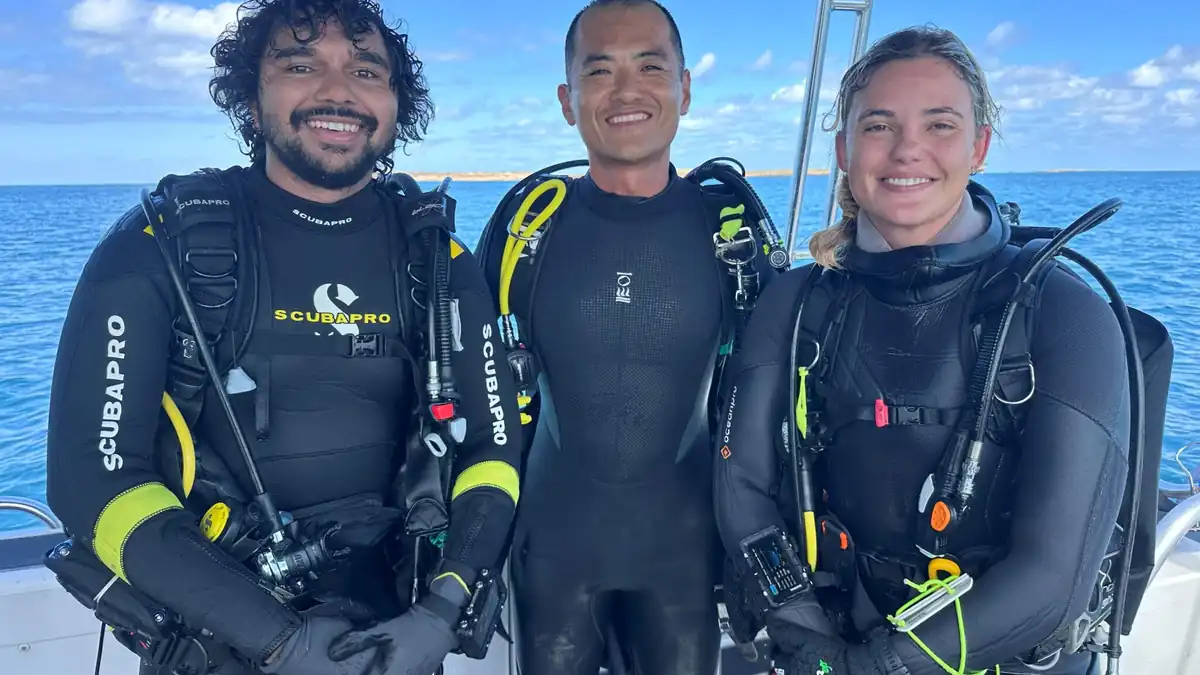
Archaeologists have documented underwater cultural sites in Murujuga Sea Country, in the Dampier Archipelago off Western Australia, according to a study published in the journal Quaternary Science Reviews and a Flinders University release dated 14 October.
Researchers identified two underwater sites containing cultural material from a landscape that is now submerged. Both lie within Murujuga Sea Country.
The work was carried out by researchers from Flinders University, the University of Western Australia, James Cook University and the University of York. They worked alongside the Murujuga Aboriginal Corporation and rangers trained as scientific divers, who took part in the underwater survey.
The two sites were submerged by rising seas at least 9,000 years ago, the study found. Some of the artefacts recorded at the sites may be older still, predating the submergence itself. The 9,000-year figure marks a minimum age for submergence, meaning the sites could have been underwater for longer.
One of the two documented sites sits near what was once a freshwater spring. The other lies near a rocky hill that once overlooked an ancient river channel. The sites are now 11 to 15 metres below sea level, the research team said.
Researchers said some of the stone used for artefacts at the two sites originated in the area around Rosemary Island, about 23 kilometres away. Their survey recorded 21 confirmed stone artefacts across the two sites.
The project combined underwater survey work with geological analysis to place the material within the former coastal landscape.
In practical terms, the findings support the researchers’ call to identify and protect submerged Indigenous cultural heritage more broadly.
The findings add evidence for a broader submerged cultural landscape around Murujuga. The paper was published in Quaternary Science Reviews.
Professor Jonathan Benjamin said the landscapes “did not simply disappear when they were flooded” and continue to preserve evidence of people’s lives, knowledge and connection to place.
The release says the project builds on landmark underwater discoveries reported in 2020 and 2023 by the Deep History of Sea Country team. Murujuga Aboriginal Corporation rangers Malik Churnside and Richard Variakojis carried out scientific-diver surveys and made some of the underwater discoveries described in the study.
Sea levels rose sharply after the last Ice Age, submerging more than two million square kilometres of Australia’s continental shelf, according to the release. Murujuga’s two documented underwater sites sit within that drowned landscape, which researchers said still holds cultural material worth identifying and protecting.