Karmactive Team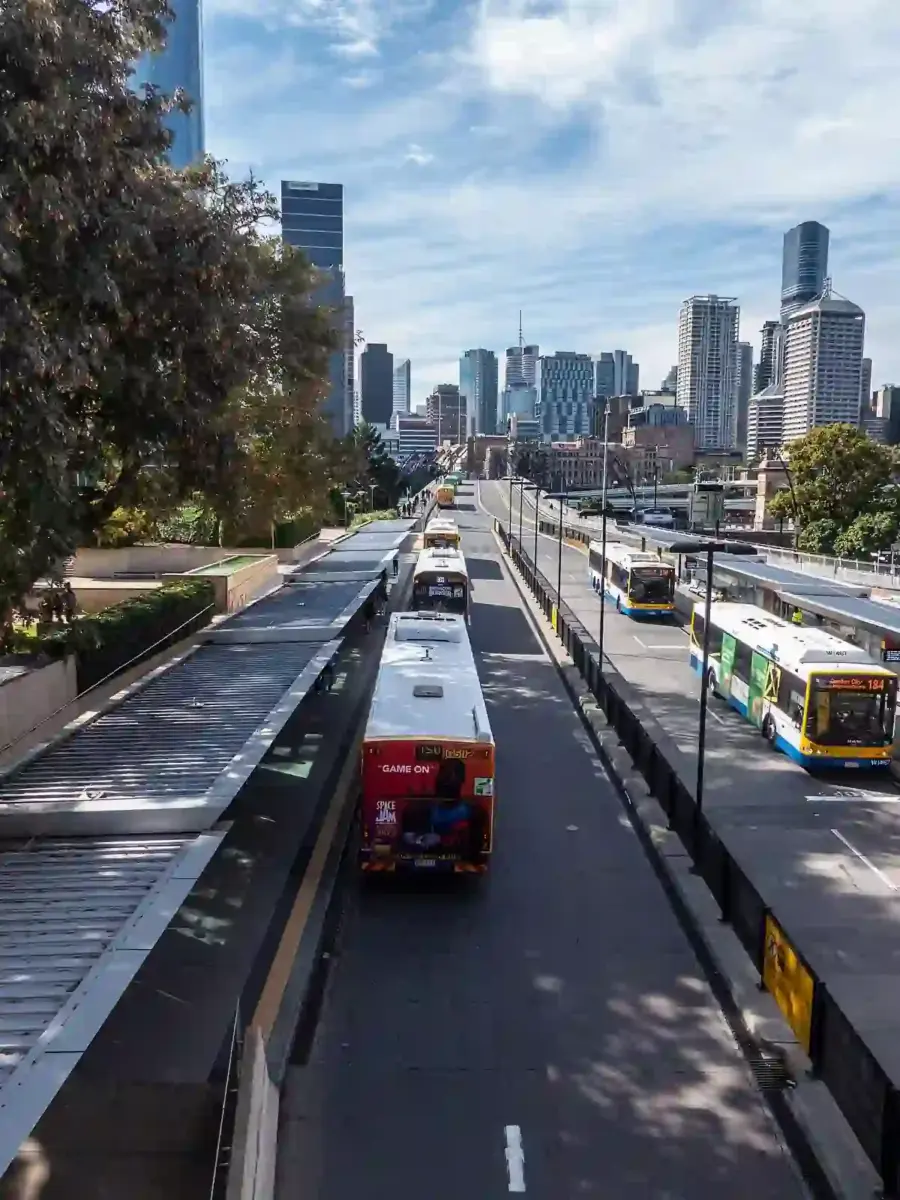
Brisbane residents voted with their wallets when the state government trialed 50-cent public transit fares — patronage climbed across southeast Queensland. The demand was there. The network was not adequate to meet it. Despite $1.55 billion spent on the Brisbane Metro, the city still runs one of Australia’s most congested road networks, and outer-suburban commuters are still waiting up to an hour for a weekend bus.
A 2015 Infrastructure Australia audit projected that southeast Queensland road congestion could cost the region approximately $9 billion per year by 2031, and Brisbane has ranked among Australian cities with the worst road gridlock. The Brisbane Metro project — after major delays — began operating high-capacity articulated electric buses along existing busway corridors. The problem is those corridors are the same grade-separated busways that already existed before the Metro launched. The investment added larger vehicles to a pre-existing bottleneck without adding new network capacity. Only about one-third of Brisbane’s population can access a regular bus service from where they live.
Brisbane residents outside the central business district remain trapped in worsening traffic congestion despite $1.55 billion spent on the Brisbane Metro project. Because the network concentrates routes into a single CBD funnel rather than establishing cross-suburban orbital connections, weekend and off-peak commuters face 30- to 60-minute wait times. The lack of reliable feeder transit forces households to absorb rising fuel and vehicle maintenance costs as southeast Queensland congestion approaches levels forecast in long-term infrastructure planning.
The CBD Funnel No Bus Fleet Can Fix
Brisbane City Councillor Emily Kim (Calamvale Ward), who has made transit reform a central platform, named the structural flaw directly: “For a river city that wants to be a global metropolis, our urban planning is a dysfunctional joke. It starts with the fact that everything is forced into the CBD. Our transit network is a massive funnel. If you want to go across town, you have to go to the city first. It’s why we get those infamous conga lines of idling buses at the Cultural Centre.”
On the Metro itself: “After massive delays and a $1.55 billion price tag, we found out it’s not a subway and it’s not a train. It’s literally just a bendy bus driving on the exact same choked busway we already had.”
The 50-cent fare trial confirmed that reducing price significantly increases patronage — patronage rose across southeast Queensland during the trial period. But for outer-suburban residents, price reduction alone cannot overcome network design. As Kim put it: “The recent 50-cent fares prove that Brisbane residents are desperate to use mass transit. But if you try to catch a bus from Jindalee on a Sunday at 8pm, you’re waiting 30 to 60 minutes. The timetables are strictly built for the corporate 9-to-5 crowd. It is a system actively designed to strand you the second you try to live a normal life outside of work.”
Kim also pointed to 22 consecutive years of LNP city administration under Campbell Newman, Graham Quirk, and Adrian Schrinner as the political context for what she described as “a whole generation of fake metros, billion-dollar road widenings and phantom weekend buses.” The Queensland government’s fare trial generated substantially increased patronage across southeast Queensland, confirming that commuter demand is price-elastic. The geometric problem is that adding throughput to busway spines without creating cross-suburban orbital routes forces outer-suburban residents back into cars for any lateral trip. For anyone tracking Australian public transit investment and southeast Queensland infrastructure spending, Brisbane is a clear case of what $1.55 billion looks like when it buys bus capacity without network connectivity.
The Brisbane Metro is operational and 2032 Olympic infrastructure planning continues. No announced program addresses cross-suburban orbital connectivity for outer-suburban residents. Check back for updates on timetable changes and any Queensland Transport network announcements as the city builds toward its Olympic commitments.