 Sunita Somvanshi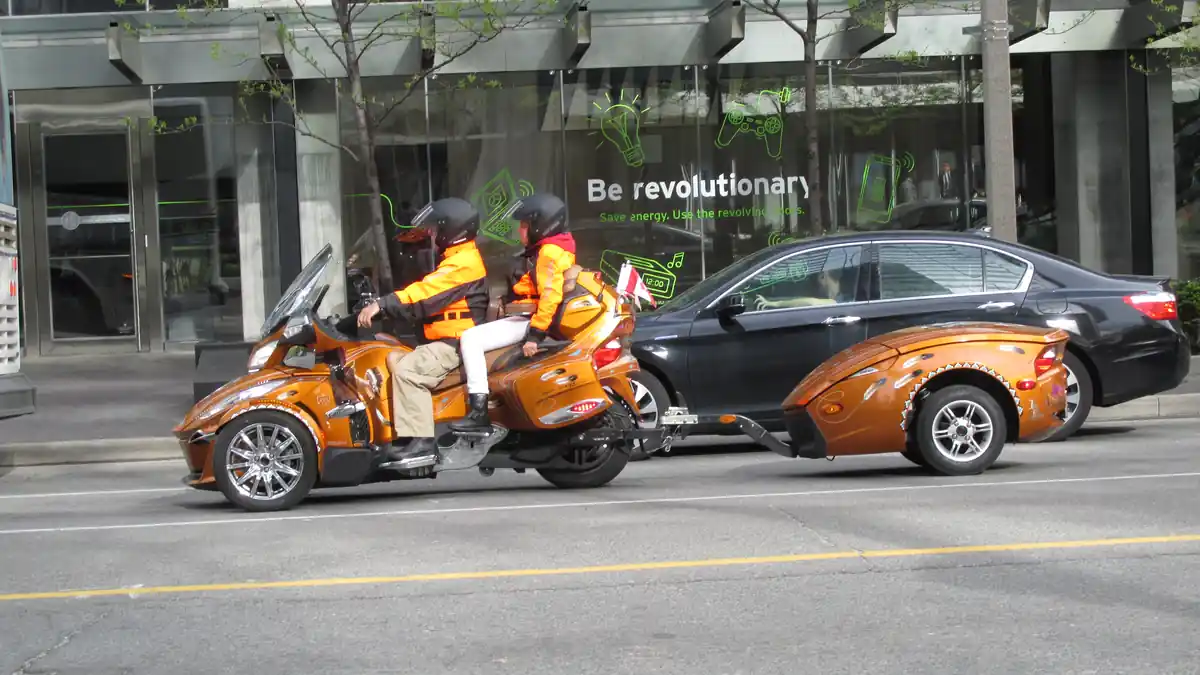
Earlier this month, our coverage of the widening Canada–US trade dispute covered the broad cross-industry picture. One specific consequence has since come into sharper focus: vehicles manufactured by BRP in Valcourt, Quebec — including the Can-Am Spyder and Canyon three-wheelers — are now blocked from US imports. Effective September 29, 2026, a US import restriction covering Canadian motorcycles over 800cc took effect. BRP confirmed that the Spyder and Canyon produced at Valcourt are excluded from US imports from that date.
BRP (Bombardier Recreational Products) assembles the Can-Am Spyder and Canyon three-wheelers at its Valcourt, Quebec facility. The September 29 restriction is part of the broader Canada–US trade confrontation and was introduced as a response to Canada’s 50% tariff on US-made motorcycles over 800cc. The Ryker model, assembled at BRP’s facility in Mexico, is in a different position under the current restrictions. The development means that US dealers will not receive new Valcourt-built Spyder or Canyon units while the restriction remains in place.
Prospective buyers considering a Can-Am Spyder or Canyon should review existing dealer inventory now. Once current dealer stock sells through, new units will not be available through normal US import channels while the restriction stands. US veterans who use these vehicles for adaptive mobility — the three-wheel platform provides stability that standard two-wheel motorcycles do not offer after limb loss, traumatic brain injury, or balance impairment — will be among those most directly affected by reduced availability.
Why the Spyder and Canyon are specifically affected
The Can-Am Spyder and Canyon are built exclusively at BRP’s Valcourt facility in Quebec. The September 29 restriction targeted Canadian-made motorcycles over 800cc as a direct countermeasure to Canada’s trade action on equivalent US-made models. Because production of these specific models is concentrated at a single Canadian facility, there is no alternative supply source that falls outside the restriction.
The impact on US buyers is a supply constraint rather than a price increase on existing inventory: dealers who have Spyder or Canyon units in stock can sell them at pre-restriction prices, but replenishment orders cannot be fulfilled while the ban is in effect. Buyers who have been considering a purchase face a narrowing window of available new units at dealerships.
BRP’s Valcourt plant is one of the company’s primary manufacturing sites in Quebec. The broader Canada–US trade dispute has created uncertainty across the Canadian powersports and manufacturing sector, with the Can-Am situation representing one of the most visible consumer-facing consequences to date.
For US military veterans who use the Spyder or Canyon under VA adaptive mobility provisions, the reduction in supply is a practical concern. The three-wheel configuration is a qualifying adaptive vehicle for veterans with specific mobility needs; availability and pricing will be affected as dealer stock depletes without replenishment.
The current restriction is part of ongoing Canada–US trade negotiations, and its duration depends on the course of those broader talks. Our overview of the VA adaptive vehicle assistance programme covers what the current grant covers and how veterans can explore their purchasing options.
The trade dispute between Canada and the United States continues to develop rapidly. We will update this piece as further official announcements are made regarding the restriction’s scope, duration, or any changes that affect how US buyers can access these models. Veterans currently planning a Can-Am purchase should contact their dealership directly to confirm current inventory status before making financing arrangements.