 Govind Tekale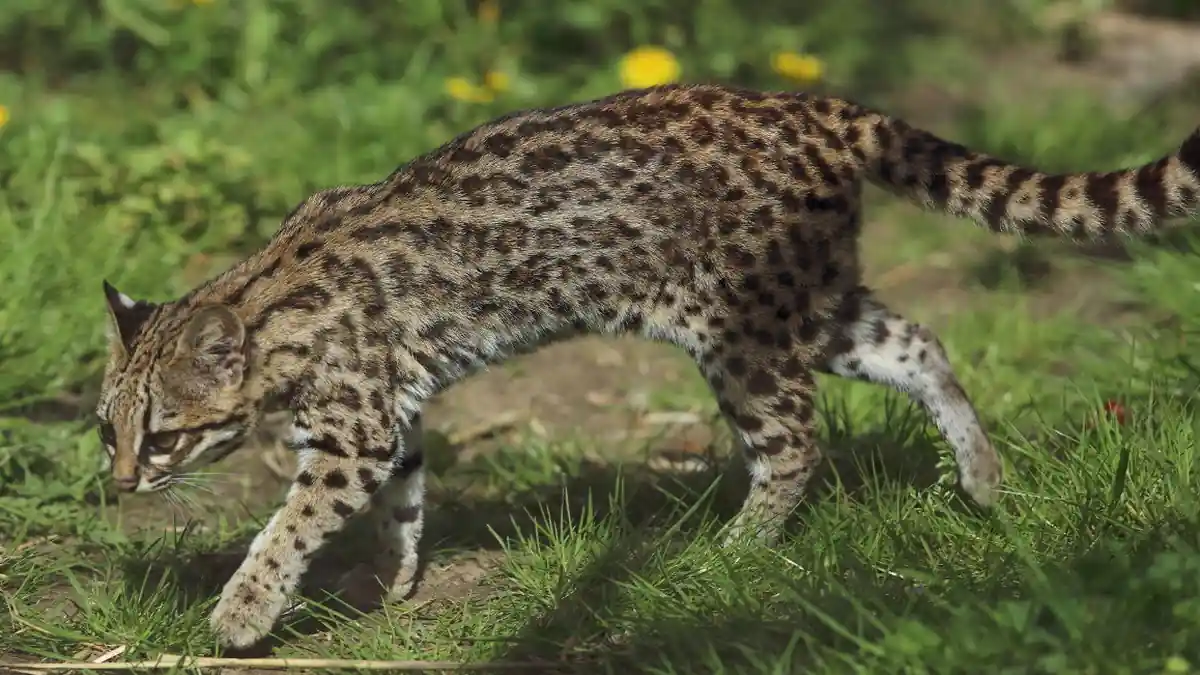
For the first time in more than 100 years, scientists have formally described a living cat species—and its discovery did not come from a dramatic encounter in the wild. It came from museum drawers, decades-old specimens, and modern genetic analysis.
The new species is Leopardus tilcayo, named using the name that local communities in the region use to describe the cat. Researchers published the findings in a study titled “Phylogenomics and museomics reveal five distinct species of tiger cats in South America,” DOI 10.1016/j.cub.2026.08.059, in the journal Current Biology. The paper resolves a long-running scientific disagreement about the tiger-cat group in South America—a cluster of small spotted cats that have been confused with each other for decades because they look similar.
The Tilcayo cat lives in Bolivia’s Yungas—a strip of cloud forest on the eastern slopes of the Andes, where the mountains drop into lowland rainforest. The same research also identified a new subspecies in Peru. The study used both modern genomic sequencing and specimens held in museum collections, some of which had been sitting in storage for decades without anyone recognising what they actually were.
The significance of this finding is not simply that a new cat was spotted. It is that a species was hiding in plain sight in museum collections and in field records, misclassified as a different species because the genetic tools to distinguish them did not exist until recently. For taxonomists and conservation biologists, the distinction matters: a species that is counted as part of a larger, more widespread group appears more secure than one recognised as its own distinct population. Knowing Leopardus tilcayo is a separate species changes how its conservation status can be assessed and whether it qualifies for separate legal protection.
How you resolve a 100-year-old taxonomy question
The tiger-cat group in South America has been a source of confusion for most of modern zoology. What appeared to be a single widespread species—or at most two—turns out to be five distinct species once genetic analysis is applied alongside the physical evidence.
The study used phylogenomics, which analyses thousands of genetic markers across the genome rather than relying on a handful of specific genes. Combined with museomics—the analysis of genetic material from museum specimens—the researchers were able to trace the evolutionary history of tiger cats across the continent using animals that died before the field of molecular biology existed.
The Yungas habitat where Leopardus tilcayo lives is under documented pressure from deforestation and land-use change. Cloud forests in the eastern Andes are among the most biodiverse environments on Earth. The formal recognition of a new species in this habitat adds weight to conservation arguments for protecting the area—but those arguments should be sourced to the actual conservation assessments rather than assumed from the discovery alone. The paper is a taxonomic finding, not a conservation status assessment; that work follows separately.
The researchers have established that Leopardus tilcayo exists as a distinct entity, that it has a specific range, and that previous wildlife surveys and protection strategies may have underestimated its distinctiveness.
What is the Tilcayo cat?
Leopardus tilcayo is a newly described tiger-cat species from Bolivia’s Yungas cloud forests on the eastern Andes slopes. It was formally named in a Current Biology paper published in 2026 and is the first new living cat species formally described in more than a century. The name comes from what local communities call the cat. The research used genomic analysis and museum specimens to distinguish it from other tiger-cat species in South America. The same study also identified a new tiger-cat subspecies in Peru.
The Current Biology paper is the primary record for this species description. Further ecological surveys of the Yungas are expected to follow as researchers work to understand the population size, range, and conservation needs of Leopardus tilcayo more precisely.