 Sunita Somvanshi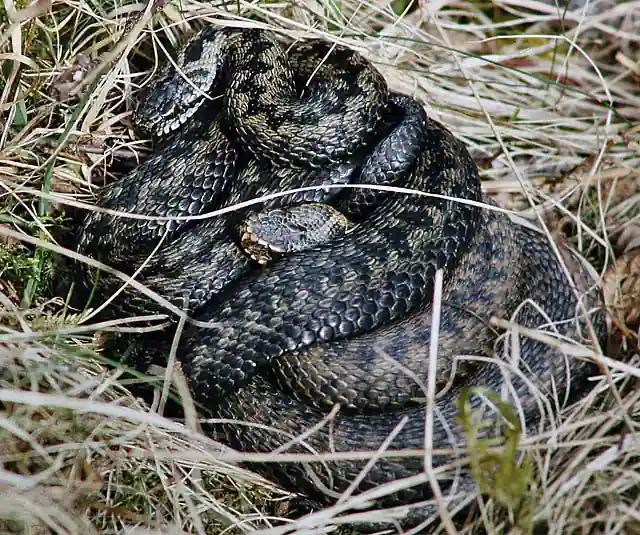
Kenzie Macrae was six years old and playing outdoors in Sutherland, Scotland, when he spotted what he thought was a slow worm — a legless lizard common in the British countryside. He reached out and touched it. It was an adder, Scotland’s only venomous snake, and it bit him on the finger.
What followed was a medical emergency that his family has shared publicly, partly to warn other parents about a risk that most people in the UK do not think about during the warmer months.
What Happened to Kenzie
Kenzie was bitten on his left index finger. The swelling rapidly spread through his hand and past his wrist. He required antivenom treatment. He later developed serum sickness — a reaction that can follow antivenom treatment — but has since recovered.
The story was reported by PEOPLE magazine based on testimony from Kenzie’s family through Kennedy News. The incident occurred in Sutherland, in the Scottish Highlands, an area where adders are present in heathland and grassland habitats during warmer months.
Why This Matters for Parents Across the UK
An adder bite on a young child is not common, but it is a genuine medical emergency when it happens. The key takeaway from Kenzie’s experience is that the animal was not threatening him — he touched it because he genuinely believed it was harmless.
Children who play in fields, grasslands, heathland, or near woodland edges in the UK may encounter adders, particularly between spring and autumn when the snakes are active. The challenge is that slow worms — harmless legless lizards — share similar habitats and can look similar to a child who has not been taught to distinguish them.
The safest lesson from Kenzie’s experience is straightforward: children should not try to touch or identify an unfamiliar snake at close range. Scotland’s adder is venomous but generally elusive, so the goal is not to make children afraid of snakes. It is to teach them to step back, leave the animal alone, and get an adult if they encounter one outdoors.
The Adder: What NatureScot Says
NatureScot, Scotland’s nature conservation agency, identifies the adder (*Vipera berus*) as Scotland’s only native snake and its only venomous snake. Adders are generally elusive and rarely bite people. When bites do occur, they are typically the result of the snake being touched, stood on, or handled — not because the animal is aggressive.
Adders are legally protected in the UK and should not be harmed. The correct response to seeing one is to leave it alone and move away.
Slow Worm vs Adder: The Distinction That Matters
A slow worm (*Anguis fragilis*) is a legless lizard — not a snake — and is completely harmless. It is shiny, usually grey-brown in colour, and moves smoothly. An adder has a distinctive zig-zag pattern along its back, a flatter head, and a more robust body.
For a child who has not been taught to look for those features, both can appear to be a small, shiny, wriggly creature on the ground. Kenzie’s mistake — believing he was touching a slow worm — is entirely understandable. It is also the exact kind of understandable mistake that leads to a bite.
Reports from other wildlife contexts reinforce the same principle: touching or trying to handle unidentified snakes or reptiles is the behaviour most likely to result in a bite. The animal’s instinct when grabbed is to defend itself. For more on snakebite risks and outcomes, see Two Ludhiana Siblings Die 18 Hours Apart After 3 AM Snakebite — The First-Aid Step Families Get Wrong and Snakebites Are Killing India’s Children — And Tradition Is To Blame.
What should you do if a child is bitten by an adder? A suspected adder bite should be treated as a medical emergency. Call emergency services (999 in the UK) or get to a hospital immediately. Keep the child calm and keep the bitten limb as still as possible while waiting for help. Do not cut or suck the wound, tie anything tightly around the limb, or try to catch the snake. Medical professionals will assess whether antivenom is needed.
Are adders dangerous to children? Adder bites are rare but can be serious, particularly in young children and small adults. NatureScot identifies the adder as Scotland’s only venomous snake. Adders are generally elusive and do not seek out human contact. Bites typically occur when a person handles, steps on, or disturbs the animal.
How can you tell an adder from a slow worm? An adder has a distinctive zig-zag pattern running along its back, a triangular head, and a more robust body than a slow worm. A slow worm is a legless lizard — not a snake — and is smooth, shiny, and uniform in colour, usually grey-brown. Slow worms are completely harmless. The safest rule for any child who cannot tell the difference is not to touch either animal.
The Seasonal Reminder
Adders are active in the UK from roughly March through October, with peak activity in spring and early summer. Kenzie has recovered. His family’s decision to share what happened gives other parents a specific, concrete reason to have a conversation with children about what to do — and not do — when they encounter a snake outdoors.