Delhi SIR Audit Says Excluded Voters Beat Winning Margins in 68 Seats, But Draft Roll Is the Key Word

September 10, 2026
1 min read
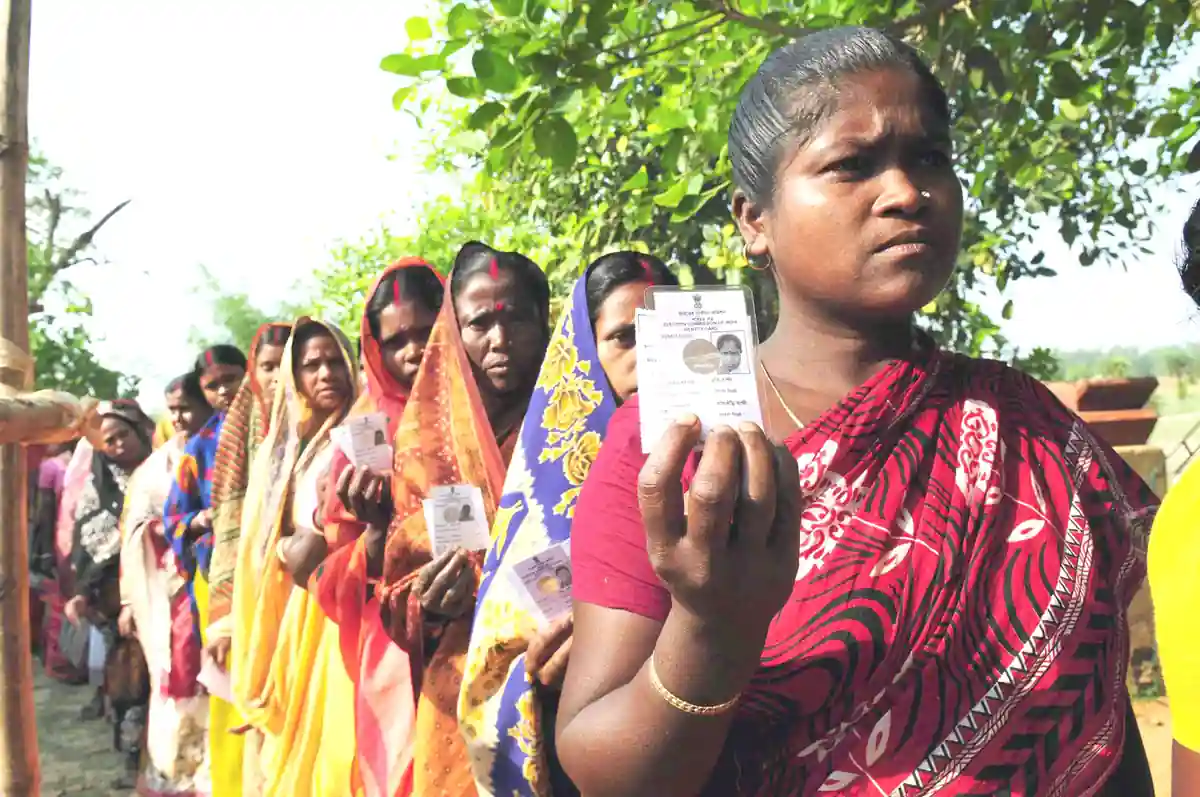
Voters standing in a queue at a polling station in India
Voters queue at an Indian polling station, illustrating the stakes of roll verification. Draft exclusions become personal when a missing name is found at polling time. [Source: Election Commission of India/PIB via Karmactive media library, Government Open Data License India]

A Delhi electoral-roll audit has put one number at the centre of a political dispute: excluded electors in the draft roll exceeded the 2025 winning margin in 68 of Delhi’s 70 Assembly seats. The study was released by Voter Adhikar Manch and Sabar Institute, using records attributed to the Election Commission of India and Delhi’s chief electoral officer.

The reported figures are large. Delhi’s roll had 1,56,14,000 electors on January 31, 2025. By June 30, 2026, when the Special Intensive Revision began, it stood at 1,45,10,299. During the SIR, 47,27,762 electors were marked absent, shifted, dead or duplicate, equal to 32.8 percent of the SIR base.

The strongest caveat is also the most important one. A draft-roll exclusion or ASDD marking is not the same as a final deletion after claims and objections. Voters still need the official claims process and local electoral office route to correct records.

The margin comparison is useful because it gives scale. It does not prove that any constituency result would have changed. It says the number of affected names is larger than the earlier victory gap in most seats.

That distinction matters for voters as much as for parties. Anyone unsure about their name should check the official electoral-roll route rather than relying only on political statements or screenshots.

The article covered the audit’s 68-seat margin comparison, the 47.27 lakh ASDD figure, and the difference between draft-roll marking and final deletion.

Related Karmactive context includes this earlier report, this linked update.
Sunita Somvanshi

With over two decades of dedicated service in the state environmental ministry, this seasoned professional has cultivated a discerning perspective on the intricate interplay between environmental considerations and diverse industries. Sunita is armed with a keen eye for pivotal details, her extensive experience uniquely positions her to offer insightful commentary on topics ranging from business sustainability and global trade's environmental impact to fostering partnerships, optimizing freight and transport for ecological efficiency, and delving into the realms of thermal management, logistics, carbon credits, and energy transition. Through her writing, she not only imparts valuable knowledge but also provides a nuanced understanding of how businesses can harmonize with environmental imperatives, making her a crucial voice in the discourse on sustainable practices and the future of industry.

Leave a Reply

Your email address will not be published.

Students protesting at Jantar Mantar in Delhi, used to illustrate Cockroach Janta Party controversy
Previous Story

Gaurav Bhatia’s ₹2 Crore CJP Suit Turns an AI Graphic Into a Defamation Test

Person holding a smartphone outdoors, used to illustrate AI agents working across apps
Next Story

Meta Muse AI Agent Can Work Across Apps, But the Real Test Is Permission

Latest from India

Misty forest landscape with dense native canopy in the Western Ghats.

Green India Mission Misses Target

Under the 2014 Cabinet-approved Green India Mission programme, 1.4 million hectares was the target for increasing forest cover, alongside another 1.4 million hectares for improving the quality of existing forest cover. An
Wide expanse of Ujani reservoir water on the Bhima River with distant shores and open aquatic habitat.

Ujani Dam Fishermen Water Protest

Hundreds of fishermen waded into the backwaters of Ujani Dam near Palasdev village in Pune’s Indapur taluka on September 5, 2026. The demonstration — called a “Jal Samadhi,” meaning a water-immersion protest
Teesta River flowing through a steep Himalayan valley with forested slopes and rocky riverbanks in Sikkim.

Sikkim Group Urges Hydropower Halt

A community organization in Sikkim has sent a formal petition to Prime Minister Narendra Modi requesting an immediate pause on new hydropower construction in the state and an independent review of existing

Don't Miss