 Rahul Somvanshi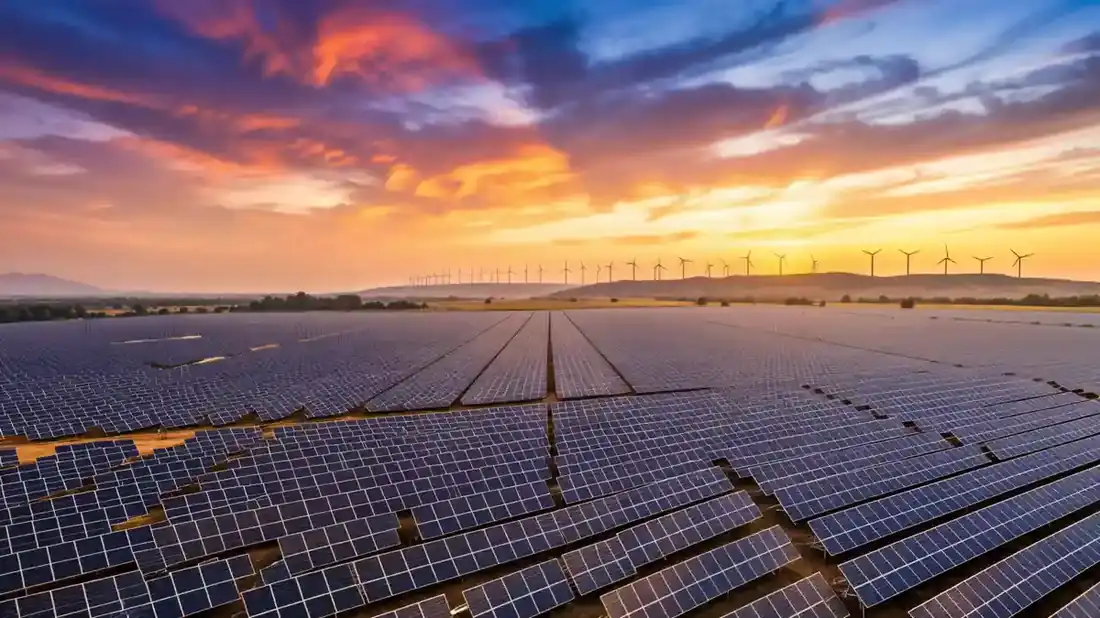
India sustained its clean energy growth trajectory by adding approximately 26 GW of new solar and 2.9 GW of wind capacity during the first half of 2026 (January–June), data released by the Ministry of New and Renewable Energy (MNRE) shows. The additions — representing a 43 percent year-on-year increase in solar installations and a 16 percent decline in wind — brought the country’s cumulative installed renewable energy capacity to about 288 GW by the end of June 2026.
Solar accounted for 56 percent of the total renewable energy mix, followed by wind at 20 percent, large hydro at 18 percent, and smaller contributors including bio-power and small hydropower. Of the new solar capacity, utility-scale projects contributed roughly 19 GW, while distributed and rooftop installations — largely driven by the Pradhan Mantri Suryodaya Ghar: Muft Bijli Yojana%20has%20been%20the%20primary%20rooftop%20driver%20in%20FY2025-26) — added the balance. Gujarat led all states with 7.6 GW of new solar installations, representing 29 percent of the national total, followed by Rajasthan at 6.6 GW and Tamil Nadu at 2 GW.
The figures build on a record-breaking financial year 2025–26, during which India added 55.29 GW of renewable energy capacity — the highest annual addition in the country’s history. As of March 31, 2026, solar alone had reached 150.26 GW of cumulative capacity, with wind at 56.09 GW, according to official MNRE statistics. The country’s total non-fossil capacity stood at 274.68 GW, of which solar constituted roughly 55 percent. Almost half of India’s Silicon Valley is powered by renewable energy, reflecting the broader shift from fossil fuels to clean power across the subcontinent.
JMK Research, which tracks sector data closely, projects that India will add around 47 GW of combined solar and wind capacity during the full calendar year 2026, maintaining the momentum seen in the first half. “It is anticipated that this trend will continue into the second half, keeping India well on track to achieve its target of 500 GW from non-fossil sources by 2030,” the research firm said in its August report. India’s green ambitions aim for 500 GW renewable energy by 2030, and current trajectory suggests the target is achievable.
The surge in solar has been powered by aggressive domestic manufacturing incentives introduced in 2025, which have attracted $2.15 billion in fresh investment commitments. The government’s decision to cut Goods and Services Tax on renewable energy equipment from 12 percent to 5 percent has further stimulated demand for domestic manufacturers. India’s solar module manufacturing capacity has reached 172 GW.
India’s renewable energy expansion has also delivered tangible economic benefits. The PM KUSUM scheme has enabled 22.7 lakh households to install rooftop solar, saving approximately 734.5 million litres of diesel annually by replacing diesel-powered agricultural pumps. Meanwhile, the country’s solar import bill declined by roughly 64 percent — from $2.15 billion to $758 million — between 2023 and 2026, reflecting the success of the domestic manufacturing push.
Third globally in installed renewable energy capacity behind only China and the United States, India’s renewable sector has created over 450,000 direct jobs in manufacturing and installation. Grid stability has improved alongside capacity addition, with renewable energy now accounting for 55 percent of India’s electricity generation — a record share that analysts say demonstrates the feasibility of deep renewable integration even in a rapidly growing economy. This growth aligns with the intersection of economy and environment, where clean energy investments drive both climate and economic returns.
The momentum shows no signs of slowing. With 17 large-scale solar projects auctioned in the June quarter alone and rooftop installations accelerating in urban centers like Ahmedabad, Hyderabad, and Pune, India appears well-positioned to meet or exceed its 47 GW annual target. The challenge now lies in building out the transmission infrastructure needed to carry power from generation sites in Rajasthan and Gujarat to demand centers in the Indo-Gangetic plain and southern states. As global wind and solar power poised for dominance by 2030, India’s positioning in the clean energy transition will determine its competitive edge for decades to come.