 Sunita Somvanshi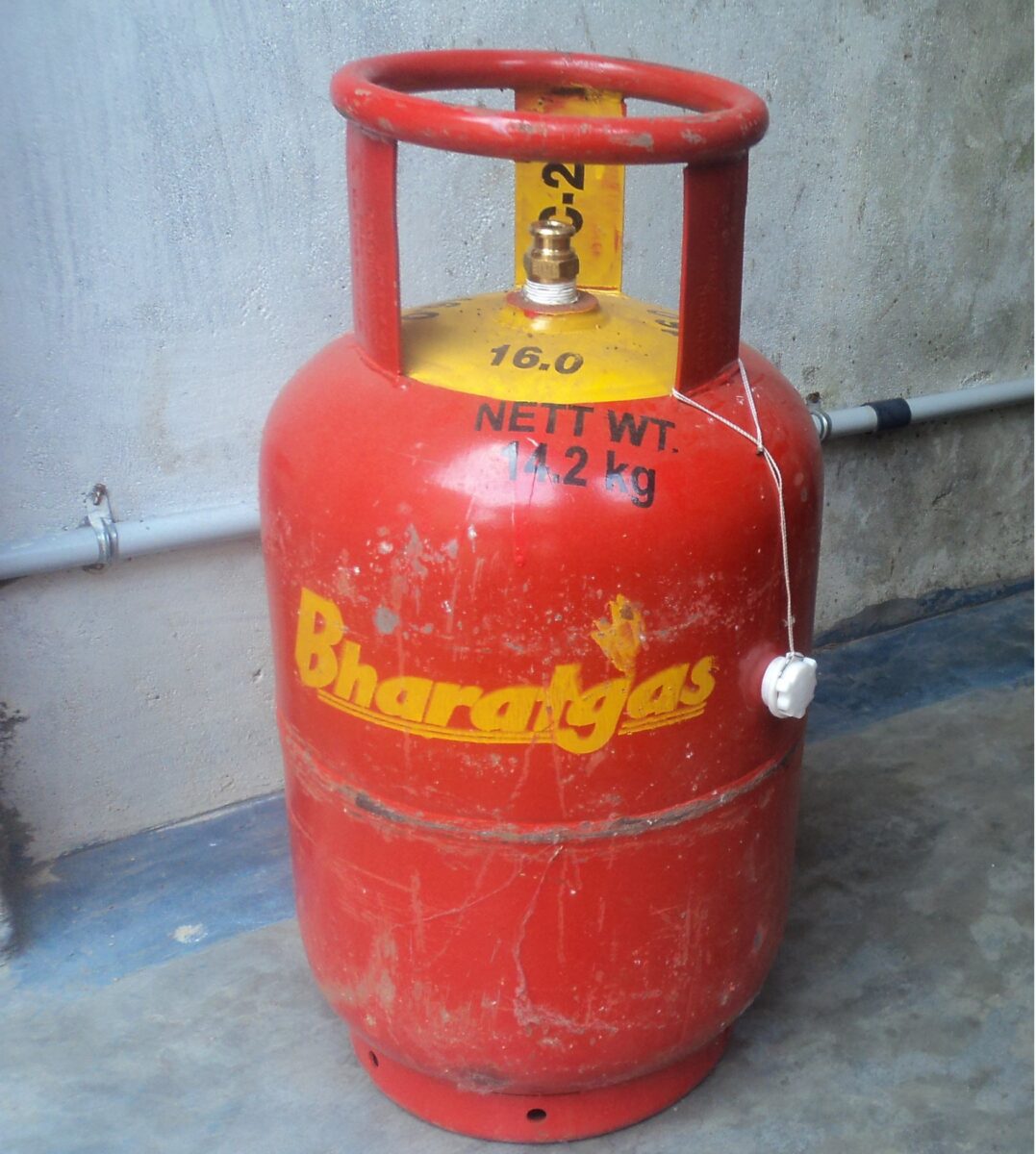

Bharat Gas LPG cylinders await delivery in Tamil Nadu — as the United States became India’s largest LPG supplier at roughly 67 percent of imports, a shift framed by officials as strategic diversification rather than a six-month war panic. Households pay the freight either way. [Photo: Visitor / Wikimedia Commons, CC BY-SA 3.0]
Alt text: LPG gas cylinders branded Bharat Gas in Tamil Nadu, India.
Title: LPG cylinders in Tamil Nadu, India
India’s LPG Imports from U.S. Surge to 67% in 2026
How the Iran War Rewired India's Energy Supply Chain
The United States became India’s largest supplier of liquefied petroleum gas, accounting for roughly 67 percent of imports by mid-2026—a reorientation Petroleum Minister Hardeep Singh Puri described as strategic diversification. The shift gained urgency after the February 28, 2026 Iran war strained the Strait of Hormuz corridor that carries most of India’s West Asian energy supply, though officials frame it as planning, not panic.
In January 2026, U.S. LPG accounted for roughly 10 percent of India’s total LPG import volume. By August 2026, it represented 67 percent. Petroleum Minister Hardeep Singh Puri disclosed the figures in briefings to the media on August 11 and August 7, 2026. The scale of the reorientation is striking. India consumes LPG for heating, cooking, and industrial use across urban and rural areas. Households depend on LPG cylinders for cooking fuel. A supply shock could ripple across the entire economy.
As West Asian supply through Hormuz grew uncertain, India moved to secure alternative volumes. U.S. exporters had available production and export capacity. American LPG shipments increased rapidly to fill the void. By mid-2026, India had negotiated supply arrangements with U.S. producers and secured port throughput capacity.
Indian importers accepted the U.S. product at a premium because scarcity forced acceptance, though the landed cost of American LPG is higher than West Asian supply once freight is included. The Hindu and NDTV Profit documented the supply-chain reorientation, while CNBC analyzed the strategic implications.
India simultaneously imports roughly 60% of its LNG (liquefied natural gas) through the same Hormuz corridor. While this story focuses on LPG, the LNG disruption was equally serious. If the Iran war had extended to a blockade of the Strait—a scenario discussed but not ultimately executed—India’s energy systems would have faced catastrophic shortages. The fact that India pivoted to U.S. LPG so quickly suggests contingency planning was already underway, possibly in anticipation of escalation.
The supply-chain reorientation raises strategic questions. Does India now have an alternative to Middle Eastern LPG that it can access in future disruptions? Yes—but at higher cost and with shipping lead times that preclude rapid emergency supplies. A second disruption would not yield the same rapid pivot. Will India seek to diversify its LPG sources away from the United States to reduce dependence on any single exporter? Likely, but options are limited. India may be compelled to live with elevated costs and Hormuz-dependent supply for the foreseeable future. The broader context of global energy security challenges underscores this fragility, while innovations like carbon capture technologies remain central to long-term energy transitions.