 Rahul Somvanshi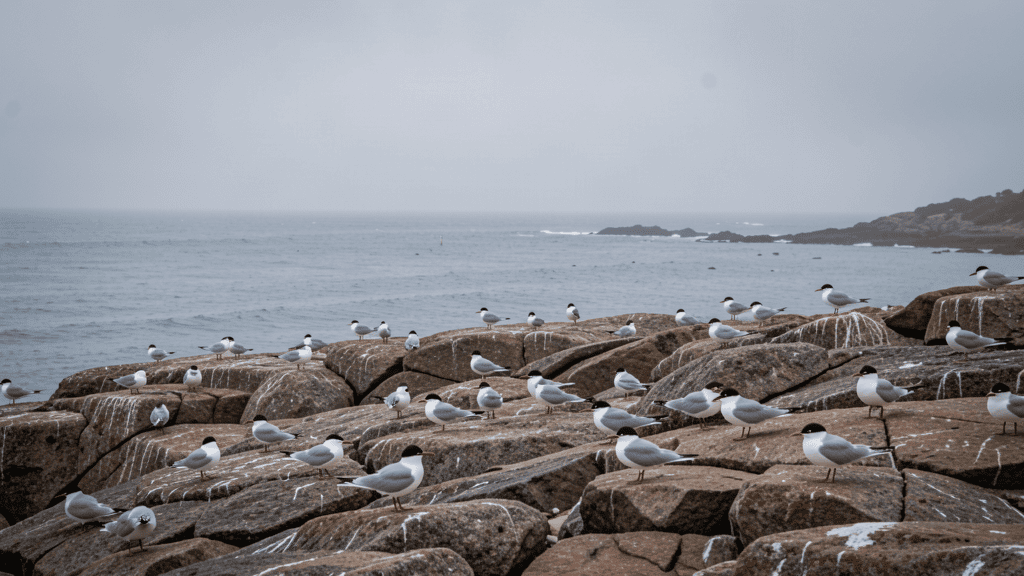
Australia’s status as the world’s sole continent free from H5N1 bird flu has ended. Australia’s Agriculture Minister Julie Collins confirmed on August 3, 2026, that testing has confirmed H5N1 bird flu in a group of 49 dead and 35 sick greater crested terns discovered by helicopter surveillance on rocks off Cape Jaffa, 250 kilometres south of Adelaide. The detection marks the first time this highly pathogenic virus has been found on the Australian continent, ending a period of geographic isolation that has protected the nation’s agricultural industry for years.
The First Australian Detection
Authorities discovered the affected seabirds during aerial surveillance operations on Friday, with testing completed over the weekend. The species—greater crested terns—are marine birds that inhabit coastal regions and feed on fish. The mass mortality event constitutes the first documented outbreak of H5N1 in wild birds on Australian territory, though Australia recorded a single human case in 2024 when a returned traveller contracted the virus while visiting India.
The clade identified is 2.3.4.4b, the same variant currently spreading globally and causing significant morbidity and mortality across continents. This particular clade arose in 2020 and spread rapidly across the world, infecting bird species that previously weren’t major carriers of H5N1.
The Global Context
To understand Australia’s concern, the global scale of H5N1’s current spread provides essential context. The World Health Organization describes the current situation as a “panzootic”—a global pandemic in animals, not a pandemic in humans, but an animal pandemic of unprecedented scale. The World Organisation for Animal Health has recorded over 1,507 highly pathogenic avian influenza outbreaks in poultry alone between October 2025 and May 2026, with roughly 2.16 million birds dying or being culled in May 2026 alone.
The virus has jumped species barriers in alarming ways. The CDC reports H5N1 infection in more than 1,000 dairy herds across 17–19 U.S. states since 2024. Additional cases have been documented in bears, foxes, coyotes, seals, dolphins, and pigs. The Netherlands reported its first cattle case outside North America in early 2026. The WHO confirms 993 human H5N1 cases across 25 countries since 2003, with 477 deaths—a case-fatality rate near 48%.
Why Australia’s Detection Matters
Australia’s agricultural industry has operated under the assumption of H5N1-free status. The nation’s poultry sector, while relatively small compared to global producers, values this disease-free status for trade purposes. Detection of H5N1 in wild seabirds introduces the possibility of virus introduction into commercial poultry operations, though biosecurity protocols have been in place since the global outbreak became apparent.
Australian farms have instituted lockdown procedures to protect poultry flocks since H5N1 was first detected in June 2026 in Western Australia (a brown skua found at Cape Le Grand National Park, approximately 700 kilometres from Perth). The discovery off South Australia’s coast represents the first documented mass mortality event in Australian wild birds.
Australia’s disease control authorities note that risk to humans remains low. The virus does not easily infect people. Most human cases have occurred among agricultural workers with direct contact with infected animals—particularly dairy farm workers in the United States, where the virus concentrated in mammary glands and spread via untreated milk.
Transmission Routes and Human Risk
Human-to-human transmission has not yet been observed, though scientists remain vigilant for mutations that could change viral properties. The CDC emphasizes that infection risk increases with direct contact with infected birds or animals, particularly without appropriate personal protective equipment. Poultry workers, game handlers, and veterinarians face elevated risk.
The WHO notes that among documented human cases, most recent infections in the United States have been mild, though a small number developed severe disease. Australia’s first case in 2024 recovered fully without requiring hospitalization.
Likely Spread Patterns
Australian authorities warn that H5N1 will likely spread further. Seabird migration patterns, particularly for species that congregate on coasts and islands, create pathways for virus dispersal. Neighbouring state Victoria already reports at least six suspect cases in crested terns, with preliminary testing showing positive results at the state laboratory.
Environmental surveillance will increase. The Agriculture Department is coordinating with state authorities to test wild bird populations systematically, particularly at sites showing mortality clusters.
Pandemic Potential and Scientific Concern
Despite current low human risk, scientists remain concerned about pandemic potential. The World Health Organization monitors mutation rates carefully. Each infected animal represents another opportunity for the virus to evolve. Recent research documents that with each generation of virus replication across millions of animals, the statistical probability of mutations enabling easier human-to-human transmission increases.
A virologist at the University of Glasgow noted in early 2026 that the virus is “raging around the world, and there is no feasible containment method other than just watching it infect huge populations of animals.” The more animals it infects, the more chances it has to adapt.
Historical Precedent
This situation parallels earlier zoonotic spillover events that triggered human pandemics. The World Health Organization traces COVID-19 to initial animal-to-human transmission, as was Ebola. The CDC documents numerous examples where animal viruses crossed into human populations, sometimes with catastrophic consequences.
Response and Monitoring
Australia’s disease control authorities have implemented enhanced surveillance protocols. Agricultural workers and veterinarians are advised to use appropriate protective equipment when handling wild or domestic birds. The Department of Health maintains active monitoring systems for any human cases.
The WHO emphasizes that current risk to the general Australian public remains low. H5N1 is still primarily a bird virus. Person-to-person transmission has not yet been documented. Infection requires direct contact with infected animals or contaminated environments.
Looking Forward
Australia’s health and agricultural authorities face a new reality: H5N1 is now present on the continent. Ongoing surveillance will document the virus’s spread through wild bird populations. Disease control authorities will monitor for any spillover to commercial poultry or other mammals.
The global scientific community watches Australia closely. How an island continent isolated from H5N1 for years manages the virus’s arrival offers valuable lessons for pandemic preparedness. The World Health Organization continues coordination of international surveillance and response efforts as the animal pandemic continues its global spread.