 Sonali Tiwary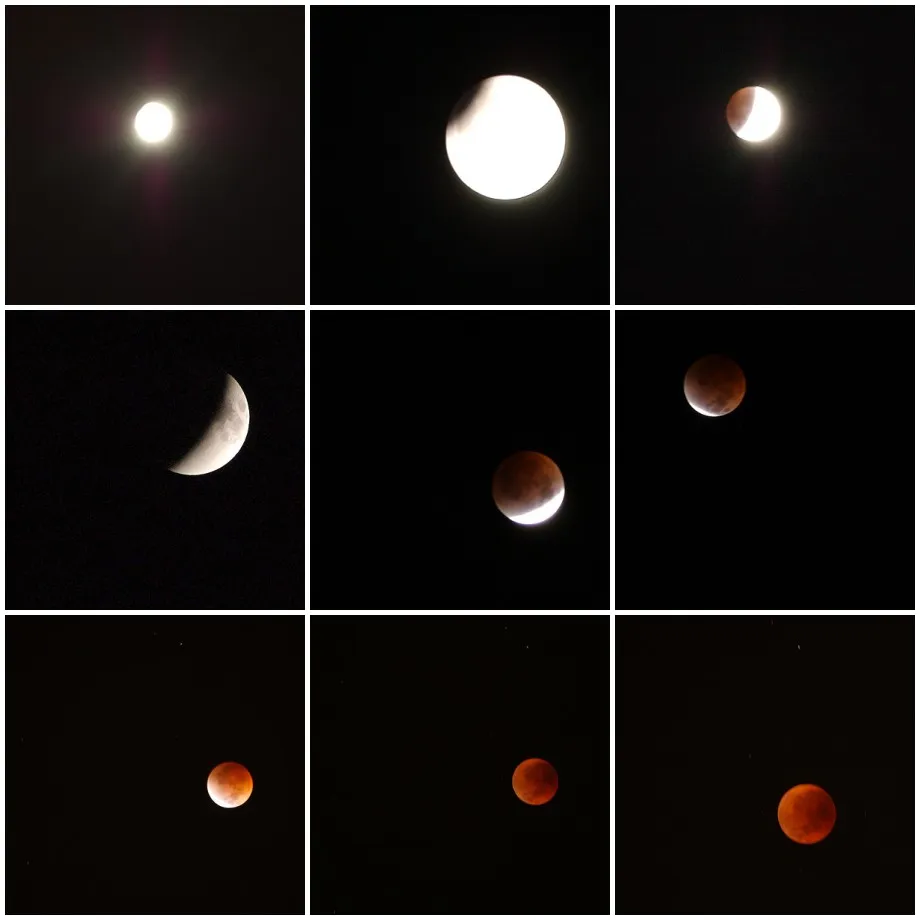
An unusual astronomical event is happening this month, but Indian readers won’t be able to see it. On August 27–28, 2026, a significant partial lunar eclipse will occur. The eclipse will not be visible from India.
During maximum eclipse on August 28, 2026, at 04:12 UTC, the Moon will enter Earth’s shadow at a deep umbral magnitude of 0.9299, with approximately 96.2 percent of the Moon’s visible disk immersed in Earth’s dark umbral shadow. The visibility zone covers North America, South America, Western Europe, and West Africa.
This is specifically a partial eclipse, not a total one. The distinction directly affects what viewers see. With approximately 96.2 percent of the Moon’s visible disk in Earth’s dark shadow, the remaining thin edge will remain directly illuminated by sunlight.
The visual appearance occurs due to physics. Light passing through Earth’s atmosphere gets scattered and filtered toward the Moon’s surface, creating a reddish tint on the eclipsed portion. The majority of the visible Moon will appear coppery-red while a thin crescent remains bright white.
The eclipse will last approximately five hours and 38 minutes total. The sequence follows a specific progression: the penumbral phase begins (barely visible shadow), the partial phase becomes noticeable, maximum eclipse occurs, then reverses through identical phases in reverse order.
For observers in visibility zones like the Americas and Europe, this represents a significant astronomical opportunity. Unlike solar eclipses, lunar eclipses require no special eye protection. The human eye can safely observe the entire event. Binoculars or telescopes enhance detail but aren’t necessary.
The eclipse is part of Saros Series 138, a series of eclipses with cycles of approximately 18 years with additional shifts in date and timing characteristics. This particular event will be notable for its deep partial coverage.
Understanding why India won’t see this eclipse involves basic geometry. During the eclipse’s observable phases, the Moon will be positioned below the horizon for viewers in South Asia. Moon visibility depends on geographic location and precise timing. This eclipse simply occurs when the Moon isn’t in the sky above India.
This reflects a fundamental truth about celestial events: they’re not visible from everywhere simultaneously. For skywatchers in the Americas, Europe, and Africa, August 27–28 presents an opportunity to observe a deep partial lunar eclipse.