Karmactive Team
 Rahul Somvanshi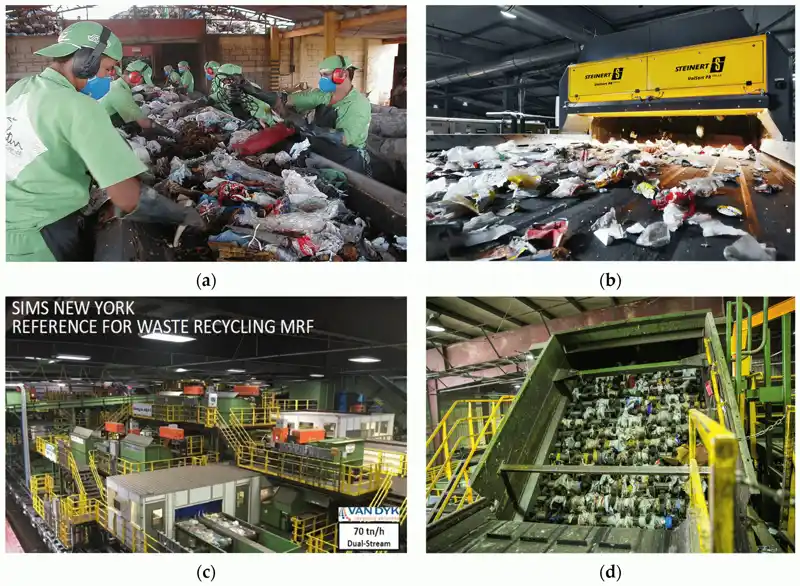
Two laboratories, two entirely different approaches, and both backed by the U.S. Department of Energy. In early 2026, researchers announced breakthroughs that attack plastic waste from opposite directions — one using cheap molten salts to turn polyethylene into gasoline-grade fuel, the other using AI-designed enzymes to break down PET bottles. Neither is a distant promise. Both are producing lab results now.
At Oak Ridge National Laboratory in Tennessee, a team led by scientist Zhenzhen Yang has demonstrated that a mixture of commercially available inorganic salts containing aluminum chloride can convert polyethylene — the plastic in shopping bags and cutting boards — into gasoline-like and diesel-like fuels. The process operates below 200 degrees Celsius, well below the 450 to 500 degrees required by conventional thermal pyrolysis. The yield runs at roughly 60 percent gasoline-range hydrocarbons.
What makes the result notable is more than the temperature. It is the simplicity. Yang put it directly: “This is the first time molten salts have been used to produce high-value chemicals from waste without a catalytic initiator or solvent.” No precious-metal catalysts, no exotic solvents, no multi-step purification. The feedstock goes in; the salts do the work; the fuel comes out.
The ORNL research was published in the Journal of the American Chemical Society, volume 147, issue 19 (2025), and announced publicly on April 8, 2026 through the laboratory’s news office. The Department of Energy funded the work as part of its broader plastics-recycling portfolio. Yang’s co-authors include Sheng Dai, an ORNL Corporate Fellow, and Liqi Qiu, a postdoctoral researcher at the University of Tennessee, Knoxville, along with multiple other collaborators.
The limits no one hides
Polyethylene is one of the most common plastics on earth, but it is also one of the simplest chemically. The ORNL system has so far been tested on pure polyethylene only. Mixed plastic streams — the contaminated, multilayered, multi-resin bales that recycling facilities actually receive — have not been tested. Aluminum chloride is corrosive and hygroscopic, which creates engineering challenges at scale. Catalyst longevity, reuse cycles, and replacement cost remain undocumented.
The energy balance is another open question. Heating salts to reaction temperature consumes energy, and the regeneration step requires additional input. Whether the fuel produced contains more energy than was used to make it — the fundamental metric for any conversion process — has not been publicly quantified.
The ORNL team has not announced a pilot plant or a commercialization partner. The path from the April 2026 announcement to a working facility is likely measured in years, not months. The economics depend on oil prices, regulatory pressure on landfills, and the cost of competing recycling methods.
Parallel paths
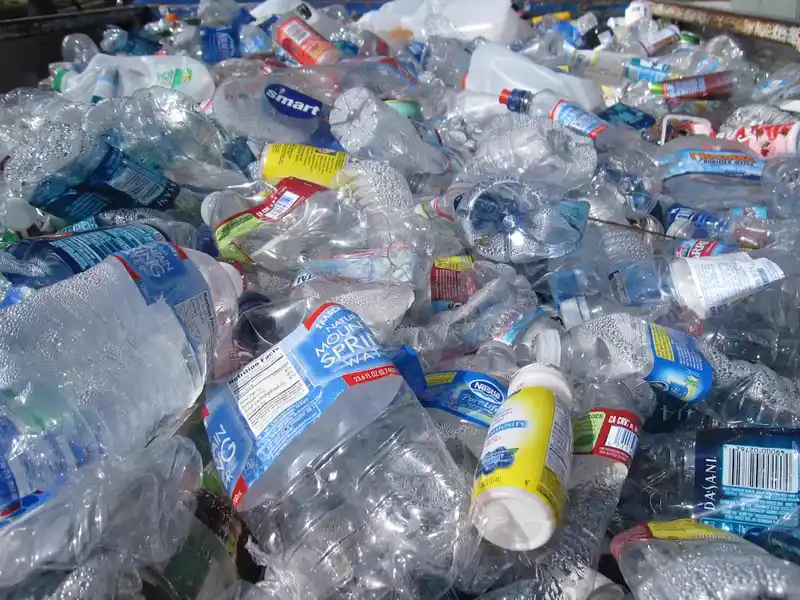
The molten salt approach targets polyethylene. A separate line of research targets PET — the plastic in beverage bottles — using entirely different chemistry. Department of Energy-funded programs have employed AI-designed enzymes to break PET down into its raw monomers for reuse. That work operates at biological temperatures and produces pure feedstock for new PET production, closing the loop that thermal methods cannot.
Mechanical recycling — melting and remolding plastic — works for clean, single-resin streams but degrades polymer quality with each cycle. Chemical recycling breaks polymers back into monomers or fuels, theoretically infinite. The challenge has always been cost and energy. The 2026 results from ORNL and from AI-enzyme labs suggest that both obstacles are beginning to yield.
The scale problem
Every breakthrough in chemical recycling faces the same wall: scale. Laboratory demonstrations produce grams or kilograms. Industrial facilities process tons per hour. The engineering step — designing a continuous-flow reactor, managing heat transfer through molten salts, handling corrosive materials safely — is where promising research most often stalls.
The global plastic waste problem is large. The U.S. Department of Energy funds chemical recycling research as part of its broader waste portfolio. Global plastic production reaches hundreds of millions of tons annually. Recycling rates remain low for most plastic types.
What the 2026 results actually prove
What the ORNL results do provide is proof that cheap, abundant catalysts can crack plastics at lower temperatures than previously thought possible. That proof is not trivial. It shifts the boundary of what engineers consider feasible and gives policymakers a new data point when evaluating waste-to-fuel programs.
The 60 percent gasoline-range yield, achieved below 200 degrees with no precious metals, is a genuine advance over earlier thermal and catalytic methods. Whether it translates into an economical industrial process depends on answers the current research does not yet provide: mixed-plastic tolerance, energy balance, catalyst lifetime, and reactor engineering.
Those answers will come from follow-up work. If ORNL and similar labs can close the scale gap, the 2026 announcements may look less like incremental research and more like the beginning of a practical alternative to landfilling plastic.
Sources: ORNL.gov news; Journal of the American Chemical Society Vol. 147 Issue 19 (2025); Plastics Today; Lawrence Berkeley National Lab.