 Rahul Somvanshi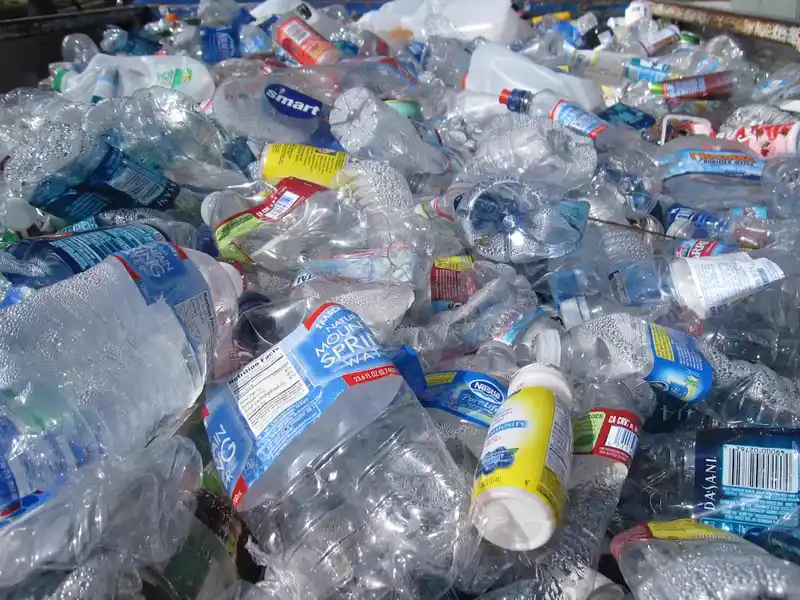
The European Union’s Circular Economy Act, due for adoption in 2026, targets something that sounds almost too ambitious to be real: doubling the bloc’s circularity rate from 12.2% to 24% by 2030. But the economic engine driving this isn’t abstract sustainability theater — it’s jobs, and a lot of them.
Between 2014 and 2023, the number of jobs linked to the circular economy in the EU-27 grew by 10% to around 4.4 million, according to Eurostat data cited in the European Environment Agency’s April 2026 briefing on just transition (published April 20, 2026; modified August 7, 2026). That’s 4.4 million people already working in manufacturing, repair, remanufacturing, waste management, and recycling across the continent. The EU’s Clean Industrial Deal, positioned alongside the Competitiveness Compass, estimates that Europe’s remanufacturing market alone has the potential to grow from its current value of EUR 31 billion to EUR 100 billion by 2030, creating 500,000 new jobs.
Those numbers reframe the entire conversation. Circular economy policy is usually pitched as environmental regulation — reduce waste, recycle more, consume less. The EEA’s framing, published in its “Just transition to a circular economy” briefing, flips that: this is workforce policy, competitiveness policy, and economic security policy rolled into one.
The August 2026 packaging rules taking effect right now give the Act a timely anchor. New EU regulations require all packaging on the EU market to be recyclable in an economically viable way by 2030, and they safely increase the use of recycled plastics in packaging. These rules don’t wait for the Circular Economy Act to pass — they’re already in force. The Act is the legislative scaffold that knits these requirements into a coherent market signal across member states.
## What the Circular Economy Act Actually Does
The CEA aims to establish a genuine Single Market for secondary raw materials. Right now, recycling standards and recycled-content rules vary across EU member states, making cross-border circulation of secondary materials economically irrational in many cases. The Act intends to fix that — creating common rules for circular solutions across the European single market, increasing the supply of high-quality recycled materials, and stimulating demand for those materials.
The Ecodesign for Sustainable Products Regulation pushes durability and repairability — a response to findings that 96% of products lack repair rights (https://www.karmactive.com/96-of-products-lack-repair-rights-eu-directive-pledges-change-by-2026-but-can-it-deliver/). The Packaging and Packaging Waste Regulation (PPWR) now enforces packaging recyclability, building on recent moves like the EU’s ban on destroying unsold clothes from July 2026 (https://www.karmactive.com/eu-espr-unsold-clothes-destruction-ban-july-2026/).
The Ellen MacArthur Foundation has called the CEA “a critical opportunity” to establish those common rules (https://www.ellenmacarthurfoundation.org/eu-circular-economy-act). Recycling Europe, in a joint letter, put the same point more bluntly: supply-side policy — making circularity technically possible — is useless without demand-side rules that guarantee markets for recycled content (https://recyclingeurope.org/publication/joint-letter-putting-demand-for-recycled-materials-at-the-heart-of-the-circular-economy-act/). In other words, you can build the recycling infrastructure, but if nobody’s required to buy what it produces, the system stalls.
## Business Is Already Pushing for This
On May 6, 2026, Forbes reported that major companies were calling on the EU to “deliver a strong Circular Economy Act,” citing the need for uniform standards across member states (https://www.forbes.com/sites/jamiehailstone/2026/05/06/businesses-call-on-the-eu-to-deliver-a-strong-circular-economy-act/). Businesses want regulatory certainty — they can’t invest in recycling infrastructure or redesign packaging for circularity if the rules keep changing depending on which side of a border they’re operating on.
The economic stakes are substantial. The CEA’s goal of doubling the circularity rate from 12.2% to 24% by 2030 isn’t just an environmental target — it’s a competitiveness target. Europe’s dependence on imported virgin resources makes supply chains vulnerable; a functioning market for secondary raw materials reduces that exposure. The European Commission’s own description of the Regulation notes it “will help secure a more stable supply of secondary raw materials, reducing Europe’s dependence on imported virgin resources” (https://environment.ec.europa.eu/strategy/circular-economy_en#:~:text=The%20Regulation%20will%20help%20secure%20a%20more%20stable%20supply%20of%20secondary%20raw%20materials).
## The Justice Dimension Nobody’s Talking About
The EEA’s just transition briefing brings three dimensions of justice into the circular economy conversation — a frame that most coverage misses entirely.
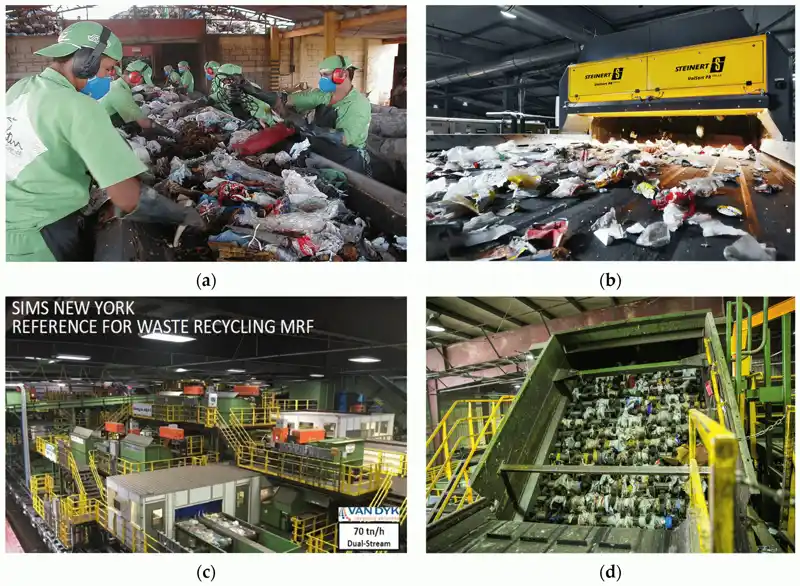
Distributional justice asks who benefits from new jobs and who bears the burden of plant closures as production models shift. Procedural justice concerns who participates meaningfully in decision-making — whether workers, communities, and affected groups have a real voice in how circular economy policies are designed and implemented. Recognitional justice recognizes the knowledge and contributions of informal workers; an estimated 11 million people worldwide work as informal waste pickers and recyclers, yet they remain largely invisible in decision-making frameworks and social protection systems (https://www.eea.europa.eu/en/analysis/publications/just-transition-to-a-circular-economy#:~:text=There%20are%20an%20estimated%2011%20million%20people%20worldwide%20working%20as%20informal%20waste%20pickers).
Women constitute 26% of the circular employment workforce, according to Circle Economy, ILO, and World Bank Group data from 2025. That’s both an underrepresentation problem and an opportunity — the transition could either widen existing gender gaps or close them, depending on how it’s designed.
Globally, a new baseline reveals that 121-142 million people are employed in the circular economy, corresponding to 5-5.8% of total employment worldwide excluding agriculture. Europe’s 4.4 million — projected to reach 4.9 million — is part of a much larger global shift, but the EU’s policy clarity could make its approach a model for just transition elsewhere.
The briefing also flags a tension worth watching: in globalized value chains, job gains in one region may coincide with losses in another. In the apparel industry, for example, EU circular economy policies could create jobs related to reuse, repair, and recycling in the EU but displace production jobs in countries such as Bangladesh, Cambodia, and India (https://www.eea.europa.eu/en/analysis/publications/just-transition-to-a-circular-economy#:~:text=In%20the%20apparel%20industry%2C%20for%20example%2C%20EU%20circular%20economy%20policies%20could%20create%20jobs). High-quality circular jobs in management, design, and innovation demand advanced qualifications, while jobs in waste collection, sorting, and repair require manual skills and few formal qualifications — raising questions about job quality and career trajectories.
## Why This Matters Beyond Brussels
The Circular Economy Act matters because it attempts to solve a problem that environmental regulation alone hasn’t fixed: making circular materials economically competitive with virgin resources. Recycling a plastic bottle is technically possible; making recycled plastic cost-competitive with newly produced plastic requires economies of scale, consistent quality standards, and guaranteed demand. The CEA is an attempt to provide all three. Recent EU moves toward replaceable smartphone batteries by 2027 (https://www.karmactive.com/eu-mandates-replaceable-smartphone-batteries-by-2027-to-achieve-a-73-recycling-rate-by-2030/) and closed-loop recycling standards like the Phoenix EV’s 75% reuse target (https://www.karmactive.com/how-phoenix-ev-boosts-recyclability-4x-setting-a-75-reuse-standard-for-eus-circular-economy/) show the direction of travel.
The packaging rules effective August 2026 are the first checkpoint — can the EU actually make all packaging recyclable in an economically viable way by 2030? The CEA is the legislative answer to that question, building on the regulatory floor that the packaging rules have already laid down.
With 4.4 million jobs already in the sector, another 500,000 projected, and a remanufacturing market that could grow threefold, the circular economy transition is reshaping European industry — a shift mirrored in projects like Porsche’s EV battery recycling program that converts 65 tons into black mass for new cell production (https://www.karmactive.com/porsche-ev-battery-recycling-converts-65-tons-into-black-mass-for-new-cell-production/). The Act, due for adoption in 2026, is the framework that could determine whether that reshaping happens coherently or piecemeal.
Sources: European Commission (environment.ec.europa.eu), European Environment Agency (eea.europa.eu, “Just transition to a circular economy,” April 2026), Eurostat Statistics Explained (2024 data: 12.2% circularity rate), Ellen MacArthur Foundation, Forbes (May 6, 2026), Recycling Europe, Circle Economy/ILO/World Bank Group (2025), Publyon.