 Sonali Tiwary
G2 geomagnetic storm may expand aurora viewing zone through Friday: What NOAA forecasts for US skies
A geomagnetic storm is a temporary disturbance in Earth’s magnetic field caused by activity from the Sun. When the Sun releases energy through solar flares and throws charged particles into space through coronal mass ejections, those particles can reach Earth and interact with our planet’s magnetic field.
On a technical scale, geomagnetic storms are rated from G1 (Minor) to G5 (Extreme). Higher numbers mean more intense disturbances with broader geographic impact.
The National Oceanic and Atmospheric Administration’s Space Weather Prediction Center (SWPC) issued geomagnetic storm watches for August 27 through August 29, 2026.
August 27: G1 (Minor) geomagnetic storm watch
August 28–29: G2 (Moderate) geomagnetic storm watch
On August 25, 2026, the Sun experienced an eruption from one of its active regions. This eruption produced an M6.9-class solar flare and an associated Coronal Mass Ejection (CME). The charged particles from this CME traveled toward Earth, and Coronal Hole High-Speed Streams (CH HSS) also interacted with Earth’s magnetosphere.
NOAA operates sophisticated space-weather monitoring instruments aboard satellites positioned at strategic points. Real-time coronagraph tracking of the August 25 solar events was captured by the Compact Coronagraph 2 (CCOR-2) instrument aboard the SOLAR-1 spacecraft.
The SOLAR-1 spacecraft operates near the Sun-Earth L1 point, approximately 1.5 million kilometers from Earth. This location allows upstream observations of solar-wind and coronal activity.
Data from SOHO (Solar and Heliospheric Observatory) and LASCO (Large Angle and Spectrometric Coronagraph) provided additional confirmation.
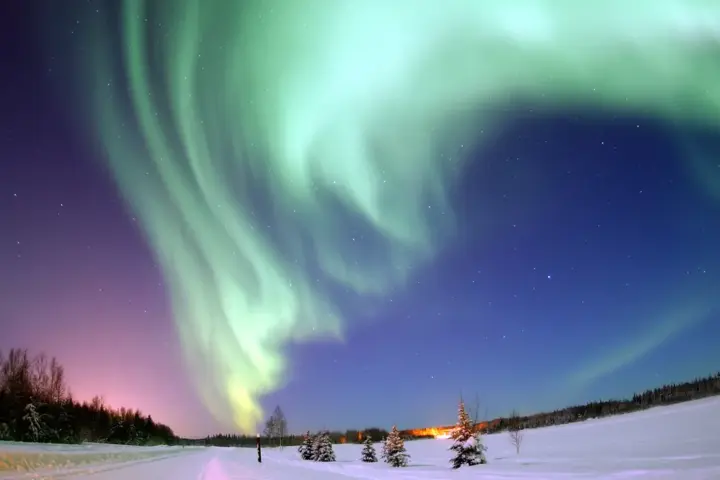
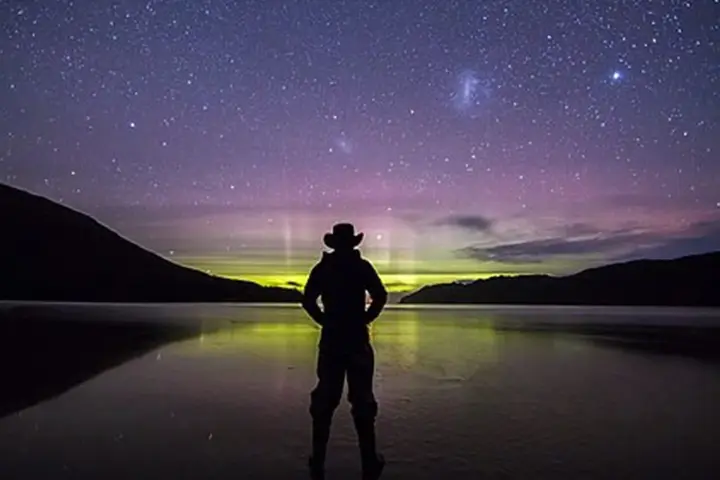
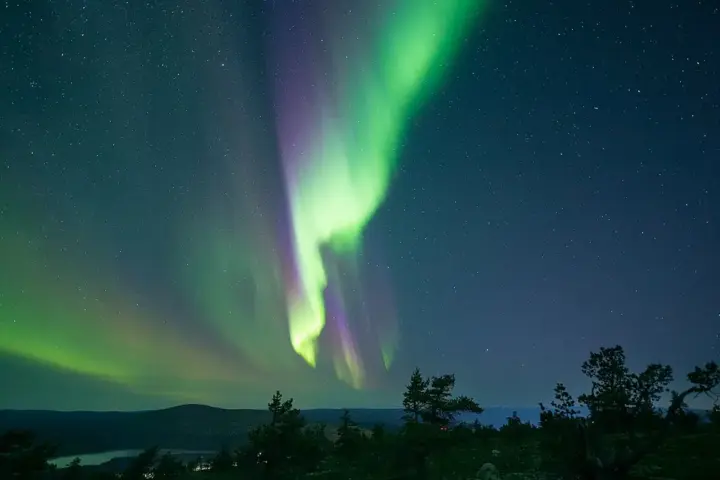
Under G1 (Minor) conditions, aurora is typically visible at high northern latitudes. Under G2 (Moderate) conditions, the auroral oval expands southward.
Potential visibility areas in the United States include: Northern Michigan, Wisconsin, Minnesota, North Dakota, Montana, Idaho, portions of upstate New York, and Northern New England.
The key factor is geomagnetic latitude. Areas at 55° and above geomagnetic latitude have viewing chances during G2 conditions.
For viewers in India: During this event, India is outside the expected aurora-viewing zone.
Optimal aurora visibility depends on darkness, local geomagnetic activity, cloud cover, latitude, and the timing of the disturbance’s arrival. Viewing conditions vary significantly by location and changing space weather conditions.
If you’re photographing aurora: Use a tripod, manual exposure mode, ISO: 1600–3200, aperture: f/2.8 or wider, shutter speed: 4 to 10 seconds.
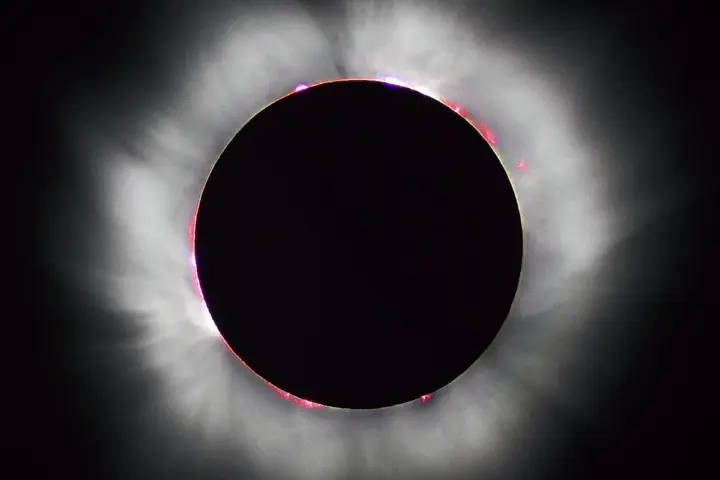
A lunar eclipse occurs when Earth passes between the Sun and Moon, casting Earth’s shadow on the Moon.
NASA classifies the August 28, 2026 event as a partial lunar eclipse—the Moon enters Earth’s shadow but Earth’s shadow does not completely cover the Moon.
Visibility from India: The partial phase of the lunar eclipse begins around 2:33 AM IST (Indian Standard Time) on August 28. Maximum eclipse occurs around 4:12 AM IST. The Moon will set before the global eclipse sequence completes, so Indian observers will see only the early partial phases.
No. They occur at approximately the same time but are independent phenomena. A geomagnetic storm results from solar activity reaching Earth’s magnetosphere. A lunar eclipse results from Earth’s orbital position relative to the Sun and Moon.
Stronger geomagnetic storms can affect power grids with induced electrical currents that cause fluctuations, satellite operations with increased atmospheric drag and radiation, radio propagation with high-frequency disruptions, and navigation systems with temporary inaccuracy in GPS and other positioning systems.
NOAA SWPC projected G1 to G2 geomagnetic storm conditions for August 27–29, 2026, resulting from an M6.9 solar flare and coronal mass ejection that erupted on August 25. These conditions enable potential aurora visibility across northern US latitudes. Separately, a partial lunar eclipse occurs on August 28, 2026, but this is an independent phenomenon from the geomagnetic storm.