 Govind Tekale
A sudden surge of water rushed down mountain valleys connecting Tibet and Nepal on August 26, destroying border communities, killing multiple people, and displacing hundreds. The incident began around 09:15 AM local time when water entered Nepal’s Rasuwa District through the Bhotekoshi River corridor, with the source originating from the Tibet side of the border. The precise trigger remained under investigation.
Witnesses and officials described significant water surge in constricted mountain gorges. The surge tore through downstream settlements with destructive force, washing away infrastructure, destroying buildings, and trapping people in its path. The most severe impacts hit the Timure area and Rasuwagadhi settlement along the Nepal-China border, where customs posts and residential areas bore the full force of the outburst.
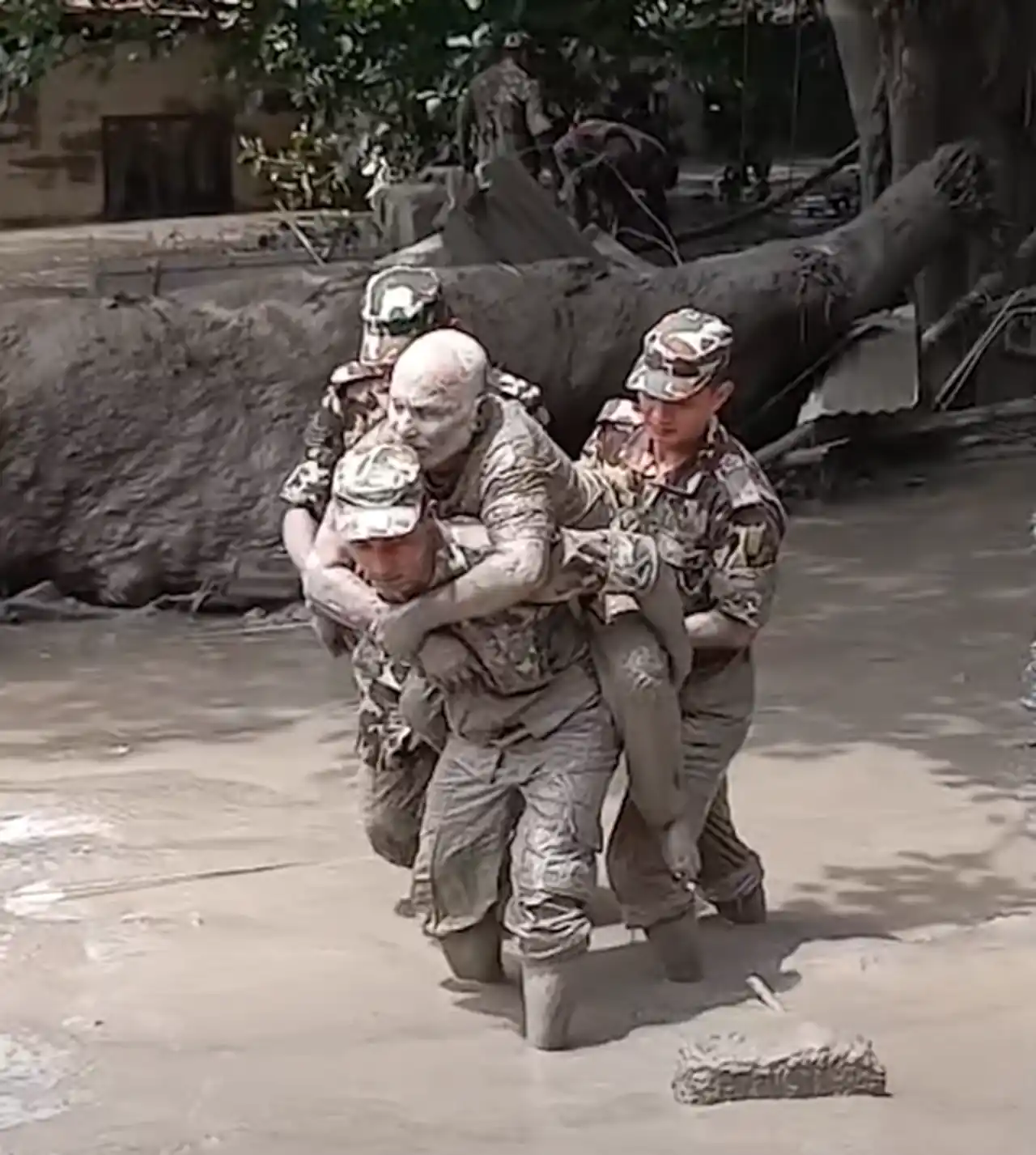
The Timure Customs Office, a key border control facility where Nepal and China coordinate cross-border commerce and movement, was inundated and destroyed. Three local police stations flooded. At least 19 bridges across the Bhotekoshi and Trishuli rivers were destroyed or structurally compromised, and approximately 40 kilometers of roads were damaged, cutting off access to affected areas for rescue operations.
More than 60 people became out of contact in the area of the Langtang Khola Hydropower Project under construction in the region, including about 25 employees and 35 workers in and around the tunnel. Rescue teams launched immediate search operations, though difficult terrain and continuing water flow complicated access.
The disaster affected electrical power across Nepal. Eleven hydroelectric power projects and one solar facility sustained damage or disruption from the flood surge. Total capacity disconnected from the national grid reached 431.1 megawatts. Some facilities will require weeks or months of repairs. Others may require complete reconstruction depending on damage severity.
The Government of Nepal mobilized emergency response operations. Over 1,100 personnel from the Nepal Armed Police Force and Nepal Army deployed to affected areas. Medical teams established trauma response centers at Bir Hospital, Tribhuvan University Teaching Hospital, and the National Trauma Center.
Casualty and missing-person counts remained uncertain and subject to revision as rescue teams reached isolated areas. Official assessments described the event as resulting in casualties and missing-person numbers, but exact figures were still being compiled as rescue operations continued. This uncertainty is typical for mountain disasters where access is difficult and survivors emerge gradually from remote locations.
The question of what triggered this outburst remained under investigation. Several factors could potentially cause sudden water discharge from high-altitude areas: glacier lake outburst (GLOF) events, ice-and-rock collapses, or unusual rainfall at elevation triggering extreme runoff. Later reporting indicated an earthquake around 8:37 a.m. and a possible rockslide or ice-lake blockage, while Nepal’s Department of Hydrology and Meteorology said the flood was not caused by rainfall in Rasuwa District itself. Experts are examining satellite imagery and collecting geological data, but definitive cause-determination takes time.
Chinese authorities officially described the event as a mudslide originating on the Nepal side that cascaded downstream through Nepal-China border areas. China activated a national-level emergency response and deployed rescue forces. Chinese emergency management officials also issued warnings that continuing rainfall could trigger additional flooding, landslides, and mudslides through August 30, keeping the area at elevated risk even as initial rescue operations wound down.
The Nepal National Disaster Risk Reduction and Management Authority coordinated response operations, appealing for international assistance.