 Karmactive Team
 Enayat Garg
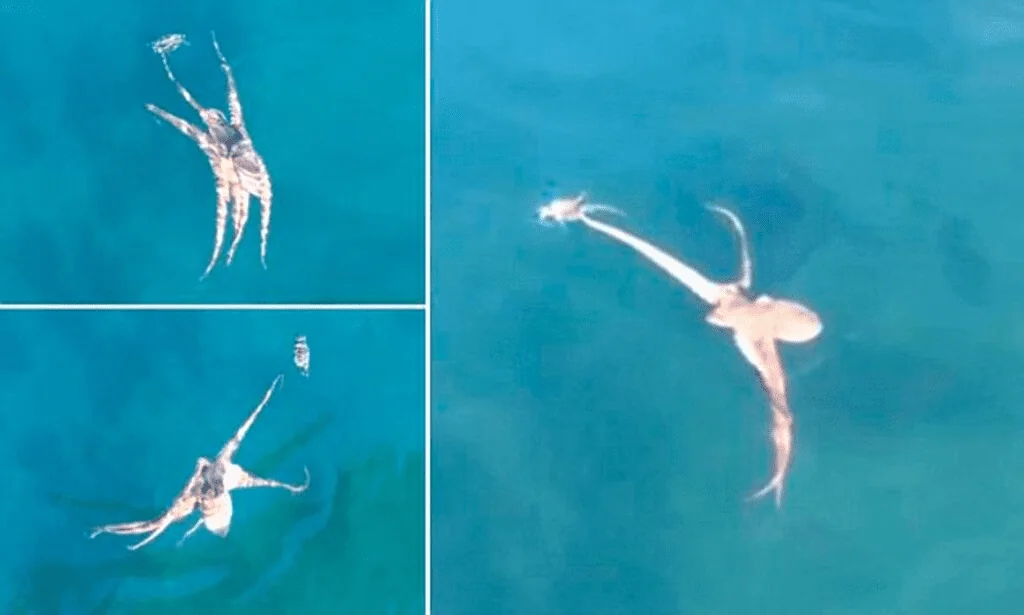
The beauty of the ocean is not just it’s deepwater but its dept that houses diversity. The video of the octopus trying to catch its prey is a phenomenal attempt to capture marine biomes’ food systems.
The video showcases the encounter between a crab and octopus for reasons of survival. The video by Bettina Turnbull is the epitome of surreal forces that balance our ecosystem and make our planet one of its own kind.
Watch More Viral Videos
Octopuses belong to the class Cephalopoda, which includes squids, cuttlefish, and nautiluses. The common octopus (Octopus vulgaris) possesses approximately 500 million neurons distributed throughout its nervous system, with two-thirds of those neurons found in its arms rather than its brain. This decentralized neural architecture enables extraordinary problem-solving abilities documented by marine biologists at the Marine Biological Laboratory in Woods Hole.
Research published in the Journal of Experimental Biology confirms that octopuses use jet propulsion combined with arms coordination to pursue prey across uneven surfaces. Their camouflage capabilities result from specialized skin cells called chromatophores, iridophores, and leukophores, controlled by the optic gland system studied extensively by the Max Planck Institute of Animal Behavior.
The International Union for Conservation of Nature (IUCN) notes that octopus populations serve as critical indicators of ocean health, with declining numbers signaling ecosystem stress from pollution and warming waters. Marine conservationists advocate for protecting cephalopod habitats through sustainable fishing practices and marine protected areas.
Marine researchers emphasize that octopus intelligence rivals that of primates, solving puzzle boxes and opening child-resistant bottles with remarkable dexterity that has inspired robotics engineering and artificial intelligence development in computing laboratories worldwide.
Octopuses belong to the class Cephalopoda, which includes squids, cuttlefish, and nautiluses. The common octopus (Octopus vulgaris) possesses approximately 500 million neurons distributed throughout its nervous system, with two-thirds of those neurons found in its arms rather than its central brain. This decentralized neural architecture enables extraordinary problem-solving abilities that rival those of primates.
Research published in the Journal of Experimental Biology confirms that octopuses use jet propulsion combined with arm coordination to pursue prey across uneven surfaces. Their camouflage capabilities result from specialized skin cells called chromatophores, iridophores, and leukophores, controlled by the optic gland system studied extensively by the Marine Biological Laboratory in Woods Hole, Massachusetts.
The International Union for Conservation of Nature (IUCN) notes that octopus populations serve as critical indicators of ocean health, with declining numbers signaling ecosystem stress from pollution and warming waters. Marine conservationists advocate for protecting cephalopod habitats through sustainable fishing practices and marine protected areas, while robotics engineers draw inspiration from their soft-bodied movement for developing next-generation underwater exploration vehicles.