 Karmactive Staff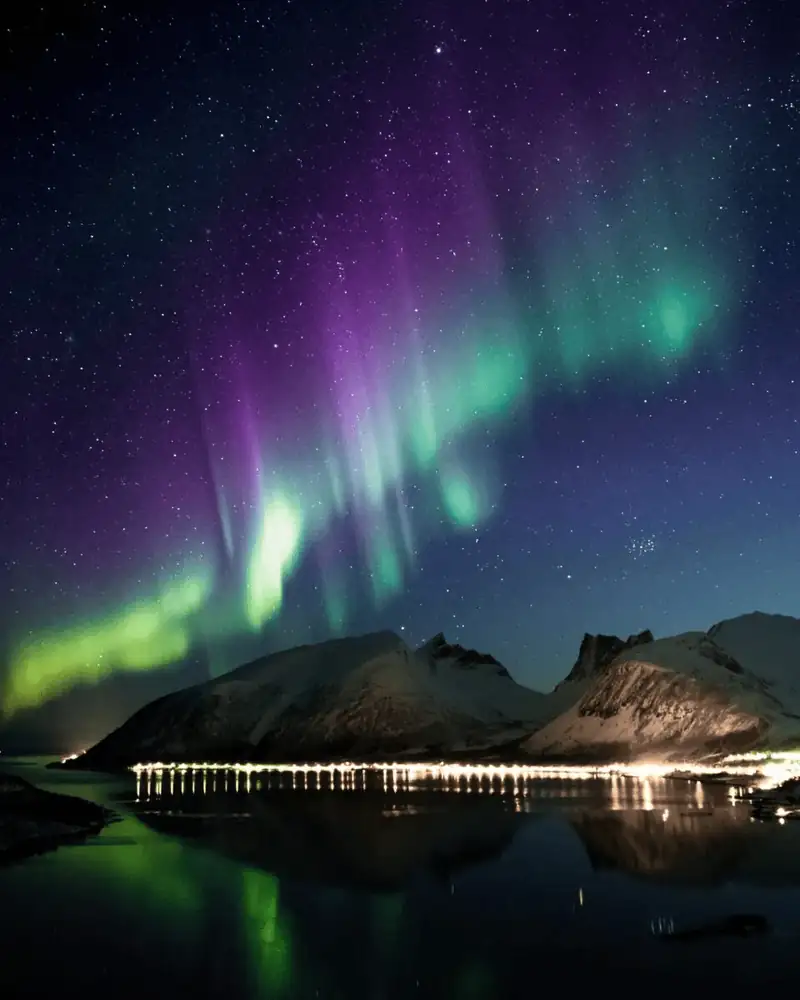
The National Oceanic and Atmospheric Administration (NOAA) issued G2 geomagnetic storm watch for August 28-29, 2026, indicating elevated aurora activity across northern latitudes with possible extended visibility across upper U.S. states. The forecast reflects solar wind conditions and magnetic field parameters tracked through the space weather prediction center.
Geomagnetic storms originate from solar activity—specifically coronal mass ejections and solar wind intensity changes. These phenomena send charged particle streams toward Earth at extremely high velocities. When these particles interact with Earth’s magnetic field, they create disturbances that accelerate charged particles in the upper atmosphere, producing the visible light phenomenon known as aurora borealis or northern lights.
The G2 classification on NOAA’s scale represents moderate geomagnetic disturbance. The scale ranges from G1 (minor) through G5 (extreme), with G2 storms occurring multiple times yearly during active solar periods. The Kp index—measuring planetary magnetic disturbance—typically reaches 5-6 during G2 events, corresponding to the forecast parameters NOAA specified for August 28-29.
Aurora visibility during G2 storms extends further south than typical auroral oval boundaries. Observers at higher latitudes—particularly northern Minnesota, Wisconsin, Michigan, and similar northern regions—have reasonable possibilities of viewing northern lights displays. However, cloud cover, light pollution, and viewing angle substantially influence actual visibility regardless of official forecast.
The aurora phenomenon captivates observers partly due to its rarity at mid-latitudes and partly due to its visual beauty. The multi-colored light display results from different atmospheric elements being excited to different emission states. Oxygen produces green and red emissions, while nitrogen generates blue and purple colors. The altitude of particle interactions determines which colors dominate in observed displays.
Practical aurora observation requires specific conditions beyond favorable forecast parameters. Viewing locations should minimize light pollution, with clear sky conditions essential. The human eye requires darkness adaptation—typically 20-30 minutes—to perceive subtle aurora activity. Many observers miss displays because inadequate darkness adaptation makes faint auroras invisible, even when objectively present.
The G2 watch for August 28-29 represents genuine aurora activity likelihood, but observers should manage expectations realistically. Actual visibility depends on weather patterns affecting specific locations. Space weather monitoring continues through NOAA systems providing real-time updates as conditions develop. The scientific value of aurora observations complements their visual appeal, with ground-based observers contributing to ionospheric research through systematic documentation.