 Govind Tekale
Two Qatari LNG tankers struck in a month in the Strait of Hormuz as Iran’s IRGC escalates pressure on Gulf energy exports, pushing global oil prices above $90 and forcing ships to question every passage.
The GasLog Shanghai was 285 meters long, flagged in Bermuda, carrying liquefied natural gas from Qatar. On July 31 at 11:30 p.m. UTC, something hit it hard.
The strike came 11 nautical miles northeast of Limah, Oman, in one of the world’s most critical shipping lanes. The projectile tore into the engine room. Fire broke out. The crew fought it and won. But the ship lost power and went dark—its tracking system offline since early that morning.
All 27 crew members made it out safely. GasLog, the ship’s operator, confirmed that. But the vessel was disabled, dead in the water, carrying Qatari LNG that had been loaded just four days earlier.
Iran’s Islamic Revolutionary Guard Corps claimed credit. They said they struck two tankers under U.S. escort and forced four others to turn back. The U.S. Central Command said nothing. They did not confirm the Iranian claims.
The IRGC’s Energy Campaign: Why Qatar Keeps Getting Hit
The GasLog Shanghai was not the first. On July 7, another Qatari LNG carrier, the Al Rekayyat, was hit in the same area. Three weeks later, Qatar suspended its LNG shipments.
The pattern matters. Qatar exports energy through the Strait of Hormuz. The IRGC has made it clear: they can reach any ship that passes through.
In a separate incident, the GasLog Salem was struck by a drone at the Damietta port in Egypt. The attacks span geography. They span time. They send a message.
GasLog Shanghai: How a 23:30 UTC Strike Disabled a Vital Tanker
The ship’s identification number was IMO 9600528. It was real, tracked, known to the maritime world. On July 31, someone targeted it.
The projectile hit at 11:30 p.m. UTC. It found the engine room. The damage disabled the vessel. The crew extinguished the fire that followed, but the ship was finished. Its AIS—the automatic identification system ships use to broadcast their location—went dark at 9:21 a.m. UTC the next morning.
No one claimed the strike formally after the IRGC’s statement. No video surfaced. But the ship did not move after that day.
If Hormuz Closes: The $2 Million Per Ship Reality
The Strait of Hormuz handles 25 percent of the world’s seaborne oil. That is 20 million barrels a day. Eighty percent of that oil heads to Asia.
Brent crude, the global benchmark, climbed above $90 a barrel. Shipping insurance rose. Route planning became a calculation in risk.
If a ship has to reroute around the Horn of Africa or through the Suez Canal, costs climb. Delays stretch from days to weeks. Fuel burns. Cargo sits. The math moves fast for shipping companies deciding whether to send a vessel through those waters.
Few ships are transiting the strait now with their transponders on. The ones that do move watch their radar and their insurance policies.
CENTCOM Non-Response: What America’s Silence Reveals
The U.S. Navy operates in the Persian Gulf. It has bases there. It escorts commercial traffic. It has the power to respond to attacks on shipping under its watch.
The Iranian claim stood unanswered. Central Command released no statement. No boarding. No investigation made public. The silence from the military command responsible for the region said something too.
Ship captains heard it. Insurance underwriters heard it. Shipping companies heard it. The message was not reassurance.
—
Qatar suspended LNG shipments for three weeks after the first attack. The GasLog Shanghai was hit while carrying Qatari cargo. These are major energy exports moving through a narrow corridor under Iranian guns.
The crew of the GasLog Shanghai survived. The ship did not recover. Other captains watched and made their own decisions about whether to risk the passage.
The oil continued to flow. The gas continued to ship. But the cost rose—in fuel, in time, in insurance, and in the quiet calculation every maritime operator now makes before entering the Strait of Hormuz.
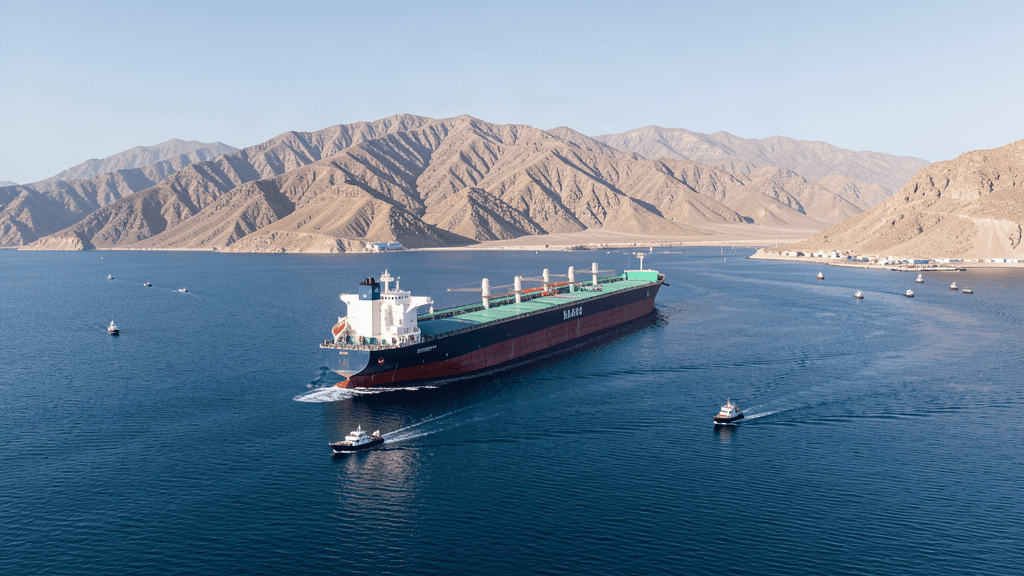
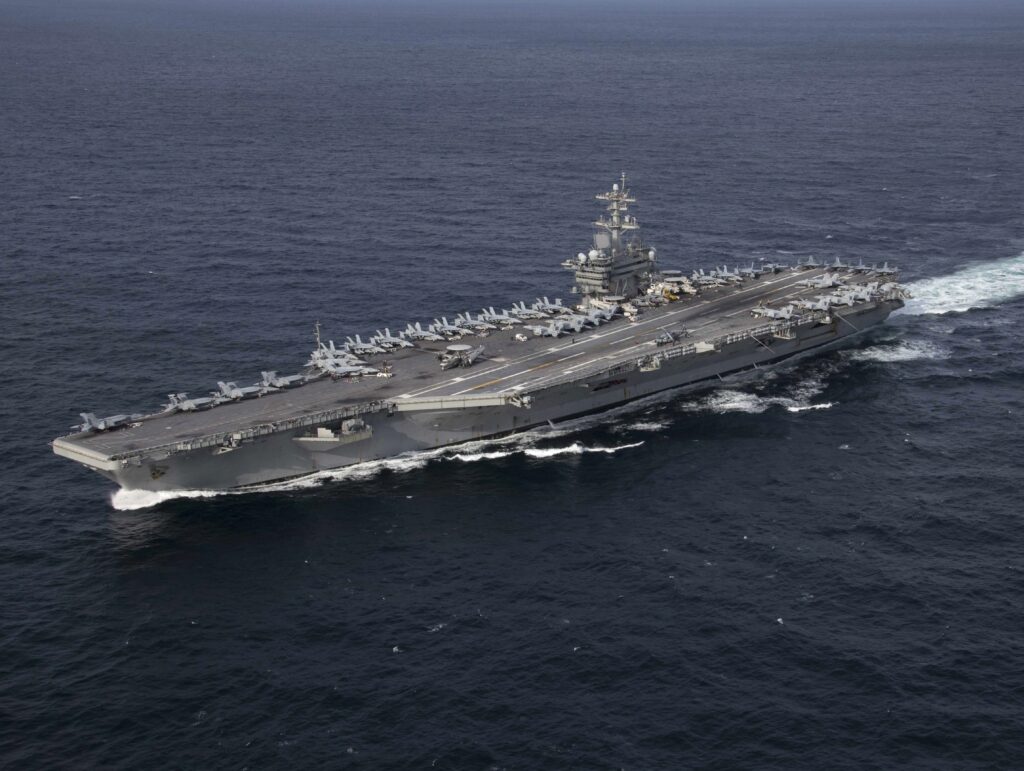
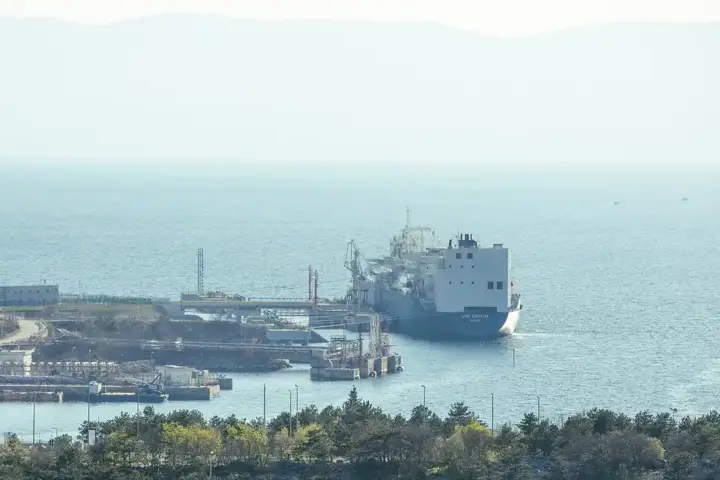
Commercial shipping transits the narrow Strait of Hormuz on July 21, 2026, two weeks before the GasLog Shanghai incident. The waterway handles 25% of the world’s seaborne oil exports, making it a strategic chokepoint of global energy security. Photo source: US Navy / Wikimedia Commons.
Alt text: LNG tanker transiting the Strait of Hormuz