Sunita Somvanshi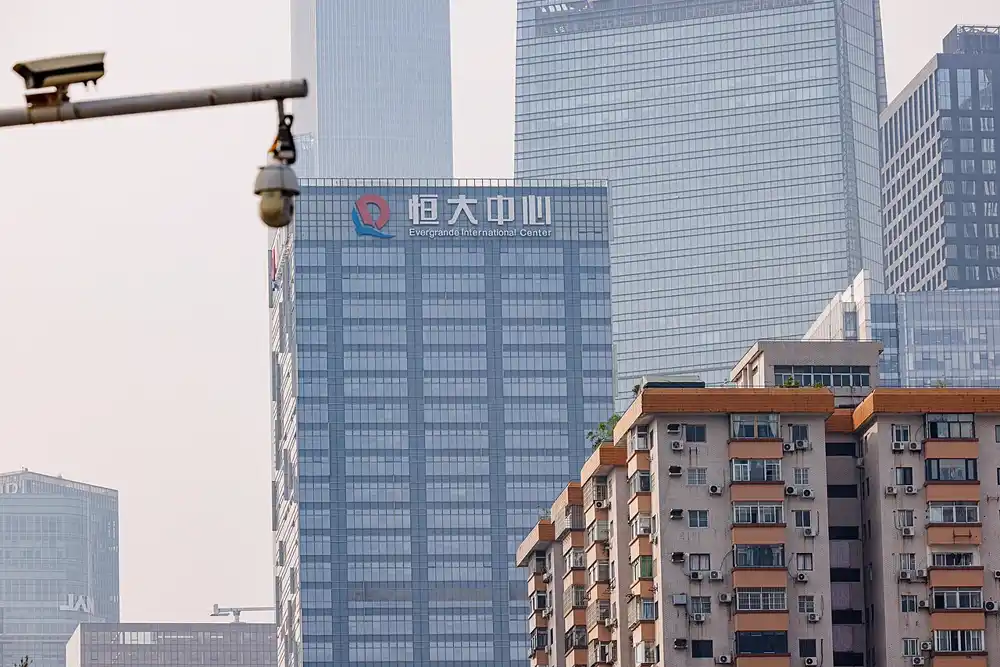
The founder of China’s most indebted property developer, China Evergrande, was sentenced to life in prison by a Shenzhen court on August 20, 2026, capping the dramatic fall of a man who was once China’s richest person.
Hui Ka Yan, also known as Xu Jiayin, was convicted of large-scale financial fraud for inflating the group’s assets and concealing its liabilities. He had pleaded guilty in April to charges including illegal absorption of public deposits, fraud and bribery. The Shenzhen Intermediate People’s Court fined Evergrande group 8.82 billion yuan ($1.31 billion) and Evergrande Real Estate Group 7 billion yuan ($1.04 billion).
“The amount involved is exceptionally large, the circumstances are particularly egregious, and extraordinarily heavy economic losses have been caused,” the court statement read. Hui’s two sons, Xu Tenghe and Xu Zhijian, were also sentenced alongside senior Evergrande executives and others linked to the group, with more than 50 individuals receiving prison terms ranging from 22 months to 18 years, China’s official Xinhua News Agency reported.
Evergrande, founded in 1996, grew into a real estate empire worth hundreds of billions of dollars through aggressive borrowing. At its peak, the company’s debt exceeded $300 billion, making it one of the world’s most leveraged corporations. When Beijing introduced strict debt controls in 2020, Evergrande could no longer service its obligations, triggering a default in 2021 that sent shockwaves through China’s real estate sector and contributed to a downturn that pulled home prices down 20% or more.
The property slump has since spread to other major developers, with billions in unpaid debts and thousands of unfinished residential projects across the country weighing on the world’s second-largest economy. The crisis has contributed to slower economic growth in China, where the property sector accounts for roughly 25% of GDP.
The sentencing comes as Chinese authorities grapple with stabilizing a property sector that once drove national growth. Analysts say the case signals that Beijing will pursue legal action against executives whose risky practices threaten financial stability. This follows our coverage of China’s energy sector transitions and the broader economic challenges facing Chinese industries highlighted in our analysis of renewable energy investments.
The case adds to a broader pattern of Chinese authorities tightening oversight of financial misconduct, as the long-running property debt crisis continues to reshape global markets.