Govind Tekale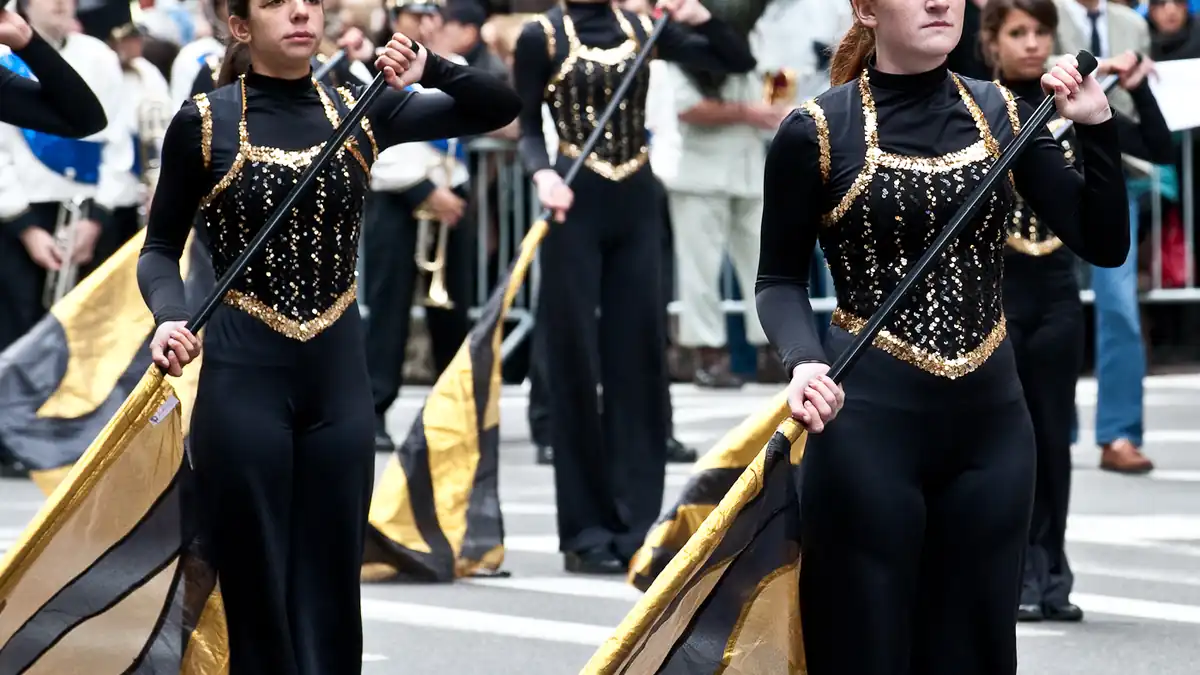
Columbus Day falls on the second Monday in October and remains a federal holiday. Dozens of states, cities, and universities have either renamed it Indigenous Peoples’ Day or added that observance alongside it. The disagreement is real, documented, and older than the social media cycles that amplify it each year. Here is where the holiday came from, what each position is actually arguing, and how observances vary where you live.
In 1892, President Benjamin Harrison issued a proclamation marking the 400th anniversary of Columbus’s arrival as a one-time national observance — not a recurring federal holiday. The proclamation came one year after the 1891 lynching of eleven Italian immigrants in New Orleans, which historians describe as the largest mass lynching in American history, and was partly a diplomatic gesture toward Italy and partly a civic signal regarding Italian Americans. Congress formally enacted Columbus Day as a recurring federal holiday through a joint resolution in 1934, with President Franklin Roosevelt holding the first federal observance in 1937. The modern second-Monday-of-October format was established by the 1971 Uniform Monday Holiday Act. Indigenous Peoples’ Day emerged as a counter-observance in 1992, when Berkeley, California, became the first US city to officially rename the day on the 500th anniversary of Columbus’s arrival. Approximately 20 states and nearly 130 cities had adopted Indigenous Peoples’ Day as of 2022, according to Berkeley’s records; the count has grown since. It is not a federal holiday; Congress has not voted to rename the federal observance.
Whether your school, employer, or local government observes Columbus Day, Indigenous Peoples’ Day, or both depends on the level of government that governs it. Federal employees and institutions follow the federal calendar. State employees follow state law. Public school closures follow local district calendars. Private employers set their own schedules. The result is a direct patchwork: workers in the same building may follow different holiday schedules depending on who employs them.
What Columbus's 1492 Voyage Set in Motion
Christopher Columbus’s arrival in the Caribbean in October 1492 initiated sustained European colonization of the Western Hemisphere. What followed over the next three centuries included the systematic dispossession of Indigenous peoples from their land, the introduction of diseases to which Native populations had no prior immunity — contributing to the deaths of tens of millions, with estimates varying substantially among historians due to uncertainty about pre-contact populations — and the transatlantic slave trade, which forcibly moved an estimated 12 to 15 million Africans to the Americas, a figure referring to those embarked on the trade.
Historians widely document these outcomes, though estimates and interpretations vary. The debate is about whether a federal holiday should honor the person most associated with initiating them. The National Congress of American Indians and many tribal nations argue it should not. Italian-American civic organizations argue the holiday was not created to celebrate colonialism but to protect a community facing lethal violence in the US — and those two origin stories are both documented historically.
Why Italian Americans Have a Specific Stake in Columbus Day
Columbus’s Italian origin became the symbolic reason he was chosen to represent Italian immigrants in the US. The 1891 New Orleans lynching — in which eleven people of Italian descent were killed by a mob following acquittals in a police chief’s murder trial — came after decades of anti-Italian prejudice that classified recent immigrants as racially inferior and socially dangerous. Historians note that Harrison’s 1892 proclamation came amid this anti-Italian violence and was widely seen as a gesture of civic recognition toward the community, though the exact intent has been debated by scholars.
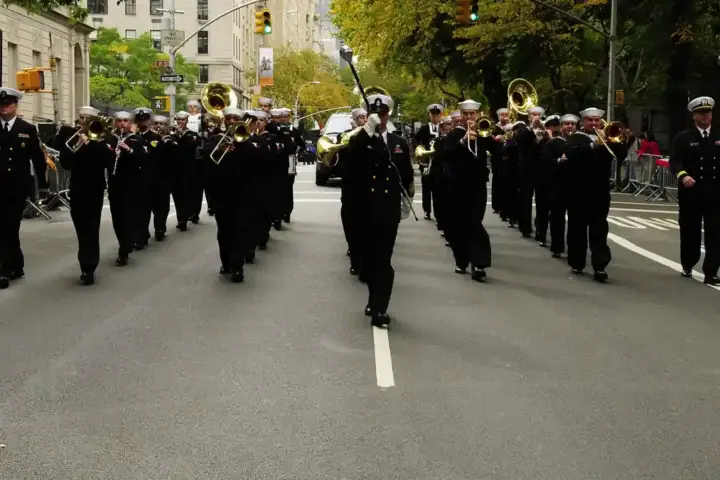
The Columbus Day parade tradition — still running in New York City with tens of thousands of marchers — carries that origin directly. For many Italian Americans, the holiday is less about the explorer and more about the moment their community was formally recognized by the federal government after years of exclusion and violence. That historical context does not invalidate the Indigenous critique. But it explains why dismissing the parade tradition as simply “celebrating colonialism” misses what the tradition was built on.
Why Indigenous Peoples' Day Emerged as a Specific Counter-Observance
The 1992 Berkeley counter-observance was not a campaign to erase Italian-American culture. It was a demand that Indigenous histories, perspectives, and sovereignty be part of the national October conversation — rather than invisible in a calendar that treats 1492 as a moment of discovery for everyone equally.
The shift to Indigenous Peoples’ Day in states and cities has generally come through legislative votes. South Dakota renamed its observance Native American Day in 1990, before the Berkeley proclamation. Alaska, Vermont, Maine, New Mexico, and others have followed through their own legislative processes. The pattern reflects local political consensus rather than a national directive. Some governments retain Columbus Day, some rename it entirely, and some officially recognize both on the second Monday of October.
Is Columbus Day a federal holiday? Yes. Columbus Day is observed on the second Monday in October and is one of the federal public holidays. Federal offices are generally closed. Banks generally follow the federal holiday calendar, though private employers set their own schedules. The holiday has not been renamed at the federal level.
Is Indigenous Peoples’ Day a federal holiday? No. Indigenous Peoples’ Day is observed by many states, cities, universities, and institutions, but it does not have federal holiday status. Some governments observe both on the same calendar date.
Why do some places observe both? Some states and cities keep Columbus Day on their official calendars while adding Indigenous Peoples’ Day as a concurrent or separately named observance. This reflects political decisions made at the local level among communities with different relationships to the day.
Why do Indigenous advocates criticize Columbus Day? Columbus’s 1492 voyage initiated European colonization of the Western Hemisphere. Critics argue that a federal holiday honoring Columbus implicitly treats the outcomes of colonization — dispossession, violence, and the deaths of tens of millions of Indigenous people — as acceptable or irrelevant.
The strongest version of this debate is not about one Italian navigator’s character. It is about what a national calendar signals about whose history is centered and whose is treated as context. The practical answer for most people is local: what your state, school district, and employer observe on the second Monday of October is determined by your specific level of government, and those decisions vary widely.