 Tejal Somvanshi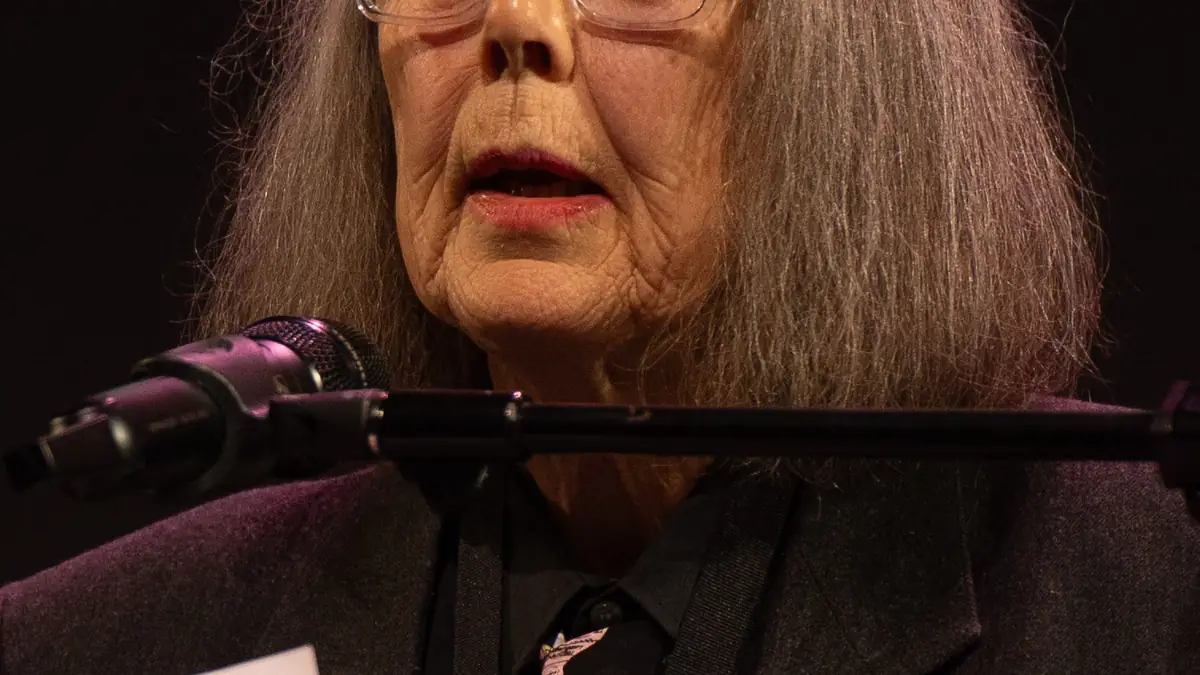
Anne Carson has spent four decades making classical literature answer for the present. The Swedish Academy awarded her the 2026 Nobel Prize in Literature on 8 October 2026, citing her “bold and inventive oeuvre that, in playful dialogue with the classical tradition, has created new forms for contemporary literature.” The prize carries a value of 12 million Swedish kronor, confirmed by the Swedish Academy.
Carson’s environmental commentary does not operate through activist declaration. She does not write manifestos. She works through structural subversion, placing geological and classical time—Sappho’s fragments, Euripides’s tragedies, Pindar’s odes—against the scale of human lifespans. In *Float* (2016) and *Autobiography of Red* (1998), the juxtaposition is precise: what the ancients treated as permanent backdrop—mountain, water, season—is fragile in ways the modern reader can verify with a news search. Literary critics working in eco-poetics have read this structural contrast as a critique of anthropocentric assumptions—a reading that emerges from the work’s architecture rather than from a stated political position.
The Social Subversion Thread
Carson’s social commentary is inseparable from her translation practice. Her versions of Euripides (*Grief Lessons*, 2006) and Sophocles (*Antigonick*, 2012) do not aim for period authenticity. Critics of classical reception have argued that Carson’s reconstructions expose how the original texts encoded the marginalization of female grief, the treatment of women’s mourning as socially disruptive, and the use of the natural world as passive backdrop for male agency. These are interpretive positions that Carson’s translations invite rather than arguments she states explicitly.
In *Nox* (2010), she works against the conventions of the classical elegy. Where the traditional elegy form served public remembrance, Carson’s book-as-elegy for her brother is private, physically deteriorated, and resistant to translation—qualities that scholars of classical form have read as a structural refusal of the public functions elegy was built to serve.
What is the Nobel Prize in Literature worth?
The 2026 prize is 12 million Swedish kronor, confirmed by the Swedish Academy. The full citation and current exchange rate are available at NobelPrize.org.
What are Anne Carson’s best-known works?
Carson’s most cited works include *Autobiography of Red* (1998), *The Beauty of the Husband* (2001), *Nox* (2010), *Float* (2016), and her translations of Euripides and Sophocles. Her 2020 Princess of Asturias Award in Literature has also been confirmed.
What is eco-poetics?
Eco-poetics is a literary critical term for poetry that engages with ecological systems and their disruption, typically without conventional nature-writing tropes. Carson’s work has been discussed in eco-poetic scholarship for its use of classical structural comparison to address environmental fragility.
Carson is scheduled to deliver the Nobel Lecture in Stockholm in December 2026. Check NobelPrize.org for the confirmed schedule and published lecture text when available.
Related Karmactive coverage: 2026 Nobel coverage climate and generational responsibility.