 Govind Tekale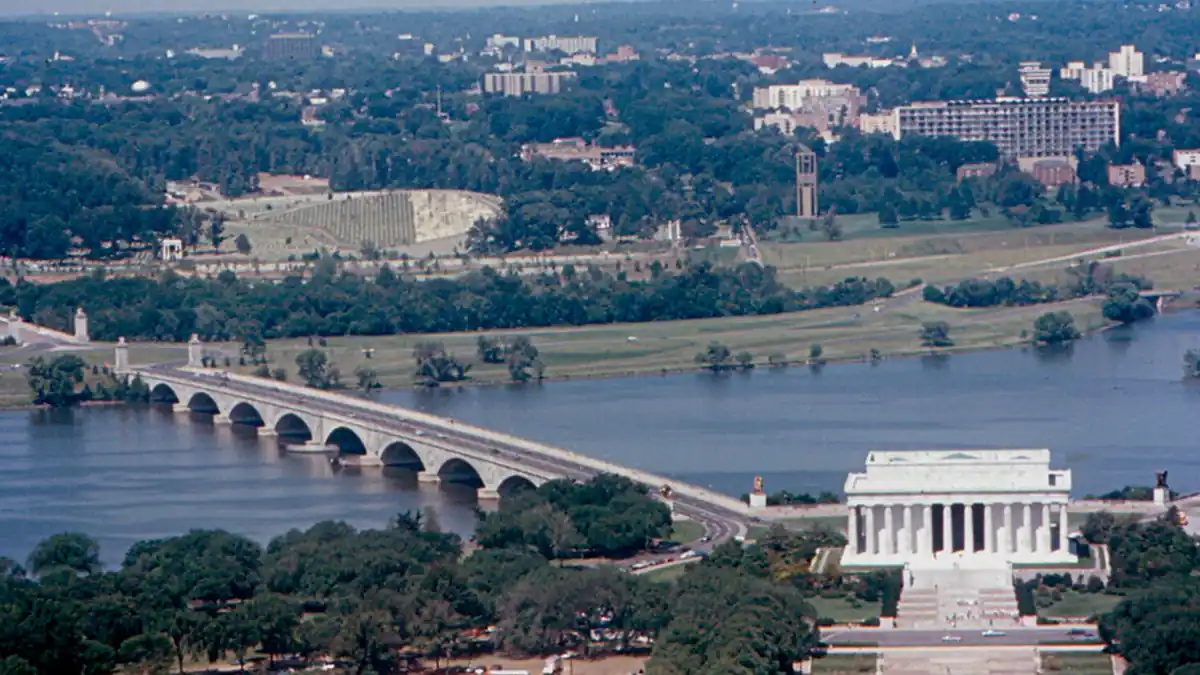
Will a 250-foot arch really be built beside Arlington National Cemetery, and can a lawsuit stop it? Arlington County has asked a federal court to halt construction until a full environmental review is done. Here is what the county is claiming, where the arch is planned and what has been decided so far.
The Arlington County Board filed a federal lawsuit on 8 October 2026 in the US District Court for the Eastern District of Virginia, becoming the first governmental body to take legal action against the monument. The case is County Board of Arlington County, Virginia v. National Park Service, No. 26-cv-03372. The county is represented by Democracy Forward. The complaint names the Department of the Interior, the National Park Service, Interior Secretary Doug Burgum and acting NPS director Jessica Bowron as defendants. The arch is planned for Memorial Circle, a traffic roundabout on federal parkland at the Virginia end of Memorial Bridge, near Arlington National Cemetery.
The lawsuit asks the court to prevent any demolition or construction at Memorial Circle until a full environmental review is completed, and Arlington seeks a preliminary injunction. The reports reviewed describe no ruling on that request yet. In a separate Washington lawsuit, Judge Tanya Chutkan ordered the administration to give 48 hours’ notice before site activity beyond permitted information gathering.
The legal claims
Why is Arlington County suing over Trump’s Triumphal Arch? The county says the National Park Service rushed toward construction after a “cursory and conclusory” environmental assessment, breaking the National Environmental Policy Act (NEPA). It argues the agency failed to consider reasonable alternatives and minimized harms to historic landmarks, traffic and public safety.
NEPA requires federal agencies to take a “hard look” at a project’s environmental impacts before deciding. The complaint says the Park Service relied on its assessment to conclude it did not need to prepare a more detailed Environmental Impact Statement. Arlington County Board Chair Matt de Ferranti said: “The Arlington County Board has filed this lawsuit because our community has the most to lose from this egregious and unlawful proposed project.”
The complaint also says the arch would directly obstruct the line of sight between the Lincoln Memorial and Arlington National Cemetery. Democracy Forward says the arch would occupy more than 15,000 square feet of ground in Memorial Circle. The US Commission of Fine Arts approved the arch in April.
White House spokesman Davis Ingle said the administration has been “fastidiously compliant with all procedural and legal requirements” and is certain the lawsuit will be dismissed. A separate lawsuit filed in February by three veterans and an architectural historian argues the arch needs approval from Congress. That argument is not part of Arlington’s complaint, which rests on NEPA.
A ruling on the preliminary injunction request would be the next step in Arlington’s case. Check back for updates.