 Sonali Tiwary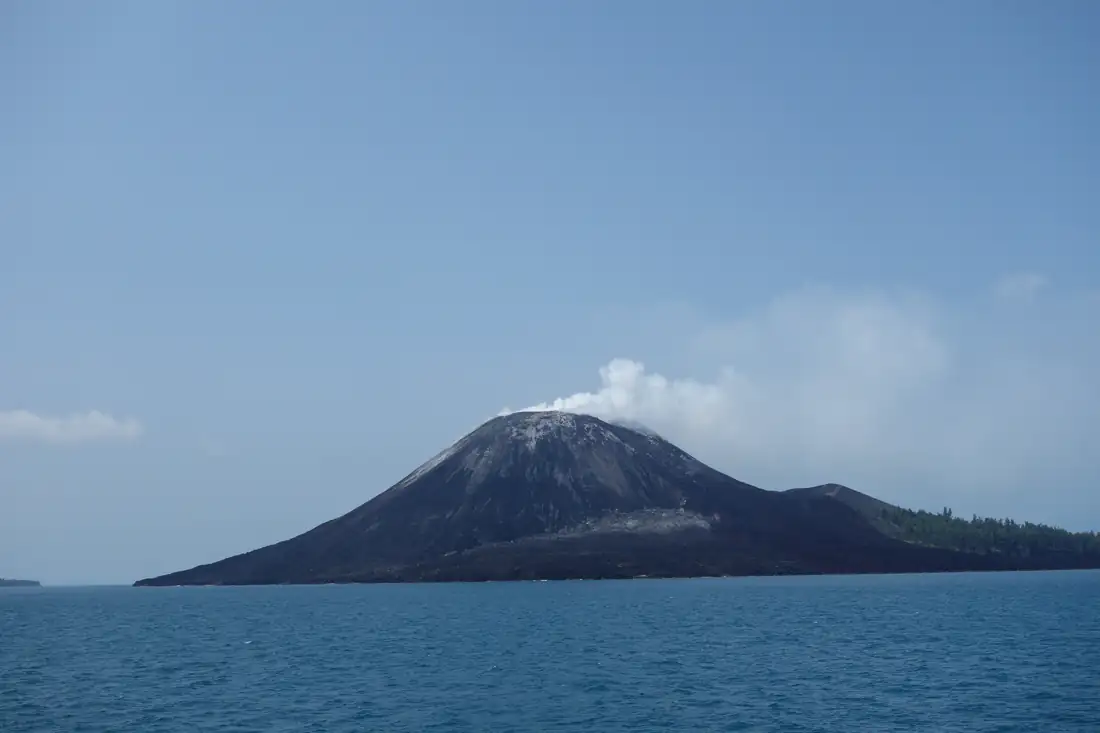
Anak Krakatau, the volcano born from the remains of the 1883 eruption that killed thousands, erupted again late Friday, sending ash across Indonesia and disrupting air travel across the region. The eruption forced the closure of eight airports and stranded more than 340,000 passengers as nearly 3,000 flights were cancelled or delayed.
Jakarta’s Soekarno-Hatta International Airport was the first to shut down on Sunday, followed by seven others. It remained closed for more than 24 hours before reopening past midnight Tuesday. The cascade of closures and reopenings disrupted travel throughout Southeast Asia and beyond, with authorities carefully monitoring ash conditions before allowing planes to resume operations.
Volcanic ash poses a serious threat to aircraft. Unlike ordinary dust, ash from volcanic eruptions contains tiny, hard particles that can scratch windshields, damage engines, and clog fuel systems. When an aircraft flies through an ash cloud, even briefly, engines can fail. This is why airports do not wait for major visible problems—they close proactively when ash clouds approach. The ash falling from Anak Krakatau affected visibility and air quality across a wide area, making safe flight operations impossible for days.
For travellers stuck in the disruption, the experience was unsettling. Liz Kendall, an Australian traveller, spent three days in a Jakarta hotel watching volcanic ash fall outside her window. She described the frustration of scratchy eyes and the uncertainty of not knowing when flights would resume. Qantas and other airlines were unable to confirm when services would return until authorities confirmed the ash had cleared enough for safe flight operations.
Indonesian authorities warned that further eruptions were highly likely in the coming days, adding uncertainty for passengers trying to reschedule travel and for airlines planning their recovery.
The volcano’s history adds weight to current concerns. In 1883, Krakatoa erupted catastrophically, killing approximately 35,000 people—most from the tsunamis that followed, not the eruption itself. The blast was so powerful it was heard as far away as Mauritius, nearly 5,000 kilometres away, making it the loudest sound ever recorded. The eruption altered global temperatures and created spectacular green sunsets visible worldwide for months.
Anak Krakatau, whose name means “child of Krakatau,” is a volcano that has been growing in the caldera left behind by the 1883 eruption. The volcano has erupted on and off for roughly 100 years, making these events part of its ongoing geological character.
Modern monitoring systems have improved significantly since 1883. Indonesia’s geological agency, PVMBG, operates monitoring stations that track seismic activity and gas emissions, providing warning before major eruptions—time that did not exist for the 1883 event. This early warning system helped authorities manage the recent disruption by closing airports before ash reached them, preventing potential disasters.
The eruption highlighted how modern infrastructure remains vulnerable to natural events. Despite advances in aviation safety and volcanic monitoring, the power of nature can still disrupt the lives of hundreds of thousands of people in a matter of hours.