Tejal Somvanshi
Preclinical and Clinical Obesity
Body weight is often summarized with a single number, the body mass index, or BMI. BMI is quick to calculate from height and weight. Its limitation is that it cannot distinguish muscle from fat. Two people with the same BMI can have very different body compositions, and a single figure does not show where fat is stored or how the body is functioning.
The Lancet Commission framework addresses this limitation by separating two categories. Preclinical obesity refers to excess adiposity without current organ dysfunction. Clinical obesity refers to excess adiposity accompanied by measurable organ or functional impairment. The distinction moves the question away from a number on a scale and toward whether the body shows measurable effects of excess fat.
BMI does not distinguish muscle from fat.
A February 2026 validation study published in PLOS Medicine offers one example of how this works in practice. The study reported 6.7% reclassification when added adiposity measures were applied. That figure describes one study and should be read as such. It shows that a measurable share of BMI-based labels changed under a broader assessment, not that every BMI-based label is wrong.
Reclassification of this kind can change the picture for an individual, but it does not settle any one person’s health status on its own. Questions about weight-related care are best discussed with a clinician. Readers with questions about their own results are best served by bringing those questions to that conversation.
Visceral Fat, Stress, and Cushing Syndrome
Fat is stored in more than one location. Subcutaneous fat lies beneath the skin. Visceral fat sits inside the abdominal cavity, around the organs in the abdomen. Because visceral fat is deeper, appearance alone does not reveal how much of it is present. Two waistlines of similar size can conceal different amounts of visceral fat.
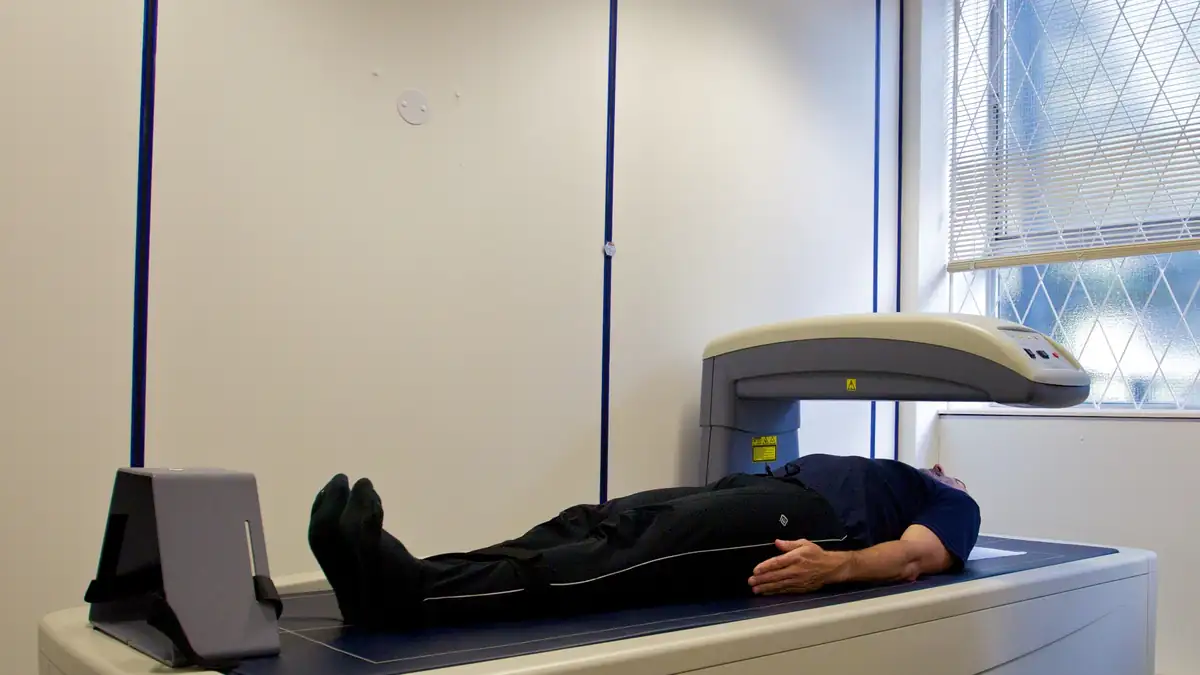
Body-composition methods attempt to separate fat from lean tissue and, in some cases, to estimate fat in specific regions of the body. DEXA, short for dual-energy X-ray absorptiometry, is one of these methods. This article does not claim that a DEXA scan is necessary for any person. Whether a body-composition assessment is appropriate depends on the reason for the assessment and the clinical context, and that judgment belongs to a clinician.
Waist measurement is a simpler tool. A single waist reading is one input among several and does not establish a diagnosis by itself.
Stress is a common explanation people consider when their weight or shape changes. Stress-related changes and Cushing syndrome are separate concerns and should not be treated as interchangeable. When other signs are present, a stress explanation is worth reviewing with a clinician.
Cushing syndrome is a condition associated with prolonged exposure to high levels of cortisol. Cushing syndrome may require medical assessment when central weight gain occurs alongside signs such as easy bruising, wide purple stretch marks, proximal weakness, or new hypertension. Central weight gain refers to fat that accumulates across the trunk and abdomen rather than evenly across the body. Proximal muscle weakness affects the muscles nearest the trunk, such as those of the hips and shoulders. These signs are a reason to speak with a clinician, and clinicians assess them together with the rest of a person’s history.
Cortisol testing is part of that assessment, but a normal cortisol result does not exclude every possible issue. Cortisol levels vary across the day and can be affected by many factors, so a single result is interpreted in context. Clinicians decide which tests to order based on symptoms, history, and examination.
This article makes no claim about commercial “cortisol detox” products. Readers concerned about visceral fat or cortisol can discuss those concerns with a clinician.
In practical terms, the steps this article supports are limited and non-prescriptive. They include discussing concerns with a clinician and, where a clinician advises it, body-composition assessment. None of these steps replaces clinical evaluation, and none is a treatment plan.