Aryaa Gavai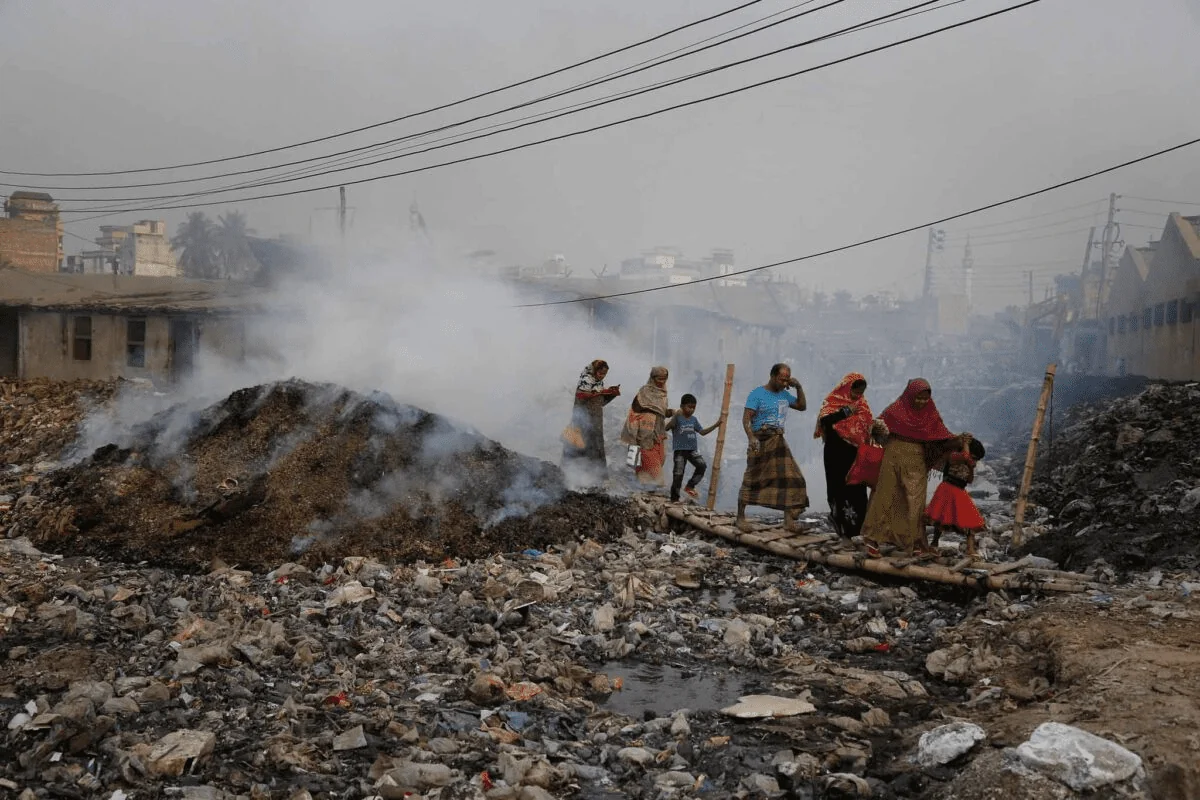
Bad quality air kills approximately a million people per year, academics and experts spend a lot of time discussing abstract concepts like air quality index and economic efficiency. The combustion of fossil fuels is the primary source of air pollution. The most significant contributions are fossil-fuel-powered vehicles (cars, trucks, airplanes, ships, and other similar vehicles) and coal- or oil-burning power plants and industries.
HEI’s Global Health program has released two new special reports that provide detailed data on air quality for every country in the world. The report revealed that no country in the world meets the new annual guideline of 5µg/m3 for ambient PM2.5 and fewer than half of the world’s countries meet the least stringent interim target of 35µg/m3.
As per HEI, in 2019, air pollution was the fourth leading cause of death, responsible for nearly 7 million deaths around the world. Deaths due to smoking and air pollution are approximately equal. HEI also predicts that the baby born today will live 1 year and 8 months less. Due to the critical air pollution levels, the world is losing 1 out of 9 lives to bad air quality.
How does the air quality index compare to other indices? A scale of 0 to 500 represents the AQI. AQI values above 50 indicate higher levels of air pollution and more significant health risks. An AQI value below 50 indicates healthy air. When it rises above 300, it is considered hazardous. Ambient fine particle air pollution refers to PM2.5 (i.e., particles measuring less than 2.5 micrometers in aerodynamic diameter, and less than a 30th of the diameter of a human hair). These particles, as well as precursor chemicals that contribute to their secondary formation in the atmosphere and are emitted from vehicles, coal-burning power plants, industrial activities, waste burning, and many other human and natural sources. Ambient PM2.5 concentrations are measured in micrograms of particulate matter per cubic meter of air, or µg/m3. In 2019, more than 50% of the world’s population lived in areas that exceeded even the least stringent interim target (IT-1) set by WHO for PM2.5 (35 µg/m3).
The state of global air report analysis ranked Bangladesh as the most polluted country while New Delhi, India, is the world’s most polluted capital. The countries with the worst air pollution were India, Pakistan and Bangladesh, all exceeding WHO guidelines by 10 times. Conversely, Denmark, Norway, Sweden, Australia, Canada, Japan and the United Kingdom ranked among the best countries for air quality, only exceeding the guidelines by 1 to 2 times.
The top 10 best air quality countries or regions are New Caledonia, U.S Virgin Islands, Puerto Rico, Cape Verde, Saba, Finland, Grenada, Bahamas, Australia, and Estonia. While the top 10 worst air quality countries or regions were Bangladesh, Chad, Pakistan, Tajikistan, India, Oman, Kyrgyzstan, Bahrain, Iraq and Nepal.
Air pollution remains an important risk factor for death and disability, and it affects human longevity worldwide with impacts comparable to those of other well-known risk factors including smoking, and poor hygiene. The data presented here highlight the need for bold action, especially in countries where exposures continue to be very high.
Reporting and analysis draw on verified sources including authoritative institutions and first-hand documentation from Wikipedia and Britannica. For more on this topic see our nature and environment coverage areas.
See: Today.
See: Today.
See: Today.