Rahul Somvanshi

Clean grids run into a hard question: how do you add more power without using up more land or water? Iceland has been answering it for decades with dams. Now it has a new answer that stands beside them.
The country’s first large wind farm has started producing electricity, and it is built to save river water for the coldest months.
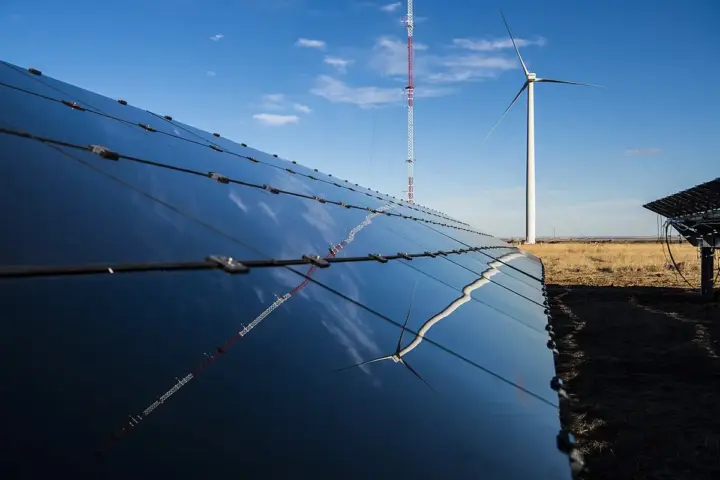
Vadolduver is Iceland’s first utility-scale wind farm, a 120 MW project run by national power company Landsvirkjun. It sits on a lava-and-sand plain east of the Thjorsa River, just south of the Sultartangi Dam. The site covers 17.1 square kilometres, or 6.6 square miles, and Landsvirkjun already runs seven hydropower stations in the same area.
The first 14 Enercon turbines were commissioned on September 15, 2026. Phase 2 adds 14 more, bringing the total to 28 turbines by the end of 2027. Together they are expected to produce 440 GWh a year. Each turbine’s blade tip reaches 150 meters, or 492 feet.
Vadolduver shows how pairing wind with existing hydropower turns dams into seasonal storage. This helps Iceland meet growing electricity demand, which Landsnet projects will reach 25.1-28.1 TWh in 2035. It also reuses existing infrastructure where possible. Iceland’s winds are generally stronger in winter, when river flow is lower, so reservoirs can hold water in reserve.
Why Wind and Hydropower Pair Naturally in Iceland
Iceland already produces most of its electricity from hydropower and geothermal energy. Rivers carry the most water in summer, when snow and glacier melt flow downhill. Winter is different. Less water reaches the reservoirs, yet Iceland’s windiest months generally fall in winter.
That mismatch is the core of the idea. Wind can complement hydropower seasonally, because glacier-fed river flows are lower in the months when Iceland’s winds are generally stronger. Landsvirkjun can then hold back water in its reservoirs rather than run its dams at full output. The water stays stored for later use.
Pairing the two also changes how planners think about dams. Each reservoir then acts as seasonal storage, drawn down in cold months and refilled by summer melt.
The two sources also cover for each other’s weak points. Wind can change from hour to hour, while reservoirs can release water on demand. Each source fills the gaps the other leaves.
Inside the 120 MW Vadolduver Wind Farm Build
The project uses 28 Enercon turbines in total. Twenty-five are rated at 4.26 MW each, and three are rated at 4.5 MW. Together, the fleet reaches 120 MW of installed capacity.
The P50 estimate puts the project’s capacity factor at 43%. P50 is the median projection, meaning output has an equal chance of landing above or below it.
Construction runs in two phases. The first 14 turbines are already running, and Phase 2 will add the remaining 14 by the end of 2027.
Phase 1 puts the first wind output on the grid in 2026. Phase 2 then brings the fleet to its full 28 turbines.
Plugging Into Existing Grid Infrastructure to Limit New Construction
Instead of building new power lines, the wind farm plugs into the existing Burfell 220 kV transmission lines. Substations and roads already in place are reused too. That limits the amount of new construction needed.
Grid planners gain a second benefit from this approach. Wind power enters the system at points that already carry electricity, so fewer new corridors are needed. Building on that network is simpler than starting a new route from scratch.