Rahul Somvanshi
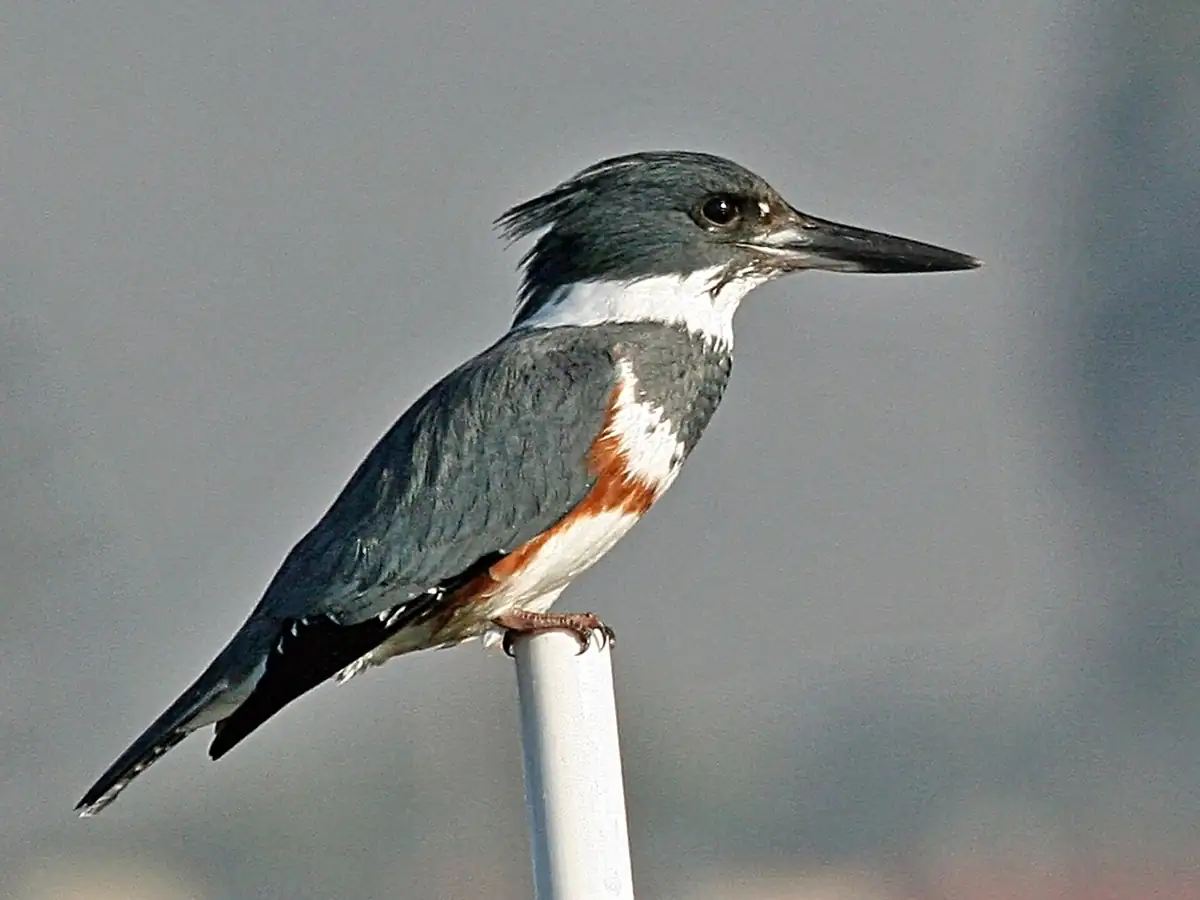
The Belted Kingfisher (Megaceryle alcyon) is a large-headed bird of waterways, found around streams, rivers, lakes, ponds, bays and coasts. Its loud rattle is often the first clue it is nearby. The species hunts mainly aquatic prey, watching from a perch or hovering before plunging into the water, according to Audubon’s field guide.
It is also an unusual bird to identify by plumage. Both sexes have a blue breast band, but females have an additional rusty, chestnut-coloured band below it. That extra band makes females more colourful than males—a reversal of the pattern many people expect in birds.
Water shapes the kingfisher’s nesting life as well as its diet. Instead of nesting in a tree, the species excavates a burrow in an earth bank, often close to the water where the adults feed. The Animal Diversity Web account describes the need for exposed, near-vertical earth for those burrows. Adults bring prey back to the nest, including fish and other aquatic animals.
What changes after a young kingfisher leaves the nest
One of the most striking details about the species concerns digestion. Audubon says nestlings have acidic stomachs that help them break down bones, scales, shells and other hard parts of prey while they remain in the nest. That is a nestling-stage adaptation, not a general description of every kingfisher at every age.
Audubon also notes that indigestible bones, scales and shells are disgorged later as pellets. The two facts are connected by diet, but they should not be blended into one claim: the source identifies acidic stomachs as a nestling trait, while it separately describes pellets as the way hard prey parts are cast out later.
That change offers a useful way to look at a familiar waterside bird. The kingfisher’s rattle, blue-grey plumage and dramatic dives are easy to notice. Its burrow nest and shifting digestive strategy are less visible, but they show how closely its life cycle is tied to aquatic prey and the banks beside the water.
Protecting clean waterways and stable, undisturbed banks matters for birds that rely on both. A kingfisher does not need a vast wilderness to be distinctive, but it does need accessible water for hunting and suitable banks for nesting.