Sunita Somvanshi
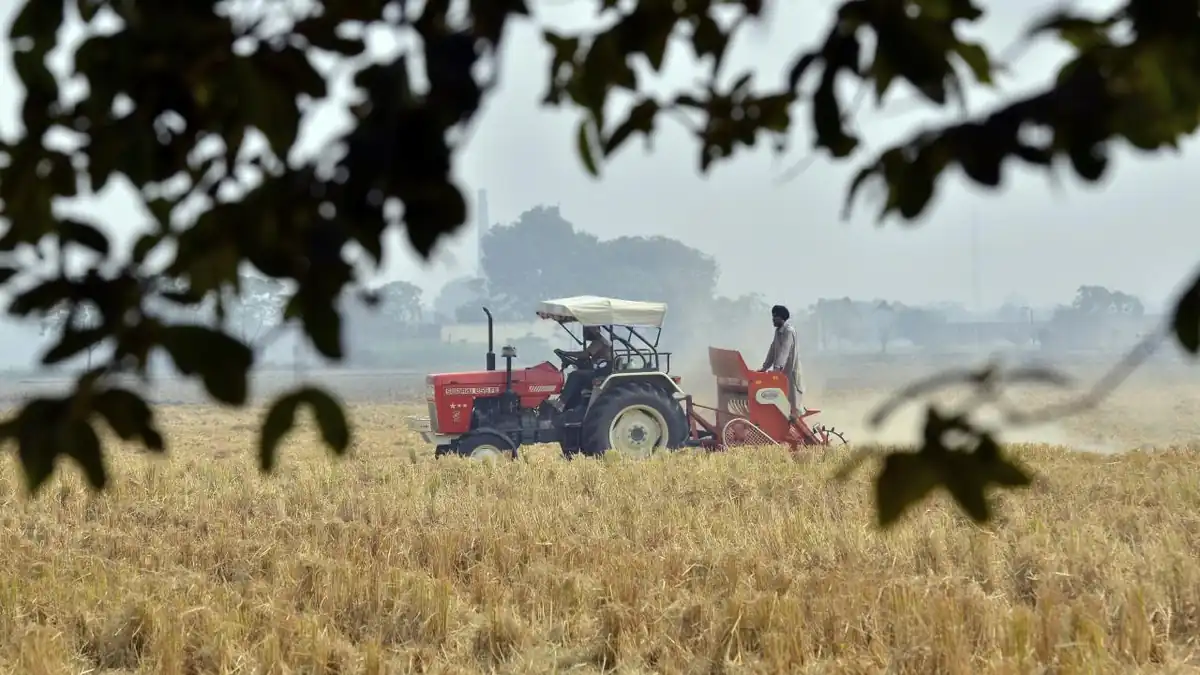
Every winter, the burning of rice and wheat residue in north India is linked to hazardous smoke. A different approach is to collect that residue before it reaches a field fire and turn it into a material people can use.
That makes crop-residue boards a practical climate and public-health story, not just a furniture trend. The question is whether the model can move beyond individual factories and work across the farming regions where burning remains a seasonal risk.
Biome, a materials company working with agricultural residue in Haryana, says it makes BIOMEBOARD™ by shredding and cleaning farm waste, bonding it with a no-added-formaldehyde resin and pressing it into engineered boards. The company describes the material as an alternative to conventional plywood, MDF and particle board for uses including furniture, partitions, wall panels, signage and interiors.
That process matters because it treats straw as a feedstock rather than as waste. If farmers can sell residue and a dependable collection system exists, burning becomes less attractive. The model also has the potential to reduce demand for virgin timber—but those benefits depend on actual collection volumes, product performance and transparent life-cycle accounting.
What the company says
Biome says its straw is sourced directly from farms in Haryana and that it pays farmers up to ₹5 per kilogram. It estimates that 100 cubic metres of BIOMEBOARD™ can use up to 75 tonnes of rice or wheat straw and avoid the burning of residue from as much as 30 acres. These are company-reported impact estimates, not independently verified figures.
The company also says the boards have no added formaldehyde and can be recycled into chipboard. Claims such as water resistance, termite resistance, strength and suitability for particular building applications should be assessed against product test reports, relevant standards and installation conditions rather than accepted from marketing language alone.
Similar initiatives are emerging
Biome is not the only organisation exploring this route. Craste markets boards made from crop stubble through its FuMa technology. Its website describes the boards as no-added-formaldehyde panels for interiors and packaging, and lists moisture and termite resistance among their specifications. Those claims, like Biome’s, remain company claims unless supported by accessible independent testing.
There is also a wider ecosystem beyond boards. The CII Foundation’s Crop Residue Management initiative works with villages and farmers to reduce open-field burning through machinery, awareness and local residue-management systems. Its programme received the UNDP-linked SDG Action Award in 2020 and a Global Development Award in 2021, according to the foundation.
Other models address the same problem at different points in the chain. The Government of India’s crop-residue guidance has examined machinery, biomass use and other ways to manage straw, while organisations such as the government’s agricultural machinery programme show why local collection, equipment access and farmer participation matter alongside manufacturing. These approaches are complementary: a board factory needs reliable feedstock, but not every field or every season will suit the same end use.
A useful solution, not a complete one
Turning stubble into boards cannot solve India’s air-pollution problem by itself. Collection, transport, moisture, seasonal supply, farmer payments, factory capacity and end-of-life recycling all determine whether the model works at scale. Residue must also remain available for uses that protect soil health, and removing every bit of straw from fields is not automatically beneficial.
Still, the idea changes the question. Instead of asking only how to punish burning, it asks how a material currently treated as a liability can create income, replace some wood-based products and support cleaner rural economies. The strongest version of this approach will combine farmer choice, verified performance data, transparent emissions accounting and public enforcement against burning.