Karmactive Team
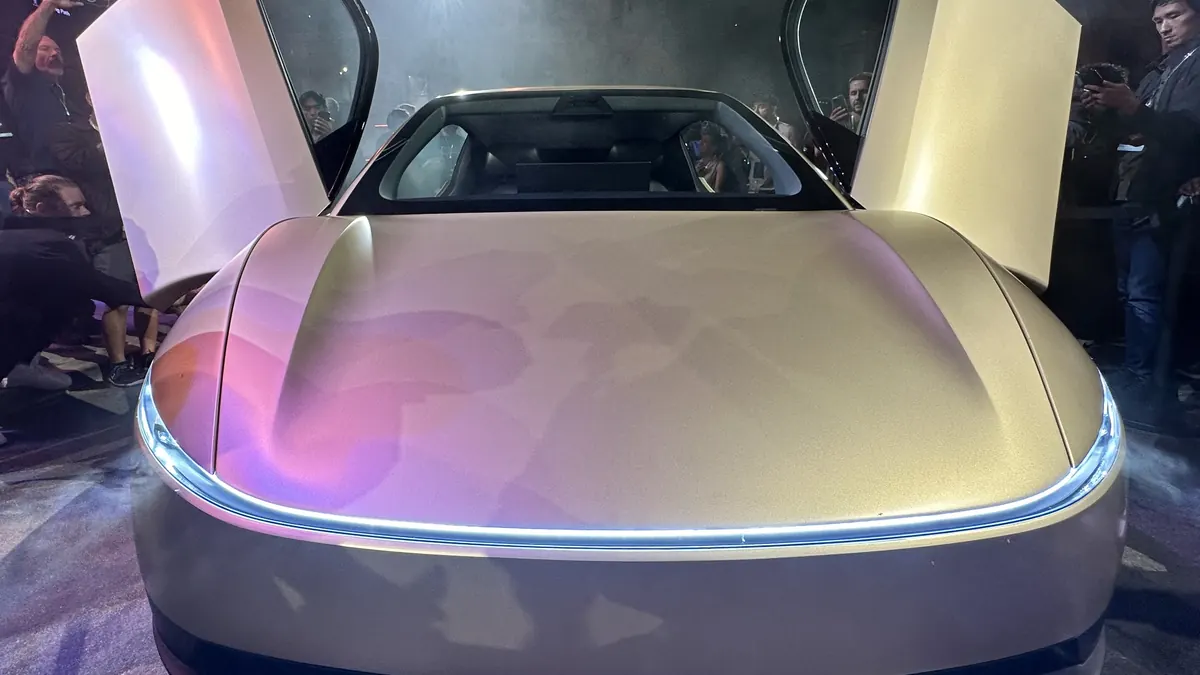
Tesla has launched commercial Cybercab rides in Austin and is targeting retail customer deliveries by the end of 2026, while the National Highway Traffic Safety Administration opened an Audit Query into whether the vehicle meets current federal safety standards. The Cybercab has no steering wheel and no pedals — and that is exactly what federal regulators are examining.
Tesla has stated its target for retail customer deliveries before year-end 2026. NHTSA opened Audit Query AQ26002 on September 4, 2026, examining how Tesla determined that the Cybercab satisfies Federal Motor Vehicle Safety Standards, which generally require vehicles sold in the US to include manual driver controls. Tesla has also announced plans to expand Cybercab service to Dallas as part of a commercial pilot program. The Cybercab operates without a steering wheel, brake pedal, or accelerator — no override mechanism for a human occupant exists in the cabin.
Retail buyers placing deposits on the Cybercab are doing so on a vehicle whose federal compliance status has not been resolved. If NHTSA finds that the Cybercab cannot be self-certified as compliant, Tesla would need to apply for a regulatory exemption or make design changes before consumer sales could proceed. One available exemption pathway under FMVSS Part 555 is capped at 2,500 units annually — a threshold that would limit consumer sales unless additional regulatory pathways are established.
The Regulatory Gap Tesla Needs to Cross Before Any Customer Takes Delivery
Federal Motor Vehicle Safety Standards were written when all road vehicles were assumed to have a human driver capable of taking physical control. The rules require steering systems, braking systems, and occupant protection features designed around that assumption. A vehicle with no steering wheel and no pedals presents certification questions the existing framework was not designed to address directly.
NHTSA's compliance investigation is not a recall or a safety defect finding. It is an inquiry into Tesla's self-certification process — specifically how Tesla's engineers determined that a vehicle without manual controls satisfies standards written to require them. The outcome determines whether the car can be sold and under what conditions. How NHTSA vehicle safety exemptions work and Tesla's autonomous vehicle regulatory history cover the federal approval pathway in more detail.
The Audit Query opened on September 4, the same day Tesla launched paid Cybercab rides in Austin, placing Tesla's commercial calendar in direct conflict with its unresolved regulatory status. Buyers placing deposits, municipal governments considering fleet deployments, and commercial partners are all operating without confirmation that the vehicle can legally ship to them on the timeline Tesla has described.
The Dallas pilot program may operate under commercial fleet structures subject to state-level rules that differ from federal consumer-vehicle standards. Federal compliance requirements for retail consumer sales are distinct, and NHTSA's investigation covers that category specifically.
Commercial electric vehicle fleet deployments of the type Tesla is planning for Dallas require coordinated charging infrastructure at scale. A city-wide robotaxi fleet running on a single vehicle platform with standardized charging requirements presents different grid management demands than mixed-fleet deployments. Urban EV fleet charging infrastructure planning covers the power logistics involved.
Why is NHTSA investigating the Tesla Cybercab?
NHTSA opened Audit Query AQ26002 covering how Tesla determined that a vehicle with no steering wheel and no pedals satisfies Federal Motor Vehicle Safety Standards, which generally mandate manual driver controls. Tesla has not publicly disclosed a timeline for responding to the investigation.
NHTSA has not announced a deadline for its findings. Tesla's year-end delivery target remains unchanged as of this writing. This article will be updated as NHTSA publishes conclusions or Tesla files an exemption petition with the agency.