 Govind Tekale
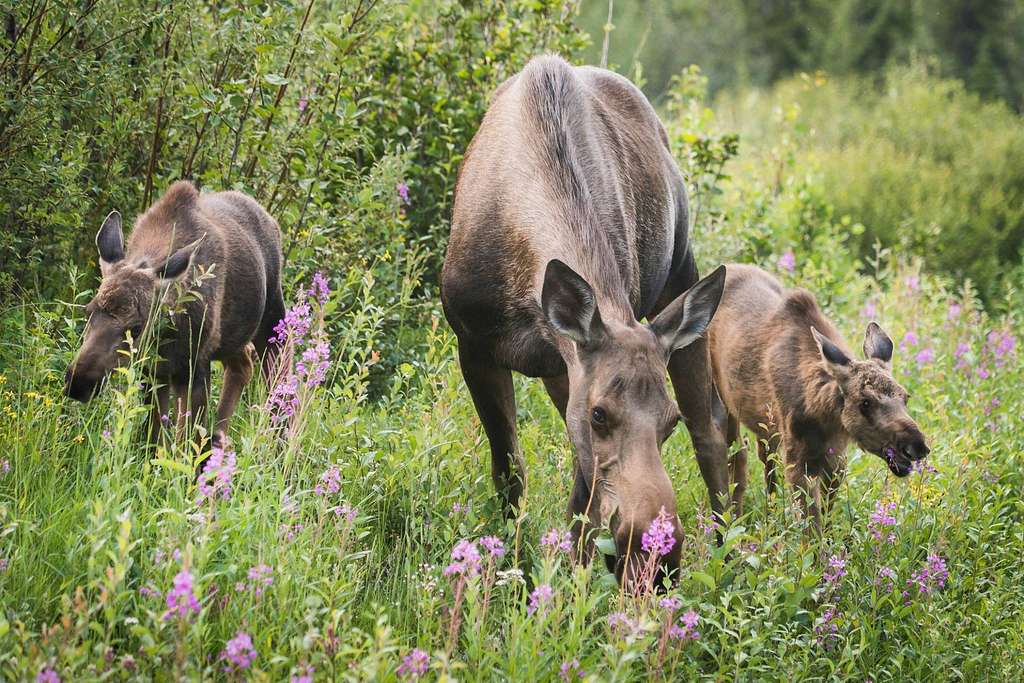
A Latah County, Idaho sheriff’s deputy arrived at a rural property call to find a juvenile moose with its legs hopelessly snared in wire, thrashing and unable to stand. The property owner had spotted the animal and contacted the sheriff’s office. What Deputy Frantz found on his body camera—and the several minutes that followed—has since circulated across social video platforms and national news feeds.
The deputy approached the animal slowly, keeping low to reduce perceived threat. Using heavy wire cutters, he calmly worked through the strands binding the moose’s legs over several minutes of careful cutting. The process took patience: the animal moved during the effort, requiring additional cuts before the moose was fully freed and able to move away. No sedation was required. The Latah County Sheriff’s Office later confirmed the animal left the scene “safe, sound, and full of apples.”
Stumbling upon an entangled moose or deer is terrifying, but approaching a thrashing 500-pound animal without professional backup can result in severe blunt-force injuries. If you spot trapped wildlife, maintain a safe distance and call local sheriff dispatch or state wildlife officers immediately. Rural property owners can significantly reduce these incidents by removing abandoned wire coils and installing wildlife-friendly fence retrofits before winter.
The wire responsible was a roll of fencing wire left at the property edge. Rural wildlife biologists at the Idaho Department of Fish and Game (IDFG) regularly urge landowners to sweep their properties for this type of legacy wire debris each autumn, before snow obscures it until spring.
What looked to viewers like a calm animal “waiting” for help was actually something more urgent. When a large animal becomes severely tangled and physically exhausted, intense muscular exertion can trigger lactic acid accumulation that, if unchecked, progresses to serious metabolic stress. A moose that has been entangled for an extended period risks irreversible metabolic damage. Deputy Frantz’s swift and careful intervention was not just heartwarming—it was time-critical.
How did an Idaho deputy rescue a tangled moose in Latah County? Responding to a rural property call, Latah County sheriff’s Deputy Frantz approached a distressed juvenile moose with legs snared in wire. Using wire cutters, the deputy worked through the strands over several minutes, allowing the animal to free itself and retreat into the forest. The full encounter was captured on the deputy’s body camera and later confirmed by the Latah County Sheriff’s Office.
Moments like this happen more often than most people realize across the rural American West, where ungulate entanglement incidents go unreported regularly. Removing abandoned wire, maintaining wildlife-friendly fence design, and reporting trapped wildlife promptly are actions available to any rural property owner. For context on the broader cost of infrastructure to wildlife, federal funding for wildlife-vehicle collision prevention captures the scale of the problem; the risks moose pose when approached is a reminder that this deputy’s caution was well-placed, and viral moose sightings show the global appetite for these encounters.
—