 Sonali Tiwary
—
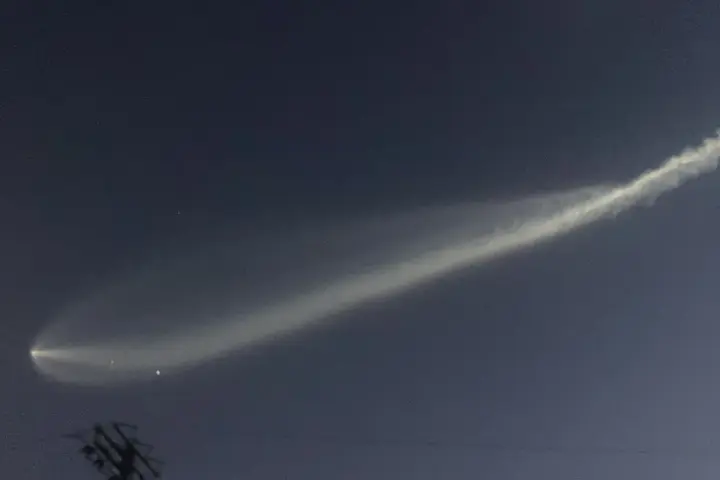
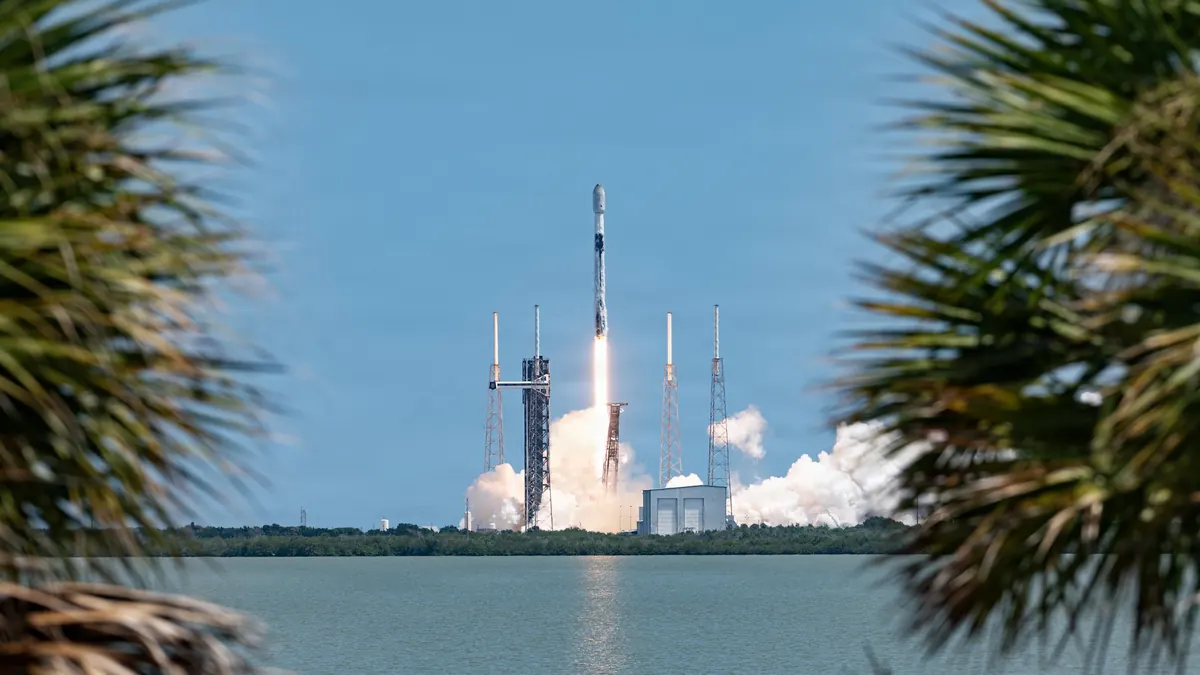
SpaceX scrubbed Monday’s primary launch attempt for its Bandwagon-5 mission due to unfavorable weather in the booster recovery zone; the mission now targets Tuesday, October 20, at 6:30 a.m. EDT from Cape Canaveral. The launch will put 32 payloads into orbit, including the Starfall reentry demonstration capsule — and if skies are clear, people along the East Coast and Gulf states may see the rocket’s exhaust plume glow against the pre-dawn sky in what observers call a “space jellyfish.”
What the Mission Carries
Bandwagon-5 is a rideshare mission, placing 32 payloads from multiple commercial operators onto a single Falcon 9 rocket. SpaceX’s rideshare program groups smaller satellites and spacecraft that cannot fill or do not need a dedicated rocket. Among the payloads is the Starfall reentry demonstration capsule; Exolaunch is managing 20 of the 31 rideshare customer payloads. The Bandwagon designation refers to mid-inclination orbits — between the polar and equatorial paths used by most large government satellites.
Why You Might See It in the Sky
The 6:30 a.m. launch window falls 55 minutes before the approximately 7:25 a.m. sunrise in Central Florida. At that hour, the ground is dark but the upper atmosphere — where the rocket will be traveling — is already lit by sunlight. The interaction between sunlight and the rocket’s exhaust plume at high altitude can create a glowing spiral cloud visible from the ground. The effect is visible to the naked eye under clear skies and does not require a telescope.
The plume typically becomes visible from about 5 minutes after launch as it enters sunlit airspace. Observers along the East Coast and Gulf states with clear eastern horizons should face east and watch shortly after 6:30 a.m. How to watch SpaceX launches from anywhere on the East Coast
What Could Cause a Scrub
SpaceX evaluates weather at Cape Canaveral and conditions along the flight path before every launch. Monday’s attempt was called off specifically due to conditions in the booster recovery zone in the Atlantic. Final launch status is available on SpaceX’s official launch page before you head outside Tuesday morning. SpaceX Falcon 9 launch record and upcoming 2026 missions
The Falcon 9 booster is expected to land on a droneship in the Atlantic after stage separation.
—