Govind Tekale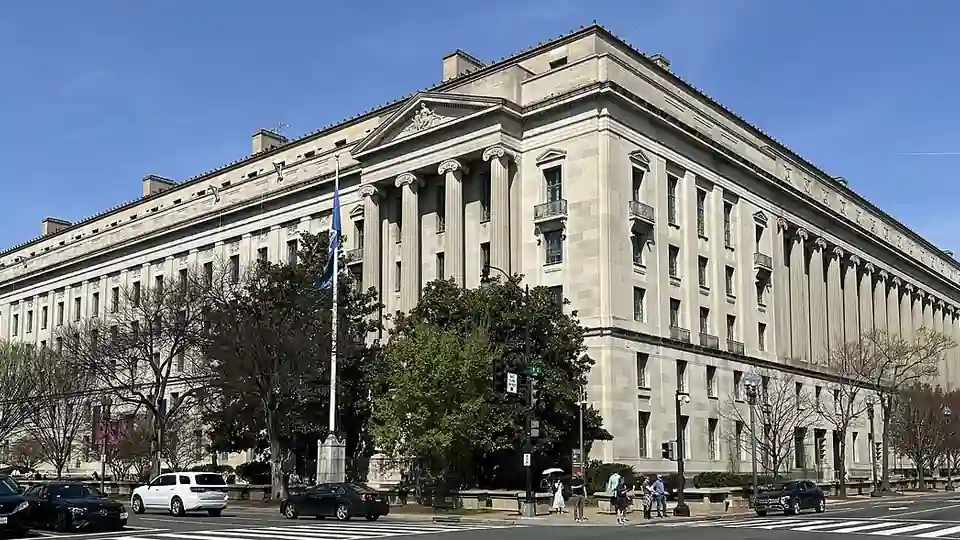
The US Department of Justice has opened an antitrust investigation into major television networks over their participation in the White House press pool, examining whether the broadcasters coordinated in a way that violates federal competition law. DOJ spokesperson Emily Covington confirmed the Antitrust Division is investigating whether the networks violated antitrust laws, as reported by CBS News and the New York Times.
The inquiry follows a period in which the pool temporarily suspended coverage after the White House restricted access for CNN, MS NOW and Politico. The networks later resumed pool coverage following a judicial ruling.
This is an investigation — not a charge. No network has been accused of breaking the law, and the DOJ has not filed a complaint.
What the White House TV Pool Actually Is
To understand what is being investigated, it helps to know what the pool does.
The White House press pool is a rotating arrangement in which a small group of news organisations takes turns being physically present at presidential events on behalf of the broader press corps. The pool shoots footage and shares it with other news organisations — including outlets that are not in the room. ABC, CBS, CNN, Fox News, and NBC participate.
The arrangement exists for practical reasons. The Oval Office, Air Force One, and many other presidential locations physically cannot accommodate cameras from every outlet. A shared pool means one camera crew films the event and the resulting footage goes to other outlets. Without it, many outlets would rely on the TV pool footage rather than sending their own camera to every presidential event.
The networks rotate TV pool duty under their own coordination arrangements. The legal question the DOJ is examining is whether the networks’ collective decision to suspend pool coverage amounted to group boycotts among commercial competitors — the language DOJ spokesperson Covington used in describing the potential violation.
Why This Theory Is Legally Complicated
Antitrust scholars have previously argued that joint newsgathering arrangements serving a public-access function are distinct from commercial price-fixing agreements, which is the typical target of Sherman Act Section 1 enforcement. Whether that distinction holds in this specific context is the central question for the inquiry.
The Trump administration’s broader approach to the media has included restricting which outlets attend briefings and limiting press access. This investigation extends that pattern into formal antitrust enforcement, which operates on different legal terrain than press access policy.
What Readers Should Watch
For the public, the practical effect of a prolonged pool disruption is simpler than the legal framework: standard footage of presidential events that feeds local news broadcasts, online clips, and international wire services would be disrupted or unavailable. Viewers in Australia and the UK who rely on US presidential coverage from major networks are watching a feed that originates with this pool arrangement.
The DOJ Antitrust Division can issue Civil Investigative Demands — a standard investigative tool — without filing a formal complaint. Whether this investigation produces charges, a settlement, or a quiet closure depends on what internal communications the networks produce and whether the DOJ finds evidence of explicit coordination rather than parallel editorial decisions.
What is the White House TV pool?
It is a rotating arrangement in which major networks take turns filming designated presidential events and share the footage with other news organisations. ABC, CBS, CNN, Fox News, and NBC participate. The arrangement matters because many outlets rely on that shared video rather than sending their own camera to every presidential event.
Watch for any formal DOJ filings or public statements indicating whether the investigation is advancing or closing. Civil Investigative Demands and formal information requests are the practical next steps to watch.