 Sonali Tiwary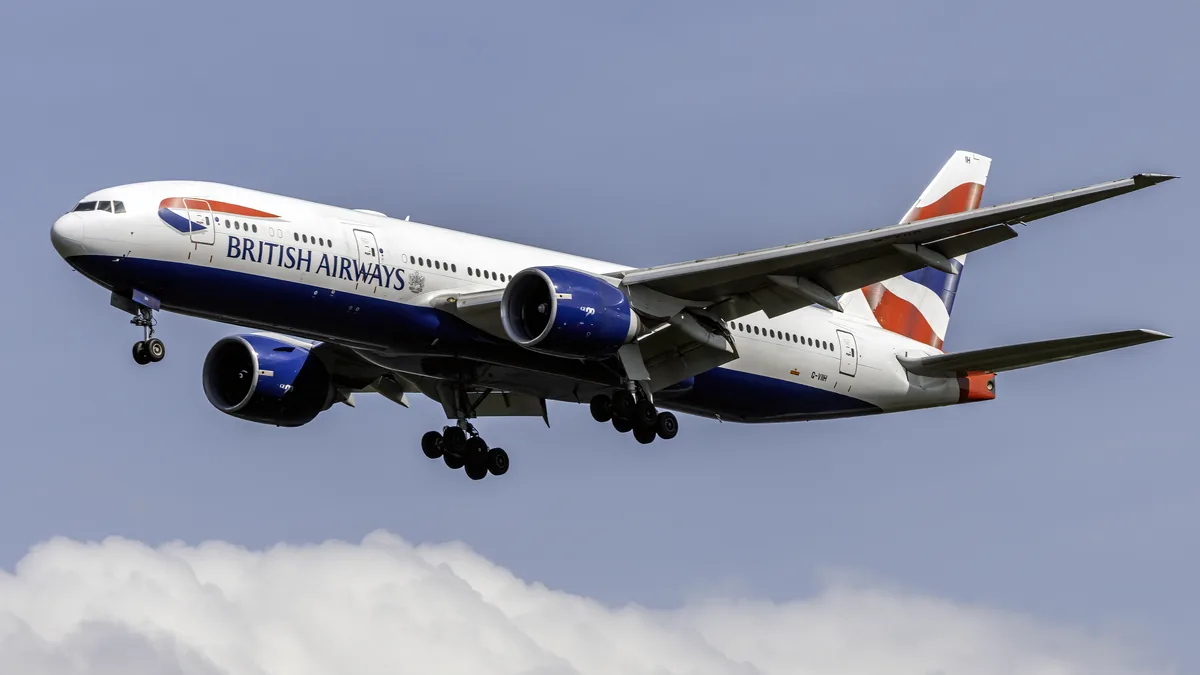
British Airways flight BA295 departed London Heathrow Sunday morning bound for Chicago O’Hare. About an hour after takeoff, the crew declared an emergency, turned the Boeing 777-200ER around over the Irish Sea, and descended more than 27,000 feet before returning safely to Heathrow. Every passenger on board disembarked without injury.
The British Airways BA295 descent began at cruise altitude of approximately 37,000 feet. Flight telemetry tracked by Flightradar24 shows the aircraft dropped to around 10,000 feet in roughly seven minutes—a rate of about 3,850 feet per minute—before entering a holding pattern to reduce fuel weight for landing. British Airways described the cause as a technical issue and confirmed the aircraft touched down on runway 27L at Heathrow. The airline said passengers disembarked normally and it would offer full rebooking assistance.
If you were a passenger on BA295 or hold upcoming transatlantic bookings, this event does not indicate a systemic airframe risk. Rapid descents following a pressurization emergency are a standard crew procedure, not a sign of impending crash. Affected BA295 passengers may be eligible for compensation under UK Regulation 261 depending on the length of the delay and whether the airline establishes an extraordinary circumstance defence; duty-of-care services including meals and hotel accommodation apply where qualifying thresholds are met.
Commercial aircraft carry stored oxygen to supply passengers for a limited time after depressurization masks deploy. Pilots train specifically to reach a lower altitude within that window—because at lower altitudes, the atmospheric pressure is sufficient for normal breathing without supplemental masks. A steep controlled descent is the designed safety response to a pressurization event; it is not evidence of catastrophic failure.
When a cabin loses pressure at altitude, oxygen masks drop automatically. Pilots immediately descend toward a lower target altitude—where atmospheric pressure is sufficient for normal breathing. The maneuver takes only minutes by design. On BA295, flight data confirms the crew reached that target altitude safely and proceeded under control from that point.
The linked passenger rights guide under UK Regulation 261 explains how to file a claim and which disruption categories qualify. For broader context, the commercial aviation safety record database covers how widebody emergency descents are categorized by the Air Accidents Investigation Branch.
British Airways has placed the aircraft into maintenance inspection.