Karmactive Team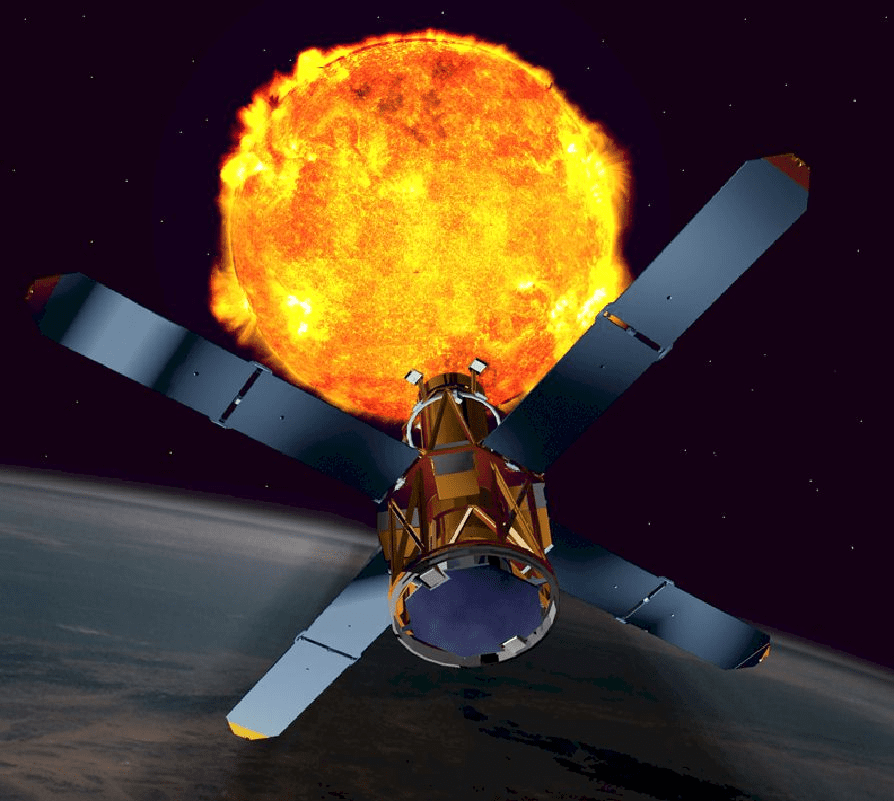
NASA has announced that a retired solar imaging spacecraft called the Reuven Ramaty High Energy Solar Spectroscopic Imager (RHESSI) is expected to reenter the Earth’s atmosphere on Wednesday night. The Defense Department predicts that some parts of the 660-pound spacecraft will survive the reentry and strike Earth.
NASA has stated that the risk of harm to anyone on Earth is low at approximately 1 in 2,467. RHESSI was launched in 2002 to explore the basic physics of particle acceleration and explosive energy releases in solar flares.
The spacecraft’s work enabled scientists to learn more about the underlying physics of how powerful bursts of energy occur. RHESSI’s imaging spectrometer became the first-ever mission to record gamma-ray images and high-energy X-ray images of solar flares.
The spacecraft’s activities included imaging the high-energy electrons that carry a large part of the energy released in solar flares. NASA has stated that RHESSI’s data provided vital clues about solar flares and their associated coronal mass ejections.
These events release the energy equivalent of billions of megatons of TNT into the solar atmosphere within minutes and can have effects on Earth, including the disruption of electrical systems. RHESSI also helped to improve measurements of the sun’s shape and demonstrated that terrestrial gamma-ray flashes happen more frequently than first thought.
- NT Child Protection Reforms 2026: Major Policy Changes for Aboriginal Children in Care
- Kerala Orange Alert 2026: IMD Warns of Heavy Rain as Monsoon Intensifies Across Districts
- Gujarat Monsoon Red Alert 2026: IMD Issues Warning for 13 Districts as Heavy Rain Batters State
- UPSSSC Pharmacist Result 2026: Selection List Released for 3,144 Posts — Check Now
- UP Police Constable Result 2026: How to Check Your Merit List and What Comes Next
NASA retired RHESSI in 2018 after maintaining communications with it became difficult. The space agency and the Defense Department will continue to monitor the spacecraft’s movements and update their predictions.