Rahul Somvanshi
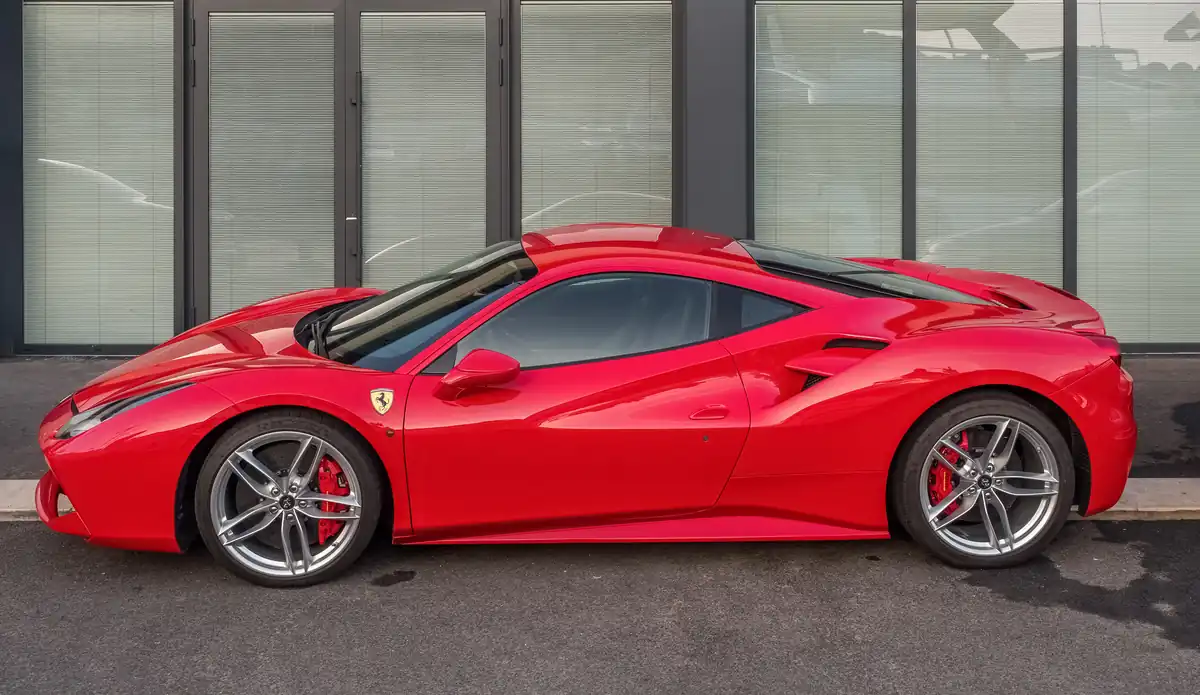
The Ferrari Luce EV arrives as the Maranello marque’s first all-electric production car, and it breaks two habits at once. It drops combustion for a quad-motor powertrain rated at 1,036 hp, and it adds four rear-hinged coach doors with room for five people. Following its international showcase from October 17 to 27, 2026, the car is expanding its global rollout and drawing attention beyond the usual Ferrari audience.
Core Specifications
The Luce’s headline figures start with output. Its four independent electric motors deliver 1,050 cv (1,036 hp) and 7,750 Nm of wheel torque, with 210 kW on the front axle and 620 kW on the rear. The car covers 0 to 60 mph in 2.4 seconds, reaches 100 km/h in 2.5 seconds and 200 km/h in 6.8 seconds, and tops out at 193 mph (310 km/h). Energy comes from a 122 kWh battery, a correction to a 112 kWh figure that appeared in some media coverage. The 800-volt architecture accepts up to 350 kW DC fast charging, adding 70 kWh in roughly 20 minutes, and the range is rated at 329 miles (530 km WLTP). Complete data is available in the Ferrari Luce official specifications.
Positioning in the Ultra-Luxury Segment
The Luce positions Ferrari against a growing group of ultra-luxury electric rivals by pairing performance with a cabin and charging profile suited to daily use. Its 329-mile range and 20-minute fast-charging window address concerns that have kept some buyers from the segment, while the five-seat, four-door layout widens its appeal beyond two-seat supercar owners. Readers following the wider luxury EV market can compare how rivals have pushed range and charging speed in recent years.
Jony Ive’s LoveFrom Cabin, Recycled Aluminum, and the ‘Electric Guitar’ Axle
Sir Jony Ive and Marc Newson co-designed the cabin with LoveFrom, the creative collective working across San Francisco and London. The interior uses four custom Samsung OLED panels measuring 12.9, 12, 10.1 and 6.3 inches, protected by Corning Gorilla Glass. Physical controls are machined from recycled aluminum toggles, and a physical yellow docking key floods the displays with Ferrari yellow when inserted. The manufacturing process cuts CO2 emissions by 70% through secondary recycled aluminum alloys. The Luce weighs 2,260 kg and rides on staggered 23-inch and 24-inch wheels, with a flat floor across its five-seat layout. More engineering detail is set out in the Ferrari corporate technical release.
The sound design takes a different route from the synthetic engine noise common in electric performance cars. A precision accelerometer at the center of the rear axle captures real mechanical vibrations from motors spinning at 30,000 rpm, and those signals are amplified much like an electric guitar. The instrument binnacle is a cut-out OLED display superimposed over the dashboard, so the driver’s information sits within the cabin’s layered design.
Does the electric Ferrari Luce make fake engine sound? No. The car uses no artificial engine audio. Its rear-axle accelerometer records genuine mechanical vibrations, which are amplified like an electric guitar signal, so the sound originates from the motors themselves.
Taken together, these choices place the Luce ahead of upcoming ultra-luxury EV rivals on paper, as global showroom previews continue.