 Sonali Tiwary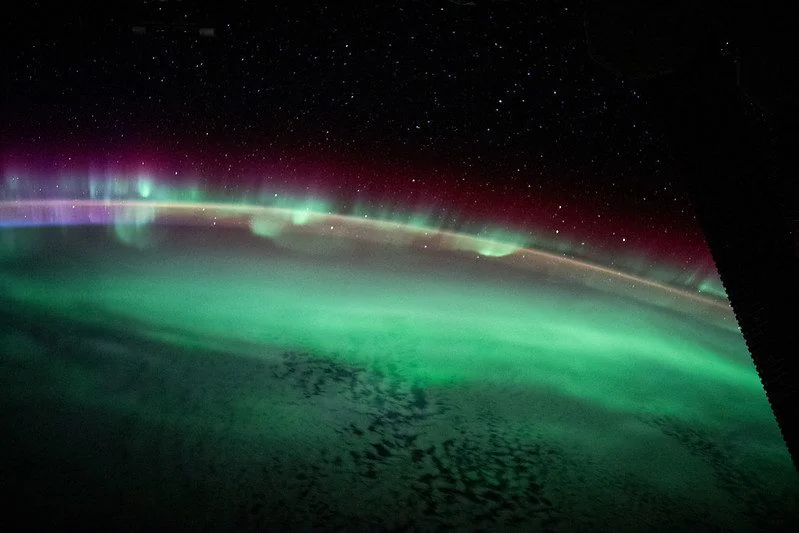
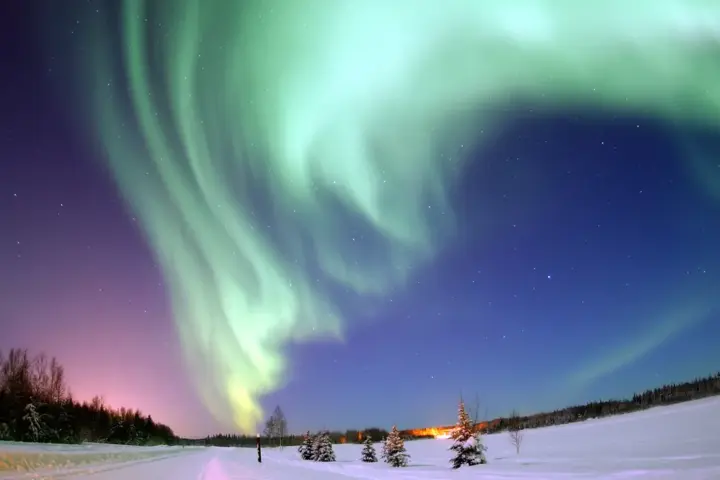
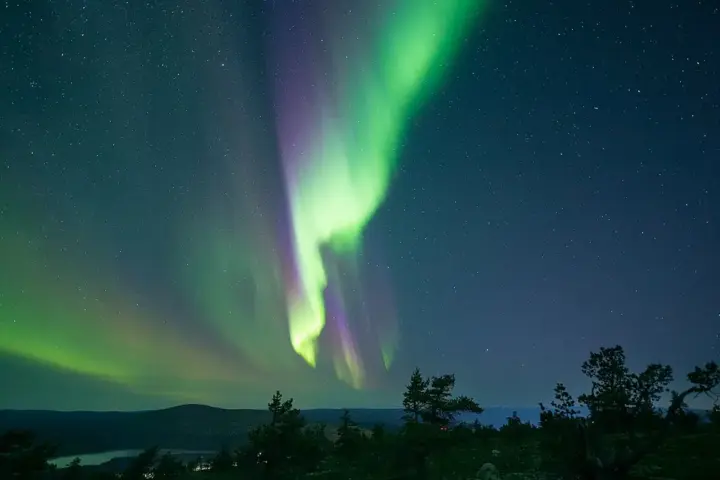
The National Oceanic and Atmospheric Administration (NOAA) has issued back-to-back geomagnetic storm watches for August 27 and 28. The first day brings a G1 (minor) watch; the second escalates to G2 (moderate). That’s the kind of solar activity that can paint the northern sky with shades of green, purple, and red.
Here’s what triggered the event. The Sun’s active region AR4513 produced multiple M-class solar flares, with the most significant being an M6.9 flare on August 25, peaking at approximately 10:02 UTC (06:00 EDT). This flare was powerful enough to generate an R2 (Moderate) high-frequency radio blackout affecting radio transmissions across Europe, Africa, and the Arctic for approximately one hour during the sunlit phase.
The flare also produced a coronal mass ejection. In addition, a separate coronal-hole high-speed stream is contributing to geomagnetic activity. The first storm watch, on August 27, stems primarily from this coronal-hole high-speed stream. The second watch, on August 28, is associated with the arrival of the coronal mass ejection from the August 25 flare, which NASA modeling projects will arrive around August 28, though different forecast models show somewhat varying arrival times.
What does G2 actually mean? NOAA uses a scale from G1 (minor) to G5 (extreme). A G2 is the second tier—strong enough to affect high-latitude power systems, satellite operations, and radio navigation. More importantly for skywatchers, a G2 watch can bring aurora sightings visible at high geomagnetic latitudes—particularly across northern states including Washington, Idaho, Montana, the Dakotas, Minnesota, Wisconsin, Michigan, and northern Maine. Under stronger geomagnetic conditions, aurora can occasionally be observed further south, with historical reports from locations like New York and Idaho during comparable storms.
To check if aurora may be visible from your location, use the live NOAA 30-minute aurora forecast, which updates in real time based on current Kp-index readings. The Kp index measures Earth’s magnetic disturbance; on August 28, readings could reach 5 to 6, which supports aurora activity extending toward lower latitudes.
The viewing window is dynamic and depends on local darkness and cloud cover. Rather than relying on a fixed time window, check real-time conditions to determine optimal viewing for your specific location.
Something extraordinary is also happening on August 27–28: the “Sturgeon Moon”—the August full moon—will undergo a partial lunar eclipse. The eclipse will be substantial, with 96.2% of the moon slipping into Earth’s shadow. Maximum eclipse occurs at 12:12 a.m. EDT on August 28. The eclipse lasts five hours and 38 minutes. For observers in the right locations with clear skies, both the reddish eclipsed moon in the south and green aurora to the north could potentially be visible simultaneously—a rare dual celestial display.
Viewing tips: Find a dark location with a clear, unobstructed horizon. No special equipment is needed—your naked eye is safe for viewing an eclipsed moon. For faint aurora that your eye struggles to detect, a mobile phone with night mode set to a 3–5 second exposure can capture images of displays. Check conditions in real time, stay flexible as conditions change, and remember that solar storms and aurora activity can shift quickly.