 Sunita Somvanshi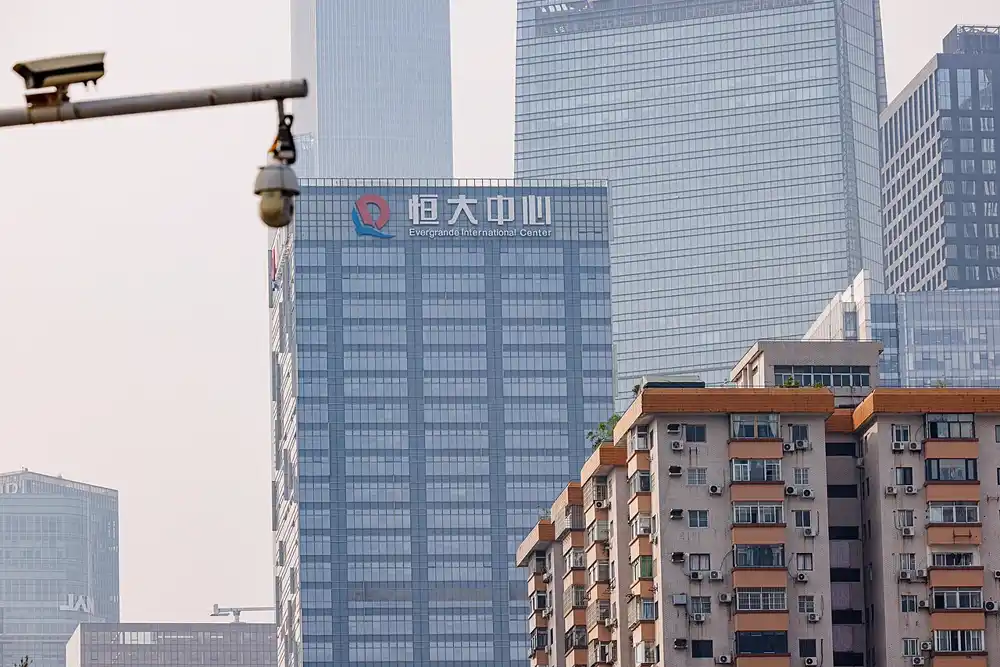
The founder of China’s most indebted property developer, China Evergrande Group, was sentenced to life in prison by a Shenzhen court on August 20, 2026, capping the dramatic fall of a man who was once among Asia’s richest people.
Hui Ka Yan, also known as Xu Jiayin, was convicted of large-scale financial fraud, fundraising fraud and bribery after he pleaded guilty in April 2026. The Shenzhen Intermediate People’s Court said the companies were fined a combined 15.82 billion yuan (about $2.3 billion) and that Hui’s personal property would be confiscated. More than 50 people linked to the group, including Hui’s two sons Xu Zhijian and Xu Tenghe, received prison terms ranging from 22 months to 18 years.
Evergrande, founded in 1996, grew into a real estate empire through aggressive borrowing. At its peak the company’s debt exceeded $300 billion, making it one of the world’s most leveraged corporations. When Beijing introduced strict debt controls in 2020, Evergrande could no longer service its obligations, triggering defaults that rocked Chinese and global financial markets.
“The criminal conduct of China Evergrande Group, Evergrande Real Estate, and Hui Ka Yan seriously disrupted the order of the socialist market economy and caused exceptionally heavy economic losses,” the court said in its verdict.
Evergrande’s collapse in 2021 sent shockwaves through China’s real estate sector, which accounts for roughly a quarter of the country’s GDP. The crisis spread to other major developers and contributed to slower economic growth in China. International banks and bondholders faced combined losses estimated in the hundreds of billions of dollars.
The sentencing reflects a broader push by Chinese authorities to hold executives accountable for financial misconduct tied to the property downturn. The case builds on our coverage of China’s energy-sector transitions and the renewable-energy investments examined in our analysis of large-scale solar deals in the Middle East.
The court’s full statement was carried by China’s official Xinhua news agency, which reported the verdict and the scope of the fines in its account of the sentencing.