 Rahul Somvanshi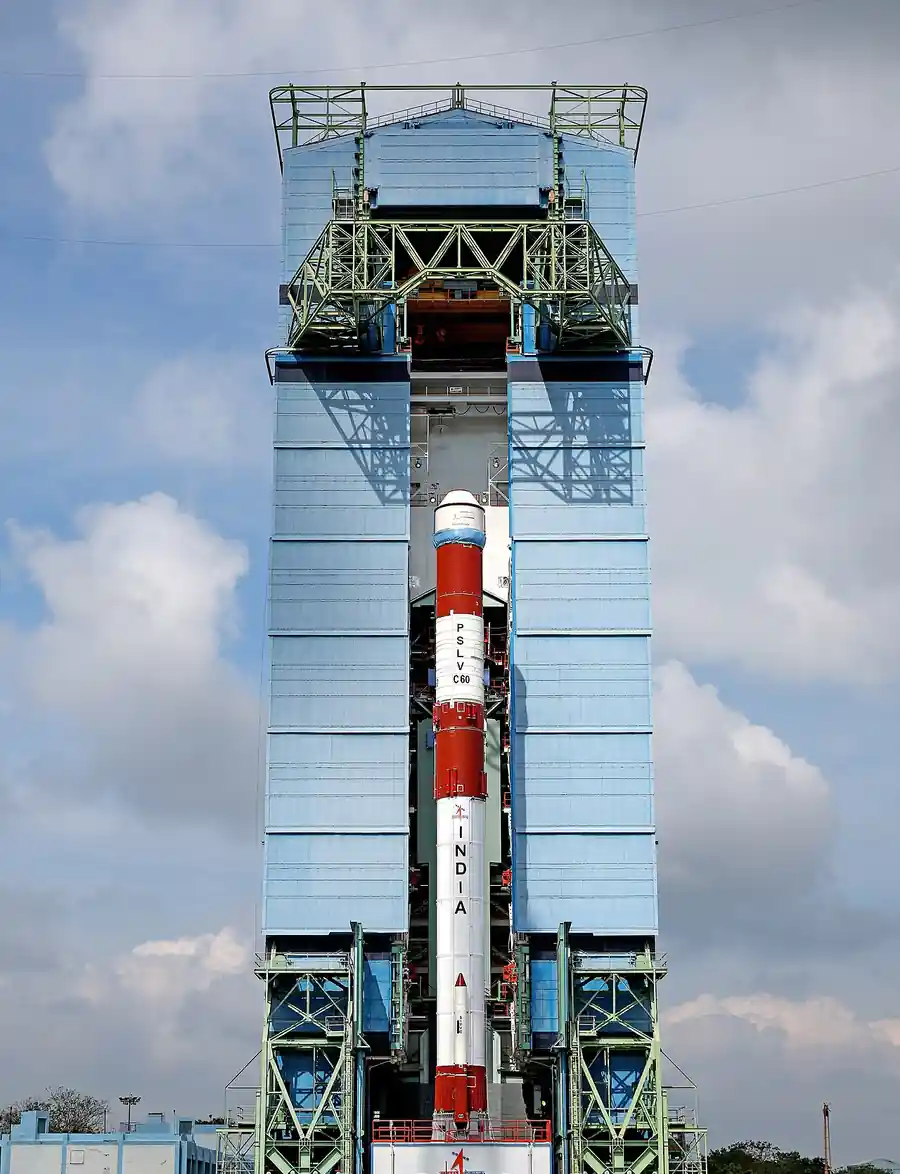
PART 1: TWO MISSIONS, TWO CELEBRATIONS, ONE PATTERN
When India’s Mangalyaan spacecraft successfully entered Mars orbit on September 24, 2014, the nation erupted in celebration. Three years later, on August 23, 2023, India achieved another historic feat: the Chandrayaan-3 lunar lander touched down on the Moon’s south pole, making India only the fourth country globally to achieve a soft lunar landing. Both missions were televised live, with millions watching in real-time as India’s space scientists and officials celebrated at mission control centers.
Television screens across the country showed jubilant ISRO scientists and officials. Prime Minister Narendra Modi held press conferences. Bollywood celebrities tweeted congratulations. International media praised India’s cost-effective achievements. The world marveled at how a nation could accomplish these feats at a fraction of the cost of comparable American or European missions.
But behind the cameras, a different story was unfolding that nobody talked about. And it wasn’t limited to one company or one mission. It was systemic. It was structural. And by 2023-2024, it had spread across India’s entire space supply chain.
PART 2: THE MANGALYAAN MYTH VS. THE HEC REALITY
The narrative that emerged after India’s space triumphs contained a dangerous myth: that Indian space scientists worked without pay for months. This false claim spread across social media and podcasts, especially during celebrations of the Chandrayaan-3 mission in August 2023. The reality, however, is more complicated and far more troubling.
The Truth About ISRO Scientists:
ISRO scientists and engineers who designed and built Mangalyaan received their salaries on time. The Indian Space Research Organisation operates under the Department of Space and receives direct government funding. The confusion originated from a completely different group: workers at the Heavy Engineering Corporation in Ranchi—a manufacturing facility that had nothing to do with building rockets or satellites. HEC is a separate government company that produces heavy industrial equipment, not space technology.
What HEC Actually Built:
So what exactly did HEC build for space missions? Everything that holds the rocket up before launch. HEC manufactured the massive steel structures that transport India’s rockets across the launchpad. They built the enormous cranes that can lift 200 to 400 tonnes—equipment necessary to assemble rocket stages. They designed the heavy sliding doors that protect rockets from weather until the moment of ignition. For the Chandrayaan-3 mission specifically, HEC built the mobile launching pad and other critical ground-support equipment that was delivered in December 2022, ahead of schedule.
Without HEC’s infrastructure work, there would be no launchpad capable of sending anything to space. Yet when the government decided to celebrate India’s space achievements, HEC remained invisible. The political spotlight went entirely to ISRO, which operates under the Department of Space and receives direct government funding. HEC, meanwhile, falls under the Ministry of Heavy Industries—a ministry that has been starved of resources as the government shifted focus toward privatization and corporate involvement.
PART 3: THE SALARY CRISIS UNFOLDS
By late 2023 and into 2024, roughly 2,780 to 3,300 HEC workers faced an impossible situation. According to reports from January 2024, they had not received paychecks for approximately 17 months, with some officer categories experiencing 18 months without pay. By August 2026, the backlog had extended further. Engineers and technicians with specialized skills took jobs driving auto-rickshaws and selling vegetables just to feed their families. The workforce that once stood at 22,000 had shrunk to a skeleton crew. The company still held orders worth 1,200 crore rupees, but 80 percent of actual production had stopped because there was no money to buy raw materials.
What makes this situation particularly bitter is the financial contrast visible when examining government spending priorities. The government’s daily advertising expenditure averages approximately ₹1.5 crore, based on official data showing ₹5,987.46 crore spent on advertisements and publicity between 2014-15 and 2024-25. This averages out to roughly ₹1.5 crore per day over the eleven-year period. When workers remained unpaid, this daily advertising budget represented a stark contrast to their struggles.
Government daily ad spend
₹1.5 Cr
per day
HEC total salary backlog
₹150-200 Cr
25-29 months unpaid
Days of ad spending needed
100-130
to pay all workers
Financial comparison
Annual publicity budget
₹1,210 crore
HEC salary backlog
₹150-200 crore
Ratio
6-8x larger (ad budget)
Time to resolve crisis
100-130 days of ad spend
The structural irony is complete. India successfully runs one of the world’s most cost-effective space programs while simultaneously allowing the manufacturing foundation that enables those programs to collapse financially. Workers who literally built the platforms that took India to Mars and the Moon couldn’t afford basic groceries. When they protested, they held up replicas of rockets and launchpads—using the government’s own symbols of national pride to expose how those symbols came at the cost of their families’ survival.
PART 4: THIS IS NOT ABOUT HEC ALONE—IT’S A SYSTEMIC CRISIS
The structural issues seen with HEC are part of a broader pattern affecting multiple contractors and workers across India’s strategic defense and space supply chains. HEC is not unique. It is emblematic.
Case Study 1: HAL’s Cash Crisis (2018-2020) – The Fighter Jet Supply Chain Collapse
Hindustan Aeronautics Limited (HAL)—the state-owned aerospace giant that builds India’s fighter jets and collaborates closely with ISRO on rocket components—faced a severe cash crunch. The Indian Air Force (IAF) delayed billions of rupees in payments to HAL for aircraft deliveries. By January 2019, HAL had to take an emergency bank loan of ₹781 crore just to pay salaries to its 29,000 employees.
According to HAL’s own disclosures, IAF dues stood at ₹15,700 crore in early 2019 and escalated to ₹17,000 to ₹20,000 crore by late 2019 and early 2020—nearly equal to HAL’s entire year’s turnover. The irony was stark: while the IAF held back HAL’s payments, it paid foreign vendors like Dassault (Rafale fighters) and Boeing (Apache and Chinook helicopters) on schedule. HAL’s cash balance plummeted from ₹5,250 crore in March 2018 to just ₹45 crore by March 2019. The company froze hiring, slashed contract worker employment by 20 percent, and survived on bank overdrafts.
Only by 2021, after the government secured advance payments for the 83 Light Combat Aircraft (LCA) contract, did HAL’s liquidity improve. Cash flow reached ₹34,000 crore including the ₹5,400 crore advance for the LCA contract, allowing HAL to finally liquidate all its bank borrowings.
Case Study 2: The MSME “Lowest-Bidder” Trap
To pull off remarkably low-cost missions, ISRO relies heavily on a Lowest-Bidder (L1) procurement system. Mid-tier and small engineering contractors aggressively lower their prices to win prestigious space contracts. The profit margins for building complex metallic components, precision hardware, and sensors are razor-thin. Companies bid below cost-effective levels to win contracts, betting on volume and reputation.
The catch: while multi-billion-dollar giants can absorb delayed payments, mid-sized engineering vendors regularly get trapped when ISRO checks or milestone clearances are caught in bureaucratic red tape. Because these contractors lack internal cash reserves, a three-to-six-month delay from the Department of Space has repeatedly forced small component suppliers to hold back wages or temporarily downsize their private machine-shop workers.
Case Study 3: Ordnance Factory Board (OFB) Workers’ Strike – The Corporatisation Crisis (2021)
Before its restructuring, the Ordnance Factory Board—which manufactures heavy defense equipment, propellants, and strategic components used across both military and aerospace launch sectors—faced massive worker unrest. The government announced on June 16, 2021, that it would split OFB into seven defense public sector units (DPSUs). The 41 factories employed approximately 76,000 workers.
Worker unions representing some 61,199 employees voted in a referendum: 61,564 participated, and 61,199 voted AGAINST corporatisation. Only 365 were in favor. Yet the government proceeded anyway. Workers feared mass layoffs, salary cuts, and uncertain pension schemes. For employees recruited after 2004, pensions were uncertain under the New Pension Scheme—a far cry from the old defined-benefit pensions of government workers.
In August 2019 and again in July 2021, workers threatened indefinite strikes. Around 82,000 workers from all 41 ordnance factories participated in strike action. Like HEC, they were building critical infrastructure for national security while fearing for their own financial survival. The government eventually assured workers that service conditions would be protected “on foreign service.” But the damage to morale and trust was done. Much like the HEC crisis, workers at ordnance factories protested that they were being stripped of financial stability despite manufacturing the critical ammunition and hardware marketed as symbols of national security.
Case Study 4: Contract Engineers Inside ISRO – The Invisible Workforce
A substantial portion of the ground work at various ISRO facilities is executed not by permanent scientists, but by temporary contract engineers recruited via third-party manpower agencies. These engineers work side-by-side with permanent staff, performing vital coding, testing, and laboratory assembly during high-profile missions like Chandrayaan-3 and the Aditya-L1 solar mission.
However, they lack basic job security, healthcare benefits, and structural allowances of central government employees. Labor unions have repeatedly flagged issues regarding irregular contract renewals, abrupt terminations right after major missions wrap up, and strict non-disclosure clauses that prevent them from using their high-profile space experience to secure outside employment easily.
Case Study 5: The Unpaid Student Intern Controversy
Even at the entry level, the practice of extracting value without compensation sparked significant backlash. ISRO runs highly competitive internships for top-tier engineering students as part of its educational outreach. Unlike global corporate aerospace firms, ISRO historically offered zero stipends and no student accommodation for these interns. Students from low-income backgrounds simply could not afford to intern at ISRO, even if they were brilliant enough to get selected.
This policy triggered fierce public debates, with critics pointing out that while the government uses student innovations to promote national tech milestones, it simultaneously builds a financial barrier that prevents talented but low-income students from participating in India’s space journey.
PART 5: THE SYSTEMIC ROOT CAUSE—STRUCTURAL DISCONNECTS IN GOVERNMENT
All of these cases point to a single structural problem: different government ministries fund different parts of India’s space program, and they operate independently with no integrated budget or payment planning.
The Ministry of Space (ISRO’s parent ministry) is well-funded and prioritized. The Department of Space, which directly handles ISRO’s operations, receives steady budget allocations. But contractors and suppliers fall under different ministries: Heavy Industries (HEC), Defense (HAL), or operate as independent MSMEs. When central government finances tighten, the political fallout from delaying ISRO scientist salaries is immediate and public. The political cost of delaying HEC or HAL payments is far lower—these are “background” operations, “infrastructure” issues that don’t hit the headlines.
Moreover, when a government chooses to spend ₹1.5 crore per day on publicity while contractors cannot meet payroll, it reveals the policy priority clearly: narrative management matters more than worker welfare.
PART 6: THE FORWARD ARGUMENTS—WHERE DO WE GO FROM HERE?
The crisis at HEC, HAL, MSME vendors, OFB workers, and ISRO contract staff raises critical questions about India’s space program and its future:
Argument 1: The Privatization Trap
The government’s stated policy direction is toward privatization and private sector involvement in space. The recently announced plan to hand over ISRO’s new small-satellite launch complex at Kulasekarapattinam to private operators reflects this shift. But history shows that privatization often means cost-cutting at the expense of worker welfare. If HEC is eventually privatized, will the remaining workers receive the back pay owed to them, or will privatization become an opportunity to wipe the slate clean and start fresh with lower wages?
Argument 2: Sustainability of “Cost-Effective” Missions
India’s space missions are celebrated globally for being cost-effective. Mangalyaan cost ₹450 crore. Chandrayaan-3 cost ₹615 crore. But at what cost to the workers? If we calculate the social cost—unpaid wages, worker hardship, family suffering—India’s missions become far more expensive than advertised. A truly cost-effective model would account for the total cost including fair compensation to all workers involved.
Argument 3: National Priority and Government Spending Choices
The government spends ₹1.5 crore daily on publicity while workers go unpaid. This is not a resource scarcity problem. India is not a poor country that cannot afford to pay its workers. It is a priority-setting problem. The government has chosen to invest in narrative and brand-building (space missions marketed as national glory) while underfunding the material conditions (worker salaries, contractor payments) that make those narratives possible.
Argument 4: The “Make in India” Contradiction
India’s “Make in India” initiative aims to build manufacturing capacity domestically. Yet the government allows HEC—a critical piece of that manufacturing infrastructure—to collapse from lack of funding. How can India build domestic manufacturing capacity if the government starves domestic manufacturers of working capital? The irony is that India imports space technology from other nations while its own domestic contractors go unpaid.
Argument 5: Lessons from HAL’s Recovery
HAL recovered from its 2018-2020 cash crisis only after the government committed to advance payments for the LCA contract. This shows that a single policy decision—providing working capital advances instead of post-delivery payments—can solve contractor liquidity crises. Why hasn’t this model been applied to HEC? The answer suggests that HEC’s crisis is not inevitable. It is a choice.
Argument 6: The Need for Integrated Budget Planning
India needs a unified space-industrial budget that treats all contractors and suppliers as integral to the space program’s success, not as background support. This would involve consolidated oversight across Department of Space, Ministry of Heavy Industries, Ministry of Defense, and DRDO; pre-agreed payment schedules for all contractors; advance payment models for critical suppliers; regular audits of contractor financial health; and transparent reporting of payment delays to Parliament.
Argument 7: Worker Protections in Privatization
If and when HEC, HAL, or other state contractors are privatized, legislation must guarantee that back-pay owed to workers is settled before privatization transfers. Workers should not bear the cost of government neglect.
CONCLUSION: THE PRICE OF PRIDE
India’s space program is a remarkable achievement. Mangalyaan’s success in 2014 proved that India could join the elite group of Mars-exploring nations. Chandrayaan-3’s 2023 moon landing made India the fourth country to achieve a soft lunar landing. These are genuine triumphs to be proud of.
But pride built on the suffering of unpaid workers is hollow pride. Workers who built the launchpads, the cranes, the infrastructure that made these missions possible have paid a price that few of us ever see. While the nation celebrated, they drove auto-rickshaws and sold vegetables to feed their families.
The government spends ₹1.5 crore every day telling Indians about their space achievements. Over 100 to 130 days of that advertising budget would resolve the entire HEC workers’ salary crisis. It has not chosen to do so. That choice reveals what the government values.
What will India do with this knowledge? Will the next space mission celebration include a moment to acknowledge the workers whose unpaid labor made it possible? Will the government commit to integrated budget planning that ensures all contractors are paid on time? Will privatization become an opportunity to settle back-pay, or an opportunity to forget it ever happened?
These are the questions that linger after the celebrations end and the news cameras move on to the next story.
—