 Karmactive Staff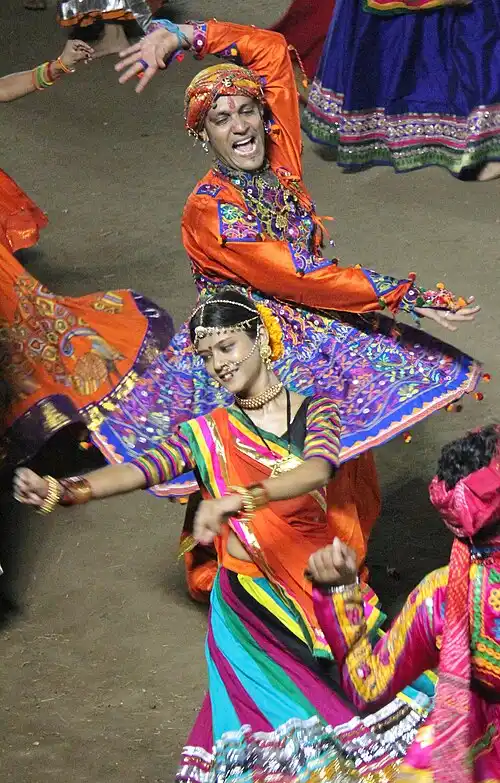
Navratri illuminates communities across India and the diaspora. For nine nights, people gather to dance Garba and Dandiya Raas, honoring the Divine Feminine in the form of Goddess Durga. The venues fill with lights, fabrics, and decorations that transform ordinary spaces into celebrations. Yet these decorations typically consist of plastic lights, synthetic fabrics, and single-use items designed to last exactly nine nights before ending up in landfills. You can create stunning Navratri venues that celebrate the holiday without poisoning the environment.
Navratri arrives around October 11th in 2026. The festival spans nine nights, with each night dedicated to a different form of the Goddess. Garba and Dandiya Raas—circle dances with sticks and hand clapping—are central to the celebration in Gujarat and increasingly across the world. These dances require spaces transformed by light and color. The decoration industry has responded by producing cheap plastic lights, synthetic fabrics, and single-use decorative elements that create the festive aesthetic quickly and at low cost. See Navratri and Garba (dance)).
After reading this article, you’ll know how to decorate Navratri venues with zero waste. You’ll understand which materials are reusable and which are single-use. You’ll learn where to find LED lights that last for years instead of plastic lights that break instantly. You’ll discover how to create color and vibrancy using natural fabrics instead of synthetic ones. This knowledge lets you host Garba that’s as beautiful as any traditional celebration while eliminating the environmental footprint.
Plastic lights dominate Navratri decorations. They’re cheap, come in bright colors, and create a festive aesthetic instantly. But plastic breaks easily in transport and storage. After nine nights, most plastic light strings end up in landfills. A single large Garba venue might use 200 light strings—that’s 200 pieces of plastic waste per event. Across hundreds of Navratri celebrations happening simultaneously, the total plastic waste reaches thousands of tons.
Synthetic fabrics used in Navratri drapes, backdrops, and stage decorations pose different problems. Polyester and acrylic fabrics don’t biodegrade for centuries. They require petroleum-based production, consuming fossil fuels and releasing carbon dioxide. After the festival, most synthetic fabric decorations are discarded. Unlike lights, which can at least theoretically be recycled if they reach the right facility, synthetic fabrics in India are rarely diverted from landfills.
What makes Garba decoration truly zero-waste?
LED light strings are the cornerstone of sustainable Navratri decoration. Quality LED strings cost more upfront—perhaps three to five times the cost of plastic lights. But they last for over 50,000 hours of use, which means they’ll light Garba venues for decades. The electricity cost is 80 percent lower than incandescent or halogen lights. After nine nights or nine years of use, LED lights don’t end up in landfills—they get stored for the next Navratri. A community that invests in quality LED lights pays less per Navratri within five years than communities buying cheap plastic lights every year. See LED lamp.
Natural fabrics replace synthetic drapes and backdrops. Cotton, linen, and silk can be purchased secondhand from textile shops or previous Navratri events. These fabrics drape beautifully, age well, and can be donated, resold, or repurposed after the festival. Cotton takes decades to biodegrade rather than centuries, and it comes from renewable sources. Dyeing natural fabrics in Navratri colors—reds, golds, blues, greens—can be done with plant-based dyes or professional textile dyers. The aesthetic matches or exceeds synthetic alternatives.
Temporary structures should prioritize reusability. Bamboo poles can be reused annually to create archways and structural elements. They’re stronger than plastic piping, and they’re completely biodegradable if they do eventually break. Wooden platforms and stages can be built, stored, and reassembled each year. The upfront cost is higher than disposable systems, but long-term economics favor durable materials.
Flower decorations offer color without waste. Fresh flowers last through the nine nights if properly maintained. Marigolds, chrysanthemums, and seasonal blooms are inexpensive and abundant during autumn. They can be composted after the festival or distributed to gardeners and farmers. Communities in smaller cities sometimes coordinate with temples to collect flowers after Navratri for composting programs. This practice ties Garba decoration to local gardening and community composting.
Can you achieve visual impact without synthetic materials? Yes. Golden or silver natural fabrics create richness without polyester. Mirrors and reflective materials made from glass amplify light in ways that synthetic materials cannot match. Carved wooden screens and latticework provide pattern and texture. These elements cost more initially but last for decades and improve with age rather than degrading into microplastics.
Lighting design becomes more important when you’re working with reusable elements. Strategic placement of LED lights creates drama and focus without relying on quantity. Uplighting from below creates shadows and depth. Colored gels on LED lights produce jewel tones that seem like authentic natural color. Modern LED technology allows programming of light sequences, creating animation and movement without increasing waste.
Waste-free decoration also means waste-free setup and cleanup. Use reusable storage containers for lights, fabrics, and decorative elements. Build an inventory system so your team knows exactly what exists and where it’s stored. Organize by color and function so volunteers can work efficiently. Transport all materials in durable crates that can be restacked and nested for compact storage. This infrastructure takes time to establish but accelerates future Navratri events.
An irreplicable observation: Regional differences in Navratri decoration are notable. Urban centers like Ahmedabad and Mumbai have developed elaborate Garba venues with sophisticated lighting and staging. Smaller towns often preserve more traditional decoration approaches. There’s no national standard for what constitutes proper Navratri decoration, which means communities have freedom to innovate and choose reusability without appearing to deviate from tradition.
How do you transform a Garba venue to zero-waste decoration? Purchase or lease quality LED lights that last decades. Source natural fabrics from secondhand markets or save them from previous years. Build durable structural elements from bamboo or wood. Use fresh flowers and natural materials for color. Develop an inventory system and storage infrastructure. Invest more upfront, knowing you’ll save money and environmental impact over time.
The beauty of zero-waste Navratri decoration is that it challenges the assumption that celebrations require disposability. Durga, the Goddess honored during Navratri, is a symbol of strength and permanence. Decorations that last years embody her spirit better than decorations designed for destruction. When Garba venues are built from materials that endure, the celebration itself feels more substantial and meaningful.
Many Navratri organizers report that switching to reusable materials deepens community engagement. People remember being part of storing decorations carefully or transporting LED lights with care. They take pride in materials that will serve their community for years. The Garba space becomes a shared resource rather than a disposable product. This shift in relationship to the physical space often strengthens community bonds alongside environmental outcomes.
Priority PAA: What are eco-friendly Garba decorations? LED lights, natural fabrics, bamboo structures, fresh flowers, glass mirrors, reusable storage containers.
—
Related: Eco Friendly Rakhi 2026; Ganesh Visarjan 2026 Water Pollution Eco Friendly