Karmactive Team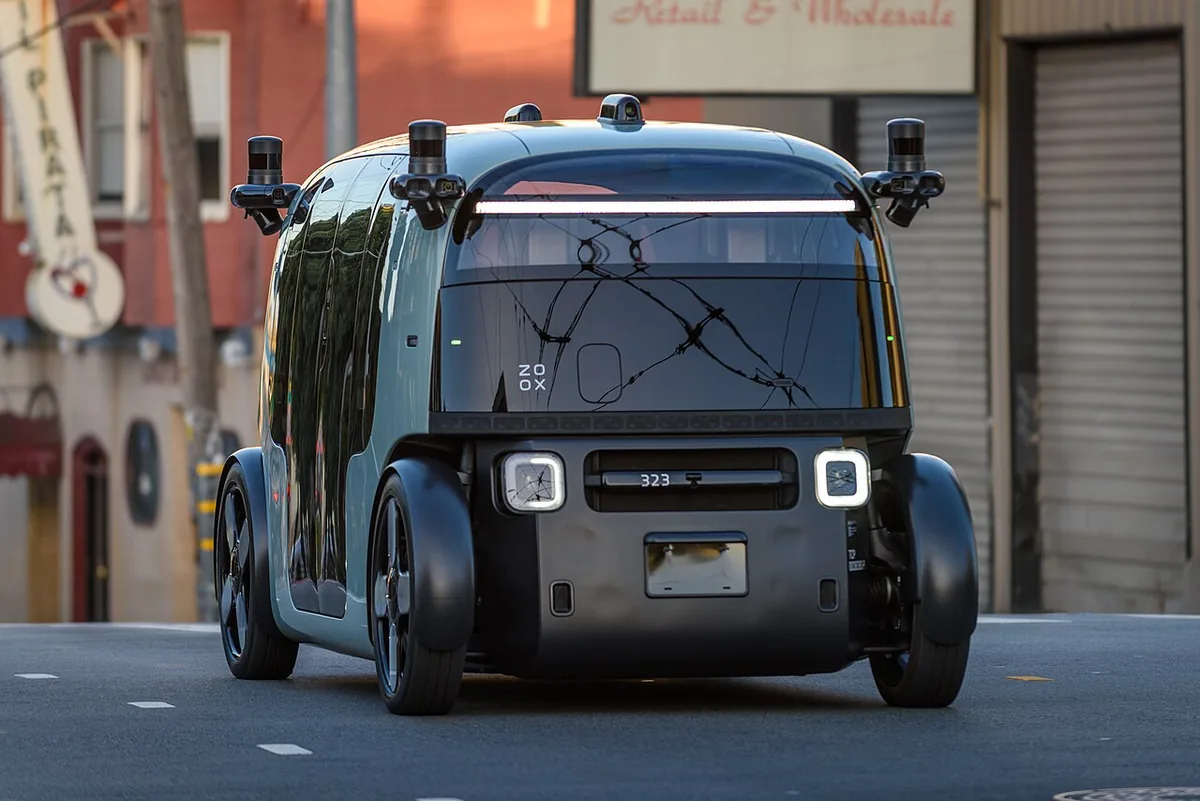
Estimated reading time: 2 minutes
Amazon’s Zoox became the first company in United States history to win federal regulatory approval for a purpose-built robotaxi with no steering wheel, pedals, or driver’s seat. The National Highway Traffic Safety Administration granted the exemption on July 30, 2026, published in the Federal Register on July 31, 2026, marking a watershed moment for autonomous vehicle commercial deployment.
The historic exemption relieves Zoox from eight Federal Motor Vehicle Safety Standards written when every vehicle assumed a human driver behind the wheel. Traditional requirements like steering wheels, brake pedals, and specific mirror configurations do not apply to Zoox’s design. The four-passenger pod operates in bidirectional mode—seating faces inward toward the center, not forward.
NHTSA granted the exemption under its Part 555 process for advanced autonomous vehicles. The temporary approval covers deployment of up to 2,500 vehicles annually for a two-year period, allowing Zoox to scale operations while maintaining federal oversight. Zoox confirmed on August 5 that paid rides in Las Vegas begin on August 10, 2026, its first commercial market after carrying close to a million riders on free services in Las Vegas, San Francisco, Austin and Miami.
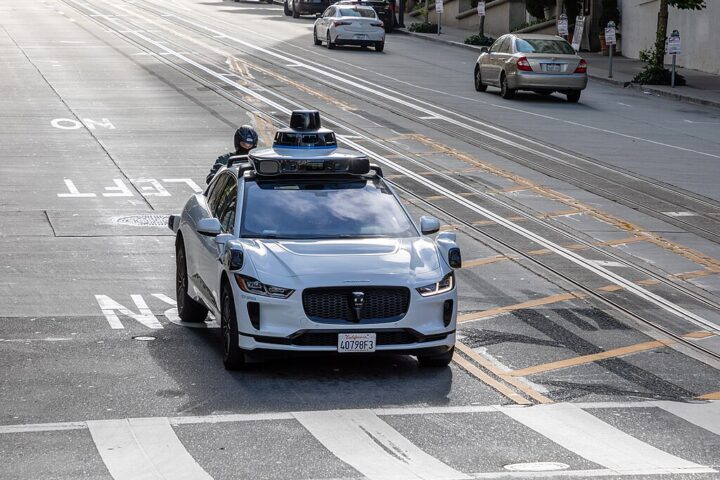
Unlike competitor Waymo, which modified production vehicles with autonomous hardware, Zoox engineered every component from inception without human controls. The engineering approach represents a fundamental rethinking of vehicle design for autonomous-only operation.
California approval remains pending from the state’s Department of Motor Vehicles and Public Utilities Commission. Las Vegas operations can proceed under the federal exemption, but San Francisco commercial service awaits separate state authorization. Regulatory collaboration between Zoox and Nevada is expected to facilitate rapid launch.
The approval comes after safety concerns. On June 20, 2026, an unoccupied Zoox robotaxi in Las Vegas approached an active fire emergency scene not yet cordoned off. The vehicle failed to detect heavy smoke obscuring the roadway, braked hard, and attempted to steer away before stopping inside the emergency zone. A remote operator subsequently guided it backward via teleoperator control. The incident exposed gaps in emergency-scene detection despite the company’s extensive testing.
NHTSA simultaneously set an industry-wide deadline for all autonomous vehicle companies to submit emergency-scene safety solutions. That deadline expired on July 30, 2026—the same day Zoox received approval—without public resolution from any operator. The timing raises questions about coordination between exemption approval and industry-wide safety standards development.
Zoox pricing remains unannounced, though the company indicated alignment with established ride-hailing providers like Uber and Lyft. The exemption represents validation of the company’s engineering and safety protocols while highlighting remaining gaps in autonomous vehicle emergency response capabilities.