Sunita Somvanshi
Estimated reading time: 5 minutes
The Telangana government released Kharif 2026 funds under the Rythu Bharosa scheme from June 30, 2026, channeling Rs. 6,000 per acre directly into farmer bank accounts through Direct Benefit Transfer. This payment marks the third major installment since the scheme replaced Rythu Bandhu in January 2025, reaching approximately 73 lakh farmers across the state.
The scheme provides Rs. 12,000 annually—Rs. 6,000 per season for Kharif (monsoon) and Rabi (winter) crops. For a farmer with 5 acres, maximum benefit is Rs. 30,000 per year, split across two seasons. This targeted support addresses input costs for seeds, fertilizers, labor, and water, reducing reliance on informal loans that carry punitive interest rates.
How Rythu Bharosa Changed from Rythu Bandhu
The predecessor scheme (Rythu Bandhu) operated differently. It paid Rs. 10,000 per acre on unverified registered land, creating regressive distribution favoring larger landholders and excluding tenant farmers despite their contribution to agriculture. Many marginalized cultivators never received payments despite being active farmers.
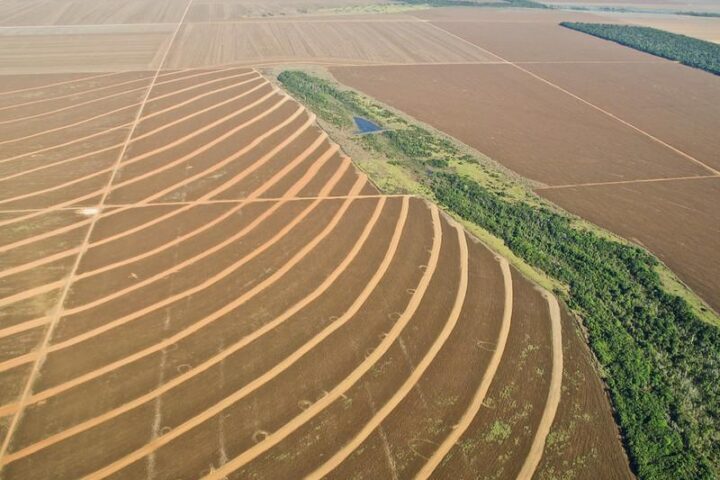
Rythu Bharosa tightened eligibility through satellite verification of “actively cultivable arable land.” If your land appears fallow or non-agricultural via satellite imagery, you’re excluded. This prevents payments to absentee landowners while still including legitimate working farmers. More importantly, tenant farmers now qualify—a major inclusion compared to the old system.
How this works: satellite data identifies cultivated plots. Cross-referencing with Bhu Bharati land records (the updated land titling system replacing Dharani) confirms current ownership/possession. Direct Benefit Transfer moves money to accounts linked with Aadhaar. Transparent, verifiable, exclusion-minimized compared to the old scheme’s opacity.
Payment Structure and Eligibility Verification
Farmers must be Telangana residents with active cultivable land to qualify. Registration requires visiting local Rythu Vedika centers and submitting land documents plus eKYC details. For joint ownership, payments are proportional to recorded share. Example: If 3 acres are jointly owned by two co-owners with equal shares, each receives Rs. 6,000 per acre annually on their 1.5-acre share (Rs. 9,000 per season total across both seasons).
The proportional payment system prevents disputes common under Rythu Bandhu where joint owners fought over single allotment. Now, if you own a recorded fractional share, you get that fraction of benefits automatically.
Land record updates matter critically. If Bhu Bharati shows your land details incorrectly, you’re excluded. This creates a common problem: farmers whose fields were recently purchased or inherited but not yet recorded miss payments. Land record offices (renamed from Meebhoomi centers post-Bhu Bharati implementation) must update records quickly, but delays persist in many districts.
Kharif Timelines and Payment Delays
The Kharif 2026 season payment from June 30 was earlier than typical patterns. Previously, Kharif payments came in July-August. June timing suggests the government accelerated disbursement to support monsoon-dependent sowing.
However, “expected” payment dates and “actual” receipt dates differ frequently. Post-harvest verification creates delays. Revenue officials inspect fields to confirm cultivation before releasing final approvals. In districts with high application volumes, verifications queue up, pushing actual bank transfers 3-6 weeks past formal payment announcement dates.
Rabi season (November-March) payment timing is more predictable because it occurs post-harvest from the prior Kharif season. Verification backlogs clear during the months between seasons. Most Rabi payments reach accounts in March-April for the upcoming Rabi sowing in October-November.
Indiramma Atmiya Bharosa for Landless Workers
A subset scheme covers farm laborers without land through Indiramma Atmiya Bharosa. Eligibility requires 20+ days of MGNREGA work participation during the 2023-24 fiscal year. Eligible laborers get Rs. 12,000 annually, distributed in two Rs. 6,000 installments. Registration closed March 25, 2026, for those meeting MGNREGA thresholds.
This inclusion addresses a gap in agricultural support—most schemes target landowners, leaving laborers who provide actual field work unprotected. Rythu Bharosa’s parallel structure for landless workers represents policy progress, though outreach remains limited in rural areas with low MGNREGA penetration.
Common Problems and Solutions
Problem: “My application was rejected.”
Why: Land details incorrect in Bhu Bharati, Aadhaar not linked properly, or agricultural classification shows non-arable land. Solution: Verify Bhu Bharati records immediately at revenue office and request corrections.
Problem: “I didn’t receive payment on announced date.”
Why: Verification incomplete, DBT processing queued, or bank account not properly linked. Solution: Check portal status at rythubharosa.telangana.gov.in, then visit Mandal Agriculture Office if status shows “processed but not received” (likely technical/banking delay).
Problem: “Joint ownership split between me and someone else—what’s my payment?”
Why: Proportional payment calculated from Bhu Bharati recorded share percentage. If records show 50-50 split on 3 acres, you get 50% of Rs. 6,000/acre on 1.5 acres (Rs. 4,500 per installment). Solution: Ensure co-ownership records in Bhu Bharati are updated to reflect actual shares.
Sustainability and Long-Term Impact
At Rs. 6,000 per acre per season, total annual expenditure reaches approximately Rs. 8,700 crore (73 lakh farmers × average 2 acres × Rs. 12,000/year). This scales with farmer count and requires consistent government budget allocation. Telangana has prioritized agricultural welfare heavily, but political changes or fiscal constraints could alter sustainability.
The scheme’s 2026 operation shows government commitment. Unlike schemes that launch with fanfare then quietly reduce benefits, Rythu Bharosa receives consistent budget allocation. However, farmers shouldn’t assume permanence—policy can change with administrations.
Impact on farming practices is subtle but real. Reduced debt burden allows risk-taking—farmers experiment with better seed varieties, improved fertilizer timing, or water-efficient techniques rather than purely subsistence farming. Psychological relief from debt stress improves decision-making. These aren’t measured impacts, but anecdotal evidence from beneficiary areas suggests genuine livelihood improvement.
Tenant farmer inclusion was transformative. Previously invisible to welfare schemes, tenant farmers now appear in official records. This creates policy foundation for future schemes targeting cultivators rather than just landowners. Rythu Bharosa’s tenant inclusion sets precedent for inclusive agricultural support.