Sunita Somvanshi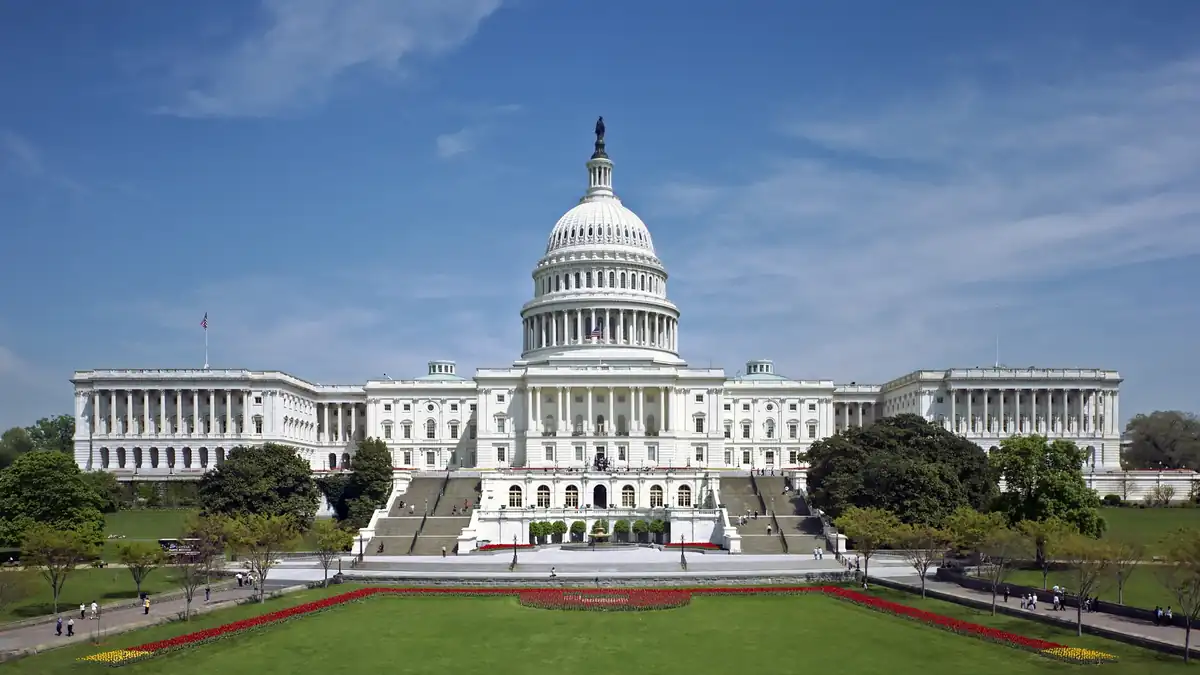
About seven weeks before Election Day, the race for control of the US Senate has narrowed to a handful of states where both parties are measuring how much they can afford to spend. The Democratic path to a Senate majority runs through states that voted for Republicans in recent cycles. The Republican path to keeping the chamber runs through holding enough of those states to deny Democrats a net gain of four seats. Senate Majority Leader John Thune has said publicly: “I worry about that, for sure. I’m a realist, and I don’t ever try and sugarcoat things.”
Democrats need a net gain of four seats to flip Senate control, assuming no independent seat changes. The competitive terrain includes Georgia, North Carolina, Michigan, Maine, Texas, Iowa, Alaska, and Ohio. Total projected ad spending in Senate races across the country is expected to exceed $3.4 billion — a figure that reflects how both parties are treating November as genuinely uncertain.
If you live in Georgia or North Carolina, your Senate contest is one of the most-watched races in the country right now. Both parties are making active decisions about resource allocation in these states. Republican strategists are weighing whether to continue significant investment in both. Voters in these states are likely to see concentrated campaign activity between now and November. Where candidate visits and advertising concentrate will tell you more about which party sees a real contest than any single poll will.
Georgia and North Carolina: The Two Races Changing the Calculus
In Georgia, Democratic incumbent Jon Ossoff is on the ballot for re-election. Ossoff won his seat in the January 2021 runoff and has been in office since. His re-election campaign is the focal point of the Georgia contest. Georgia held its primary in May 2026, with the Republican nominee heading into the general election against Ossoff. The state has voted Republican in presidential races for decades but flipped in both 2020 and the subsequent Senate runoffs — a pattern that makes it genuinely competitive rather than a predictable outcome in either direction.
In North Carolina, the 2026 general election on November 3 includes a US Senate seat. The candidate list on the North Carolina State Board of Elections website as of this writing is still subject to changes. North Carolina’s Senate contest has been described as an open-seat race, which typically draws more outside spending than a race featuring an established incumbent. Both parties are treating it as a priority.
Senate Republican sources, speaking to multiple news outlets, have described internal discussions about whether to maintain full investment in both Georgia and North Carolina — or redirect some resources to defend seats in other states where margins may be more manageable. Those conversations are themselves a signal that neither race is considered reliably safe from the Republican perspective.
Where the $3.4 Billion Goes
Ad spending in Senate races does not distribute evenly across the map. The states where spending concentrates by October will tell the clearest story of where each party’s internal polling shows the contest is live. Michigan and Maine have also seen elevated activity, as has Texas — a state that national Democrats have increasingly treated as a long-range target as its suburban population has shifted.
Alaska and Ohio round out the states where both party organizations are maintaining campaign infrastructure. Iowa has seen Republican investment stay committed even as some strategists have described it as a state where the margin may be smaller than expected in a neutral cycle.
Which Senate seats are contested in 2026? Georgia (Ossoff running for re-election), North Carolina (open seat, general election November 3), Michigan, Maine, Texas, Iowa, Alaska, and Ohio have all been identified as competitive contests by both parties.
The next major public signal on this race will be October polling and the ad-reservation data that reflects how campaigns are actually allocating their final spending. Check back for updated Senate race coverage as those numbers become available. For a full breakdown of which seats are up this cycle, see the 2026 Senate race guide on Karmactive. Georgia Secretary of State election results and the North Carolina State Board of Elections are the authoritative sources for candidate and ballot information.