Rahul Somvanshi
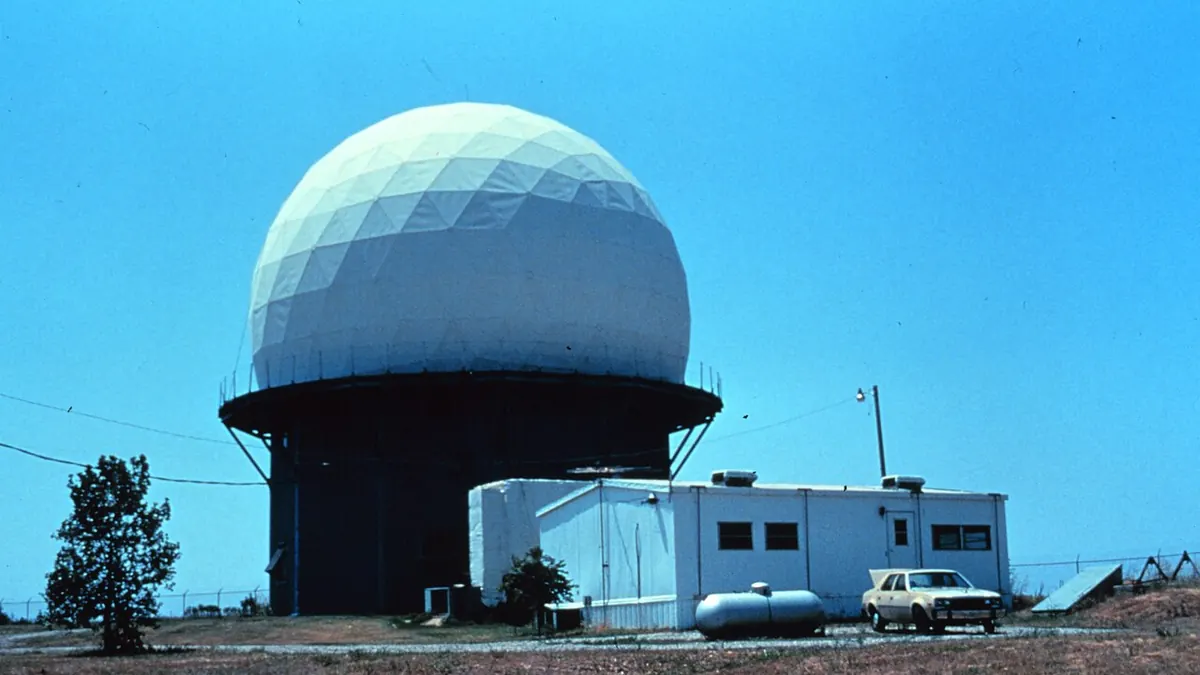
If a cyclone, flood or heatwave is heading your way, a warning only helps if someone is watching the radar. It also has to reach your phone. A new United Nations report shows how many cannot.
The WMO early warning systems report comes from the UN Office for Disaster Risk Reduction (UNDRR) and the World Meteorological Organization (WMO). Its formal title is the Global Status of Multi-Hazard Early Warning Systems 2026. It was launched on 11 November 2026 at the COP31 climate conference in Antalya, Türkiye. It finds that 136 countries now report some multi-hazard early warning capability. That is up 17 from March 2025 and equals 70 per cent of all countries.
The measured effect is large. Countries with substantial to comprehensive systems recorded disaster-related mortality 6.1 times lower than countries with limited to moderate systems. They also recorded 3.2 times fewer people affected by disasters.
A warning chain has four links: knowing the risk, detecting the hazard, sending the alert, and acting on it. Only 64 of the 136 countries report capabilities across all four. Where a link is missing, an alert may never be issued, or it may arrive with no advice on what to do. That gap decides whether a warning saves a household or arrives too late.
The staffing and data gaps behind the numbers
Only 15 per cent of WMO members report a full complement of qualified and experienced technical staff. Another 30 per cent report partial capacity. Many warning agencies cannot carry out maintenance, calibration and quality control. Improvements to observation networks do not always last.
Fifteen per cent of national meteorological and hydrological services operate with unstable internet connections. That is 29 WMO members, mostly least developed countries, small island states or landlocked ones. Third is forecasting style. Only 14 per cent of WMO members issue impact-based forecasts for all of their priority hazards. Such forecasts say what the weather will do, not simply what it will be.
The gap is less about having a system on paper than about the people and data needed to run it.
Four pillars, and only 64 countries with all of them
The report scores countries on four pillars. Out of 136 reporting countries, 72 report disaster risk knowledge and 102 report detection, monitoring and forecasting. Another 123 report warning dissemination and communication. A further 111 report preparedness to respond. Disaster risk knowledge is the weakest link on both counts.
Average quality has not kept pace with coverage. The preparedness to respond score slipped from 0.74 to 0.70. The global average score rose 47 per cent. In plain terms, more countries have a system on paper than a year ago. The strongest systems have improved. The ability to act on warnings has edged backwards.
Where the gaps are concentrated
Coverage is uneven. Small island developing states report the lowest coverage. Least developed countries have the lowest overall comprehensiveness scores, despite the largest improvement from their initial scores. Every region now reports coverage of at least 50 per cent. Africa added 11 countries in a year and reached 77 per cent. Europe and Central Asia have the highest comprehensiveness and the Arab states the lowest. Africa’s average score is now on a par with the Americas and the Caribbean.
Two networks are improving. Data sharing from Global Basic Observing Network compliant stations rose from 37 per cent in 2023 to 52 per cent in 2025. 38 countries now run cell broadcast systems, with 17 more close to launch.
From warning to action
A warning has to trigger action. The report finds that anticipatory action frameworks rose 70 per cent in a year, from 154 to 262, spanning 75 countries. These frameworks release pre-agreed funding and steps when a forecast crosses a threshold. In 2025, 146 activations in 54 countries reached 9.6 million people. They were backed by US$119.9 million in pre-arranged financing.
UN Secretary-General António Guterres put the stakes plainly at the launch. “A warning of 24 hours can reduce damage by up to 30 per cent.”
Kamal Kishore, the UN Special Representative for Disaster Risk Reduction, offered a caution. “Four out of five people affected by disaster received a warning, 1 in 3 were unable to act on it.”
Frequently Asked Questions
How many countries have multi-hazard early warning systems in 2026?
136 countries report some capability, up 17 from March 2025. That equals 70 per cent of countries, a 143 per cent increase since reporting began in 2015, when 56 countries reported systems.
How much do early warning systems reduce disaster deaths?
Countries with substantial to comprehensive systems recorded disaster-related mortality 6.1 times lower than countries with limited to moderate systems. They also recorded 3.2 times fewer people affected.
What is the Early Warnings for All 2027 deadline?
The initiative was launched in 2022 and is led by UNDRR, WMO, the International Telecommunication Union and the Red Cross and Red Crescent. It aims to protect everyone on Earth with early warnings by 2027. By mid-2026, 50 countries were actively engaged, 35 national roadmaps existed and more than 160 countries received direct support.
The 2027 target is now one year away. COP31 closed on 20 November 2026 with leaders backing a long-term future for the initiative. Financing and capacity commitments that decide whether the last third of countries get covered are still being settled. Check back for the outcome.