 Enayat Garg
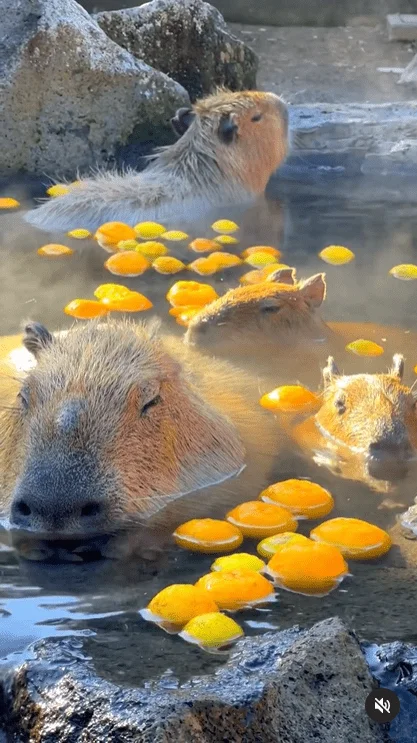
1min.traveller is a travel page that covers Japanese aesthetics while traveling on their page. This video is How Capybaras Relax In Japan taking a bath between yuzu.
Yuzu is a small citrus fruit that enhances relaxation. How Capybaras Relax In Japan This video must have brought you the relaxation the capybaras must be feeling on a lazy day.
See: capybaras.
See: capybaras.
Capybaras in Japan demonstrate how introduced species can integrate into local ecosystems while maintaining natural behaviors and social structures in environments far removed from their native South American habitats. These semi-aquatic rodents have adapted to Japanese seasons, food availability patterns, and human interaction dynamics in ways that reveal insights about animal behavior plasticity and cultural transmission. The presence of capybaras in Japanese hot springs has become a popular tourist attraction that raises questions about balancing wildlife conservation with public recreation. Similar capybara populations exist in Australia and European zoos where behavioral studies have documented consistent patterns of social behavior and habitat preferences across different geographic regions. These large rodents play crucial roles as ecosystem engineers that shape vegetation patterns and provide food sources for numerous predators across their range. Conservation efforts focus on protecting these remarkable animals while managing human-wildlife interactions in carefully planned environments.
These large rodents play crucial roles as ecosystem engineers that shape vegetation patterns and provide food sources for numerous predators across their range. Their grazing activities influence plant community composition by selective feeding preferences, seed dispersal through fecal matter, and creation of clearings that promote biodiversity and habitat heterogeneity in wetland ecosystems. Conservation efforts focus on protecting capyvaras through habitat preservation, regulated tourism practices, and community-based management programs that engage local stakeholders in sustainable wildlife stewardship and education initiatives that promote coexistence between humans and wildlife in shared landscapes where these charming creatures have become ambassadors for wildlife conservation and environmental education through their gentle nature and remarkable adaptability to diverse environmental conditions including seasonal variations in water availability, temperature fluctuations, vegetation changes, and human activity patterns that influence their behavior, reproduction, and overall population dynamics across different habitat types and geographic regions where these remarkable animals continue to thrive and captivate human observers with their gentle intelligence and social complexity that inspires conservation efforts and wildlife appreciation worldwide through collaborative research projects and educational outreach programs that connect scientists, educators, conservationists, and local communities in shared efforts to protect capyvaras and their habitats for future generations to study and enjoy.