Dipannita Sarkar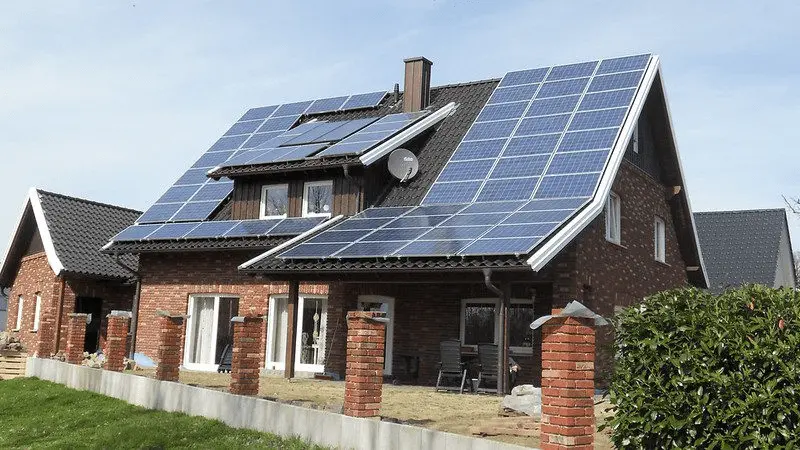
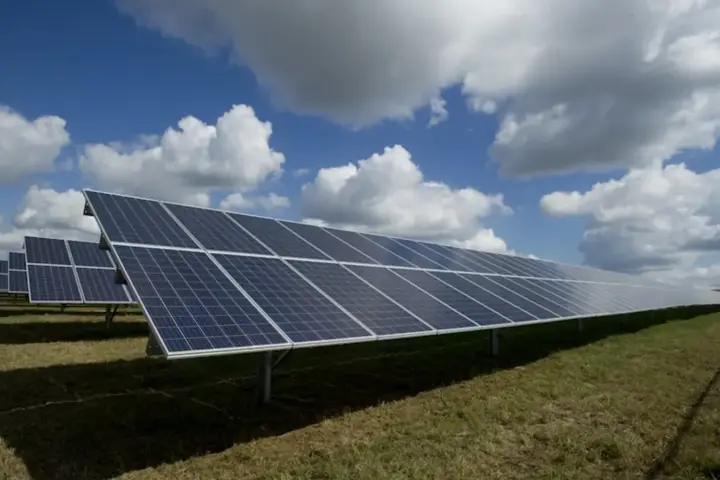
California With its year-round sunny skies and a number of financial benefits and solar incentives to choose from, ranks first in the nation for its solar power generation thus, making an investment in installing solar rooftops an intelligent choice for California residents.
The California Solar Initiative (CSI) Program, established by Senate Bill no.1 had three eligibility criteria to qualify for the ratepayer-funded incentives. The first criteria were high-quality, solar energy systems with maximum system performance, so as to promote the highest energy production per ratepayer dollar. And the second is optimal system performance during periods of peak demand and an appropriate energy efficiency improvement in new and existing homes, or in commercial structures where solar energy systems are installed.
However, because of significant drops in equipment prices created a cost-effective nature of solar in the state. Even if currently there are no upfront incentives for California residents to help them with the cost of solar panels, solar customers are eligible for the State’s Net Energy Metering Program (NEM). It is a key element of the policy framework that supports direct customer investment in grid-tied distributed renewable energy generation, including customer-sited solar photovoltaic (PV) systems. It enables one to get financial credit for the customer-generated power fed back to the electric grid.
| Program Authority | California Public UtilitiesCommission | California EnergyCommission | Publicly Owned Utilities (POUs) | Total |
| ProgramName | California Solar Initiative (CSI) (including CSI-Thermal) | New Solar Homes Partnership | Various Program Names | Go Solar California! |
| Budget | $2,167 million (Electric) and $250 million (Gas) | $400 million | $784 million | $3,351 million (Electric) and $250 Million (Gas) |
| Solar Goals | 1,940 MW (Electric)585 million therms (Gas) | 360 MW | 700 MW | 3,000 MW (Electric)585 million therms (Gas) |
| Scope | All solar systems in large IOU areas except new homes | Solar systems on new homes in large IOU areas | All solar systems in POU areas | All of California |
Additionally, the ones who own and live in their homes which can be defined as affordable housing by California public utilities (code 2852), where they receive electrical service from Pacific Gas & Electric (PG&E), Southern California Edison (SCE), or San Diego Gas & Electric (SDG&E) and has a household income that is 80% or below the area median income (AMI) are qualified as low-income homeowners. And hence, can receive solar incentives of $3 per watt under the Single-family Affordable Solar Homes (SASH) Program for the installation of rooftop solar panels.
The state’s Multifamily Affordable Solar Housing (MASH) program established in 2008 provided solar incentives on qualifying multifamily affordable housing for new applications. But the MASH VNM successor tariffs in PG&E, SCE, and SDG&E territory remain open for new enrolments for qualified properties and generation projects. Multifamily properties that satisfy the MASH eligibility criteria and meet all other utility interconnection requirements may utilize the MASH tariff.
Several opportunities to generate solar energy and a wide number of solar incentives and utility credits make California an ideal place for installing solar panel systems. One can take advantage of the financial incentives to save money on the installation of solar panels. And also gets access to a renewable energy source, reduced carbon emissions, and a good reputation for investing in sustainable energy.
California residents can now check their eligibility for expanded federal student debt relief programs, which were reinstated by recent court ruling. The programs offer forgiveness of up to $20,000 for Pell Grant recipients and $10,000 for other qualifying borrowers. To qualify, individuals must meet income thresholds and demonstrate financial hardship. The application process requires linking federal tax records and providing documentation of employment status. California has also launched its own state-level debt relief initiative, offering additional support to residents. Education advocates urge borrowers to apply early, as processing times are expected to extend through the end of the year.
See also: Canada National Electricity Strategy Double Grid Capacity 2050; Eu Greenwashing Rules Environmental Claims Packaging Advertising