 Karmactive Staff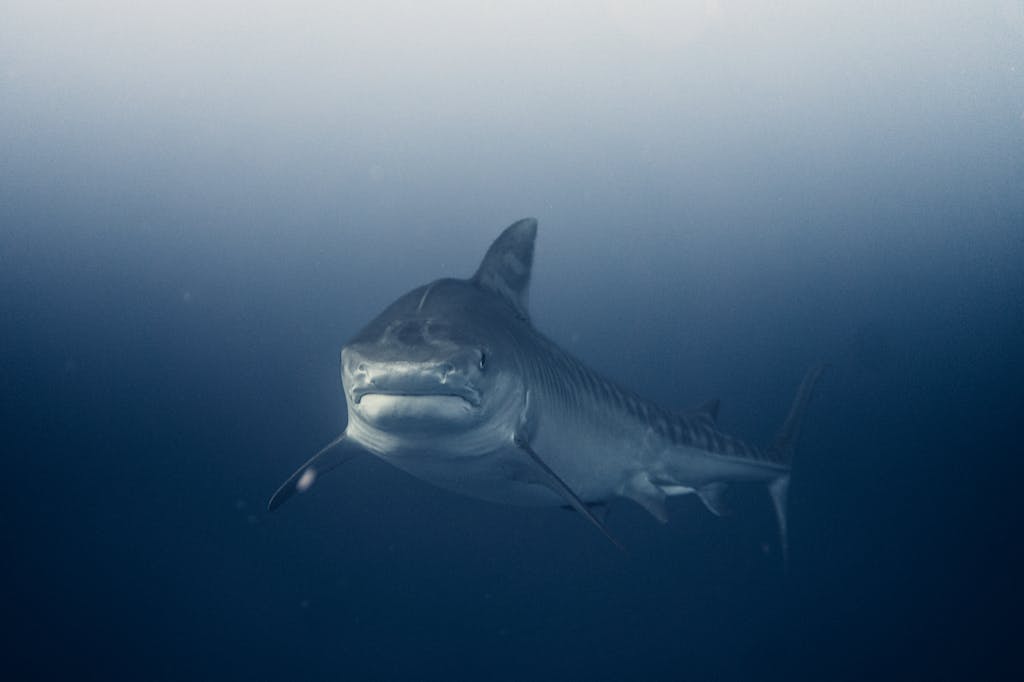
Record-breaking shark signals critical moment for marine research and coastal communities
A massive 1,653-pound great white shark named “Contender” was detected just 50 miles east of Nantucket on July 18, 2025. At 13 feet 9 inches, this giant is the largest male white shark ever tagged in the Western Atlantic Ocean. First tagged off the Florida-Georgia coast this January, Contender’s northward migration offers researchers unprecedented data on apex predator movements along the Eastern Seaboard.
Tracking an Ocean Giant
The Smart Position and Temperature (SPOT) tag attached to Contender’s dorsal fin requires about 15-90 seconds of surface exposure to transmit data via Argos satellites. OCEARCH, the marine research organization tracking Contender, reports the shark has followed a typical northward seasonal migration, pinging previously near Cape Hatteras, North Carolina.
The SPOT tag has an expected battery life of approximately five years, transmitting location and temperature data critical to understanding white shark behavior patterns.
Ecosystem Impact
White sharks like Contender play a vital role in maintaining marine ecosystem balance. They primarily feed on the growing seal populations off New England, with recent NOAA estimates indicating approximately 27,131 gray seals in U.S. waters as of 2022.
Media reports suggest Contender is approximately 32 years old, based on standard aging techniques. Great whites can live up to 70 years according to NOAA Fisheries data.
Conservation Status and Climate Concerns
The great white shark (Carcharodon carcharias) is classified as “Vulnerable” on the IUCN Red List and listed in CITES Appendix II, indicating significant conservation concerns. Protected under U.S. federal law, these sharks face threats from bycatch and habitat disruption.
Similar Posts
Recent research suggests climate change may be altering traditional migration patterns. The Gulf of Maine has experienced sea surface temperature warming of approximately 0.84°F per decade (about 0.47°C per decade) since the early 1980s, potentially affecting migration timing of marine species including sharks.
Public Safety Guidelines
For beachgoers in the Nantucket area, safety experts recommend:
- Stay close to shore
- Avoid swimming at dawn and dusk when sharks actively feed
- Report any sightings immediately to local authorities
Massachusetts uses purple warning flags with shark silhouettes to alert beachgoers when sharks are detected in the area, part of their comprehensive shark advisory system.

Research Implications
Contender is one of approximately 800 sharks estimated to visit Massachusetts waters annually, according to studies conducted between 2015-2018. The data collected from his movements will contribute to 24 ongoing science projects across 29 research institutions.
Dr. Bryan Franks, lead author of a study in Frontiers in Marine Science, emphasizes the importance of protecting recurring shark habitats from Newfoundland to the Gulf of Mexico.
Real-time tracking of Contender and other tagged sharks is available through the OCEARCH Global Shark Tracker app. Marine scientists continue monitoring these magnificent predators, gathering vital data that bridges the gap between conservation efforts, public safety measures, and our understanding of ocean ecosystems in a changing climate.