Rahul Somvanshi
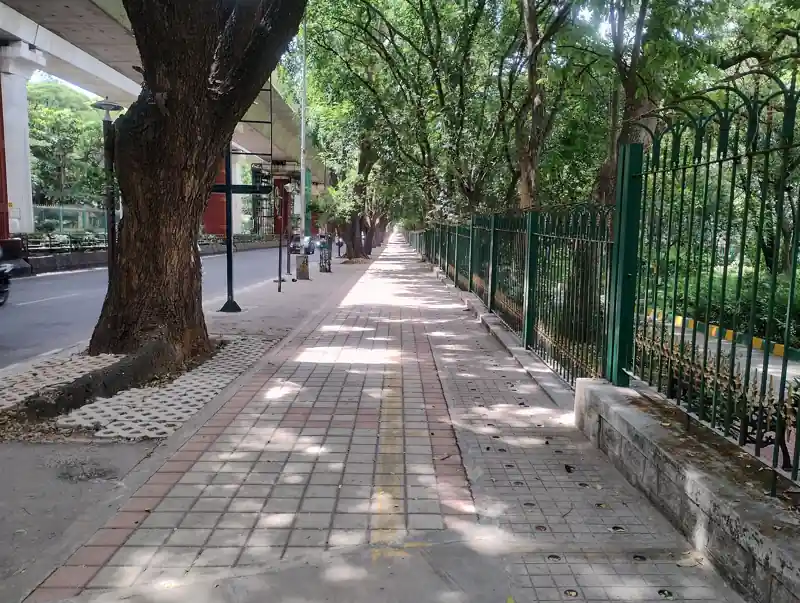
Rasthe is a community platform that lets Bengaluru residents report broken footpaths and blocked pedestrian pathways by submitting a photo and selecting an issue category online. Some claims about the tool match what the platform documents; others go further than its own materials support. Here is what Rasthe’s public site and app content confirm, and what remains unverified.
What Rasthe actually is, according to its own site
Rasthe is a live, publicly accessible website that describes itself as Bangalore’s community footpath reporter. Its own page copy frames it as “community-powered”: a resident can upload a photo of a broken sidewalk or an obstruction on a walking path, choose an issue category, and submit the report. No account or sign-in is required, and the platform describes submissions as anonymous. According to the site’s own description, these individual reports feed into a broader, crowdsourced dataset, and the platform’s materials also reference ward updates and voting on walkability upgrades.
The platform also includes a sharing feature that generates a pre-filled WhatsApp message a user can send to a phone number, framed in the site’s own copy as a way to pass along a citizen report, alongside links to Rasthe’s ward and report pages. Separately, the platform’s own materials state that aggregated data from these reports may be shared with municipal bodies such as the BBMP, traffic police, researchers, and advocacy groups. The site credits Surya Uthkarsha as its builder; no further detail about age or schooling is documented in the reviewed materials.
That is the extent of what Rasthe’s own public-facing materials establish. It is a tool for collecting and compiling community observations about footpath conditions in Bengaluru, built around photo submissions, categorized reports, and an aggregated dataset, plus optional ways to pass a report along by message or share it more widely.
What isn’t backed by the platform’s own materials is a separate question, and it matters because the gap between “lets people submit a report” and “triggers official municipal action” is exactly where misunderstanding tends to creep in.
There is no confirmation in Rasthe’s publicly available site or application content that it is an official BBMP system, or that it has a formal partnership or data-sharing arrangement with a municipal agency, traffic police, or any other government body. The platform’s own copy describes potential sharing of aggregated data as something that may happen, not an existing, confirmed integration. Submitting a report through Rasthe is best understood as logging an observation into a community dataset, not as filing a municipal complaint that a civic agency is confirmed to receive or act on. This reflects the absence of confirmation in the reviewed materials, not proof that no such relationship exists.
Similarly, nothing in the platform’s own materials supports a claim that any specific report has been resolved, or that fixes happen within a defined window of time. Rasthe’s public description covers collecting and organizing reports; it does not include a documented repair process, a response-time commitment, or confirmation that reported problems get fixed at all. Treating a submission as a guarantee that a pathway will be repaired, or repaired by a certain deadline, goes beyond what the platform itself states.
There is also no indication in Rasthe’s own site content that it operates outside Bengaluru. Its description is specifically scoped to the city, and claims suggesting broader or nationwide coverage are not supported by its public materials.
For residents, the practical takeaway is straightforward: Rasthe offers a structured, low-friction way to document footpath and pedestrian-path problems and add them to a shared civic dataset, with simple options to pass a report along. It functions as a community reporting and awareness tool rather than a verified municipal complaint channel, and treating a submission there as equivalent to an official, acted-upon government report isn’t something its own public materials support. The platform itself is at rasthe.in.