 Rahul Somvanshi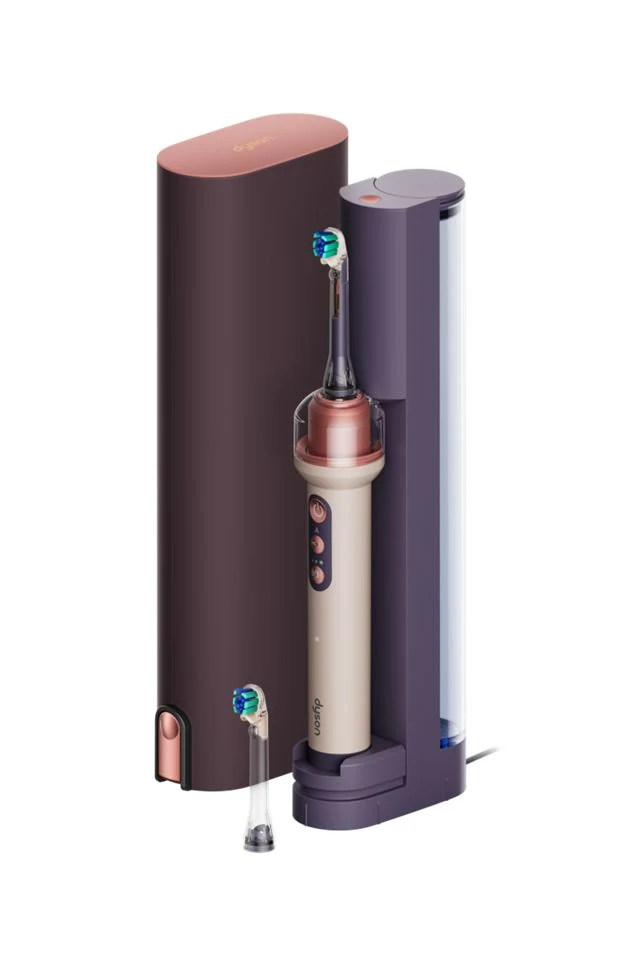
What if your toothbrush could actually see between your teeth and automatically spray the spots it finds? That’s exactly what Dyson’s new CameraJet does.
The CameraJet is priced at $499.99 and represents six years of development involving 661 Dyson engineers, 38 patents, and partnerships with the National University of Singapore’s Faculty of Dentistry.
Inside the toothbrush sits a 100,000-pixel macro camera that captures 28 images per second. A machine-learning system called Gap Optical Targeting analyzes these live images and identifies spaces between teeth. When it detects a gap, the toothbrush automatically releases a targeted liquid burst within about 100 milliseconds. The system was trained using more than 470,000 dental images. The toothbrush contains 16 million lines of code running this entire process.
The core claim centers on gum health improvement. Dyson conducted a clinical study with 204 participants over six weeks, comparing twice-daily use of the Brush plus auto-jet against a manual toothbrush. Dyson reported the CameraJet performed better for gum health in this study. This remains Dyson’s own study, not independent verification. The test relied on a proprietary proxy plaque developed through a funded research collaboration with the National University of Singapore Faculty of Dentistry. This means the testing used specific laboratory conditions rather than comparing against existing industry benchmarks.
This distinction matters for credibility. Dyson tested its claims using its own methods and a university-developed testing standard. That is factually supported, but it differs from independent verification by a neutral third party.
The privacy question addresses a concern most people have with camera-equipped devices. Dyson states that camera images are not stored on the product or in the cloud. Images delete from the app immediately after viewing. The toothbrush processes images to detect gaps, but those images don’t remain on your phone, Dyson’s servers, or elsewhere. That is Dyson’s stated privacy architecture.
The liquid jet operates differently than traditional floss. The conical jet creates targeted spray rather than string between teeth. Dyson tested this against its proprietary plaque model but hasn’t published comparisons against actual floss.
At $499.99, the CameraJet represents a significant investment compared to standard toothbrushes. You’re paying for engineering innovation. Whether that price justifies your purchase depends on how much you value the device’s specific capabilities.
The reality: the CameraJet represents genuine technological achievement. The camera identifies interdental gaps that the system can target automatically. The AI responds faster than human reaction time. The privacy protection as stated by Dyson is real. But gum health claims come from the company’s own testing, not independent research. The device works as designed. Whether that design justifies $499.99 depends on your priorities.